In this article, we’ll show you the different types of corner cabinets available, how they work, and what you should keep in mind when planning your kitchen. This will help you quickly find the corner solution for your kitchen that fits your habits, your floor plan, and your comfort needs.

What challenges does the kitchen nook present?
A corner is geometrically simple, but challenging in practice. That’s because two rows of cabinets meet there, pathways cross, and measurements must be planned precisely.
Hard to reach, easily forgotten
Traditional corner shelves often create this problem: items get pushed to the back, while the front becomes cluttered with pots, bowls, or storage containers. Anyone who cooks often notices this every day. If you use your kitchen corner effectively, you’ll have to bend down less, spend less time searching, and have a better overview.
Unfavorable dimensions and dead zones
Standard pull-outs or drawers rarely fit perfectly into a kitchen corner. Without a proper system, a dead zone can quickly form—one that takes up space but offers hardly any storage. This is especially frustrating when the kitchen as a whole is compact.
A common planning mistake: The kitchen corner remains empty
Sometimes, the corner is simply left out of the design; base cabinets are installed on the left and right, leaving a space in between that no one actively designs. The result: untapped potential.
An Overview of Popular Corner Cabinet Solutions
There is no single perfect solution for every kitchen corner. But there are systems that have proven themselves over the years because they provide ergonomic access to storage space and integrate the corner into your daily routine. Here are the most common kitchen corner cabinet solutions, including their strengths, limitations, and recommended uses.
The Le Mans Cabinet – Comfortable and Modern
If any corner cabinet pull-out could be said to embody “convenience,” it would be the Le Mans. The system seems almost like an elegant bow from the corner, bringing its contents right to you. Swiveling shelves slide forward out of the corner. Access is significantly more direct than with a carousel.

Le Mans Cabinet Benefits
The usable space is excellent, especially for larger pots, pans, or heavy kitchen appliances. You can see what’s there at a glance. This makes everyday life noticeably easier—like a smooth, confident move that always works.
Disadvantages of the Le Mans Cabinet
The main drawback is the greater technical complexity: The system requires precise planning, sufficient space for the shelves to move, and careful installation. Anyone who wants to store very wide, particularly bulky items should also check whether the shelf design is suitable for this purpose.
Who is the Le Mans cabinet suitable for?
For anyone who cooks often, likes to store heavy items safely, and wants a kitchen with corner cabinets that feels “light” in everyday use.
The Classic Revolving Cabinet
The rotating carousel cabinet is something like the classic car of kitchen corner cabinet systems: familiar, sturdy, and widely used. Inside, round or segmented shelves rotate. They swing the contents forward when you turn the carousel.
The Advantages of the Revolving Cabinet
A corner cabinet in the kitchen with a rotating shelf generally makes better use of the space than an empty corner. Many of these systems can also be retrofitted into existing kitchens. For households that rarely use large pots, this may be sufficient.
The Disadvantages of Revolving Cabinet Carousels
Convenience and cleaning are often the sticking points. Crumbs and dust tend to accumulate in the curves. In addition, accessibility is limited when tall parts block each other.
Who is a rotating carousel cabinet suitable for?
For anyone looking for a practical corner kitchen and, above all, wanting to store medium-sized, easy-to-handle items: bowls, storage containers, and small pots.
Qanto – Lift-Up Storage for Equipment and a Truly Quiet Workspace
Some corners aren’t too small—they’re just too quiet. Qanto turns an unused corner into a smart appliance zone. With the push of a button, the surface rises, bringing kitchen appliances to a comfortable working height. Then everything disappears back into the countertop. This keeps the kitchen quiet and tidy.

Qanto Benefits
You no longer have to carry large appliances around. Thanks to the built-in power supply, you can turn them on, use them, and then slide them back into place. This saves time and keeps the countertop clear. Especially in open-concept kitchens, this creates a clean, minimalist look and helps maintain order in everyday life.
Qanto Disadvantages
The solution requires careful planning to ensure that there is enough space for movement and that everything fits properly. Qanto is also designed for specific appliance sizes. If you have a lot of appliances, it’s worth setting clear priorities: Which ones do you use most often, and which ones can be stored away in the traditional way?
Who is Qanto suitable for?
For anyone who regularly works with larger appliances and is looking for a corner solution in the kitchen that discreetly integrates the technology. If you’d like to see how this fits into your floor plan, the kitchen planner can help you get a first impression of your kitchen.
Classic Corner Pull-Out (Drawer Solution)
If you like clean lines, a corner pull-out in the kitchen is a very attractive option. Drawers or pull-outs arranged diagonally or across a corner provide access from above, often with full extension.
Advantages of the Classic Corner Pull-Out
Very easy access, a clear layout, and a modern look. This is especially convenient in everyday use because you don’t have to turn or swivel anything. A pull-out corner kitchen cabinet also makes it easy to keep things organized intuitively: what’s in front is in front, and what’s in back is in back.
Disadvantages of the traditional corner pull-out
Depending on the floor plan, the usable space may differ from that of swing-out systems. In addition, the design requires careful planning of the adjacent rows of cabinets to ensure that the layout remains harmonious.
Who is a classic corner pull-out suitable for?
For anyone looking for a compact, convenient corner solution for their kitchen and who prefers to organize their kitchen using drawers.
Corner Solutions for Upper Cabinets – Making the Most of the Corner Above the Countertop
While base cabinets often take center stage, the corner space at the top surprisingly often goes unused. Yet a corner solution for wall cabinets can really bring a sense of calm to the overall look while also creating additional storage space.


Corner wall cabinets and diagonal wall cabinets
Corner wall cabinets are classic solutions, often featuring hinged or folding doors. Diagonal wall cabinets visually “cut into” the corner, making them easier to use because they appear less deep.
Suitable for: glasses, mugs, small pantry items, spices, and items you use frequently but don’t want visible on the countertop.
Open Shelves as a Deliberate Display
Sometimes the best alternative to a corner cabinet is an open corner shelf. It makes the corner look less cluttered and can be used for decorative purposes. The only important thing is to limit the number of items you put on it.
Integrate Devices Smartly
Depending on the room and its intended use, the corner of the upper cabinet area can also be a good spot for appliances, such as a microwave. The key factors here are ventilation, the direction the door opens, and an ergonomic height.
What Goes Well with My Kitchen? A Guide to Choosing Corner Cabinet Solutions
The best corner cabinets aren't the ones with the most spectacular mechanisms, but the ones that fit into your daily life. To make the decision easier, consider these three factors: kitchen layout, usage, and comfort needs.
Kitchen layout and room size as guidelines
In a small kitchen, every centimeter counts—but so does every movement. Here, well-organized solutions like pull-out cabinets are often particularly convenient because they allow for quick access.
In larger layouts (U-shaped, G-shaped, island designs), a Le Mans or Qanto can really show its strengths, since the corner is often designed to be deep and spacious.
Your usage habits are the deciding factor
Do you cook every day and use large pots? If so, you’ll want a solution that can hold heavy loads and keeps them within easy reach. Do you mainly store supplies and accessories? If so, organized storage systems with clearly defined sections are often ideal.
Comfort vs. Simplicity
Some people prefer a minimalist, straightforward approach: open the drawer, grab what you need, and you’re done. Others love that “aha moment” when the corner brings its contents forward. Both approaches are fine, as long as they suit your style.
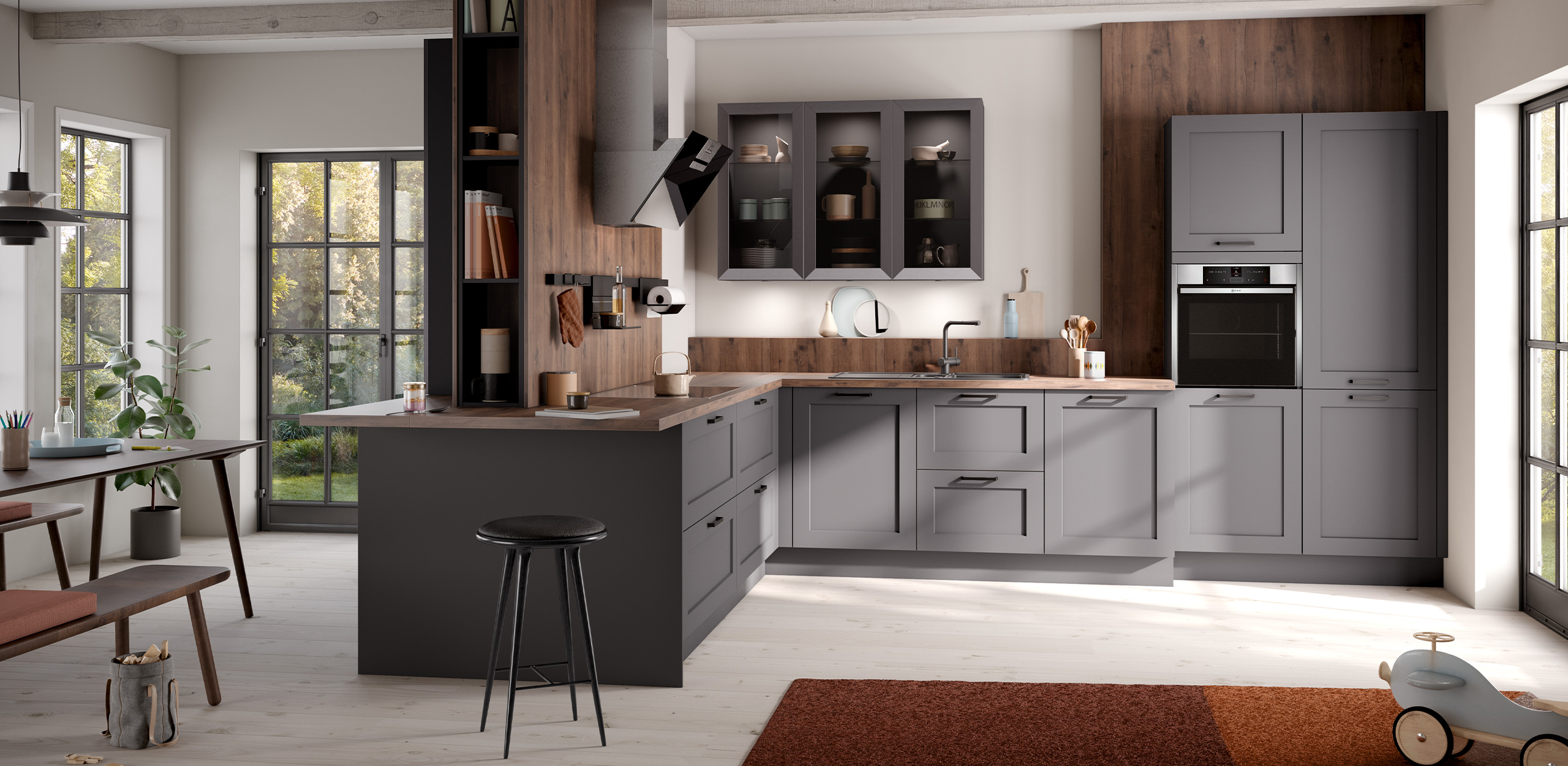
Planning Tips – How to Get the Most Out of Your Kitchen Nook
To help you make the most of your kitchen, here are the key points to ensure that your corner cabinet solutions will truly work for you down the road.
Think about the corner from the very beginning
Plan the floor plan first, then the details, but don't forget about the corners in between. Corners can quickly become problem areas, especially when it comes to utility connections, windows, radiators, or walkways.
Check dimensions, opening angles, and movements
Whether it's Karussell, Qanto, or Le Mans: Every system has its own range of motion. Check to see if adjacent handles, cabinet fronts, or passageways could restrict its use. The cabinet height is also a factor, because it determines how much—and what—can actually fit inside.
Take Advantage of the Zone Principle
This corner is ideal for items you need in a specific area: the cooking area (pots, pans), the prep area (bowls, food processor), or the pantry area. If you plan for both organization and easy access, your kitchen will look like it was designed as a single, cohesive whole.
Seek advice when things get complicated
When there are multiple doors, windows, or slanted walls to consider, it’s worth getting an expert’s opinion. Good kitchen planning not only identifies what’s possible but also what will actually remain convenient in the long run.

Conclusion – Every Corner Has Potential
A corner cabinet in the kitchen is more than just a storage solution. It’s a small piece of kitchen architecture that noticeably influences your daily life. Whether it’s a rotating carousel, Le Mans, or Qanto: what matters most is that the solution fits your floor plan, your habits, and your expectations for comfort.
Frequently Asked Questions About Corner Cabinets in the Kitchen (FAQ)
The best corner kitchen cabinet is the one you enjoy using every day. If you want maximum convenience, swivel systems like the Le Mans are very popular. If you prefer a clear overview, a corner pull-out is often ideal. For practical needs, a carousel may also suffice.
In some cases, yes. A rotating carousel can often be retrofitted if the cabinet is a good fit. For more complex solutions like Le Mans, it depends more on the existing cabinet, its dimensions, and the layout of the walls. A quick check by experts can save you a lot of hassle.
Yes, that’s exactly where a well-designed corner kitchen cabinet solution is particularly valuable. Pull-out drawers or compact swivel systems are often a good choice because they keep things organized and save space. You can find additional inspiration in our article on kitchens for small spaces.