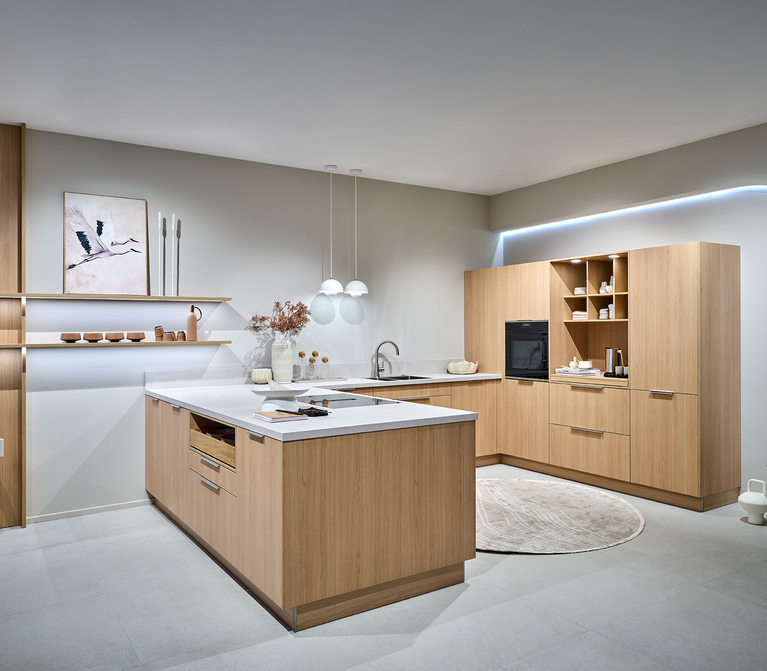
What is a Scandinavian Kitchen?
The Scandinavian kitchen style takes its name from the countries of Northern Europe. It is characterized by light colors, open spaces, and minimalist designs.
It also embodies an attitude that the Danes call “hygge”: the art of making life cozy. Wood, wool, ceramics, and warm lighting ensure that the clean design remains inviting. Simply enjoy more comfort.
Scandinavian-style kitchens are characterized by four key features: a light color palette, exposed wood, simple, unadorned cabinet fronts, and plenty of light—both natural and artificial. Our overview of kitchen styles shows how this look differs from other design trends.
Typical Colors and Materials for Scandinavian-Style Kitchens
The color palette: white, cream, and soft pastel shades
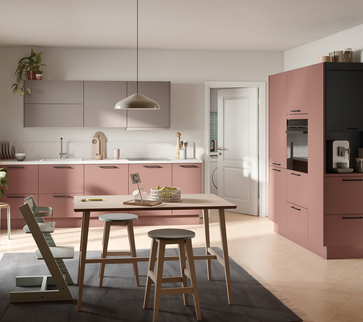
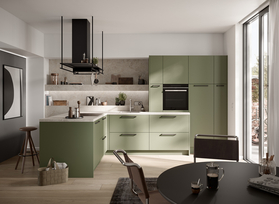
The foundation consists of light, calm tones: white, cream, sand, and warm gray-beige shades. These are complemented by muted pastel shades such as sage green, soft blue, or dusty pink, which serve as accents to highlight specific areas.
It’s important to avoid harsh contrasts across large surfaces. Instead of using many colors, the Scandinavian style relies on subtle variations within a single color family. The result is a calm atmosphere that lets decor, tableware, and plants take center stage.
Materials: light-colored wood and matte finishes
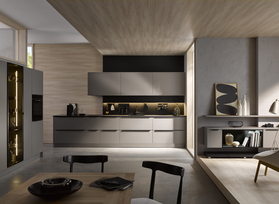
The second key element is wood. Light-colored oak, ash, and birch bring a distinctive warmth to the kitchen—whether used for cabinet fronts, countertops, wall paneling, or flooring. A light-wood kitchen captures natural light and changes its ambiance throughout the day.
Matte finishes work well here, as they softly reflect light rather than mirroring it. Countertops made of stone, ceramic, or with a light wood finish complement the look, as do sinks in black or stainless steel, which serve as a deliberate contrast. If you like, you can repeat a material—such as the oak from the cabinet fronts on the shelf above the niche.
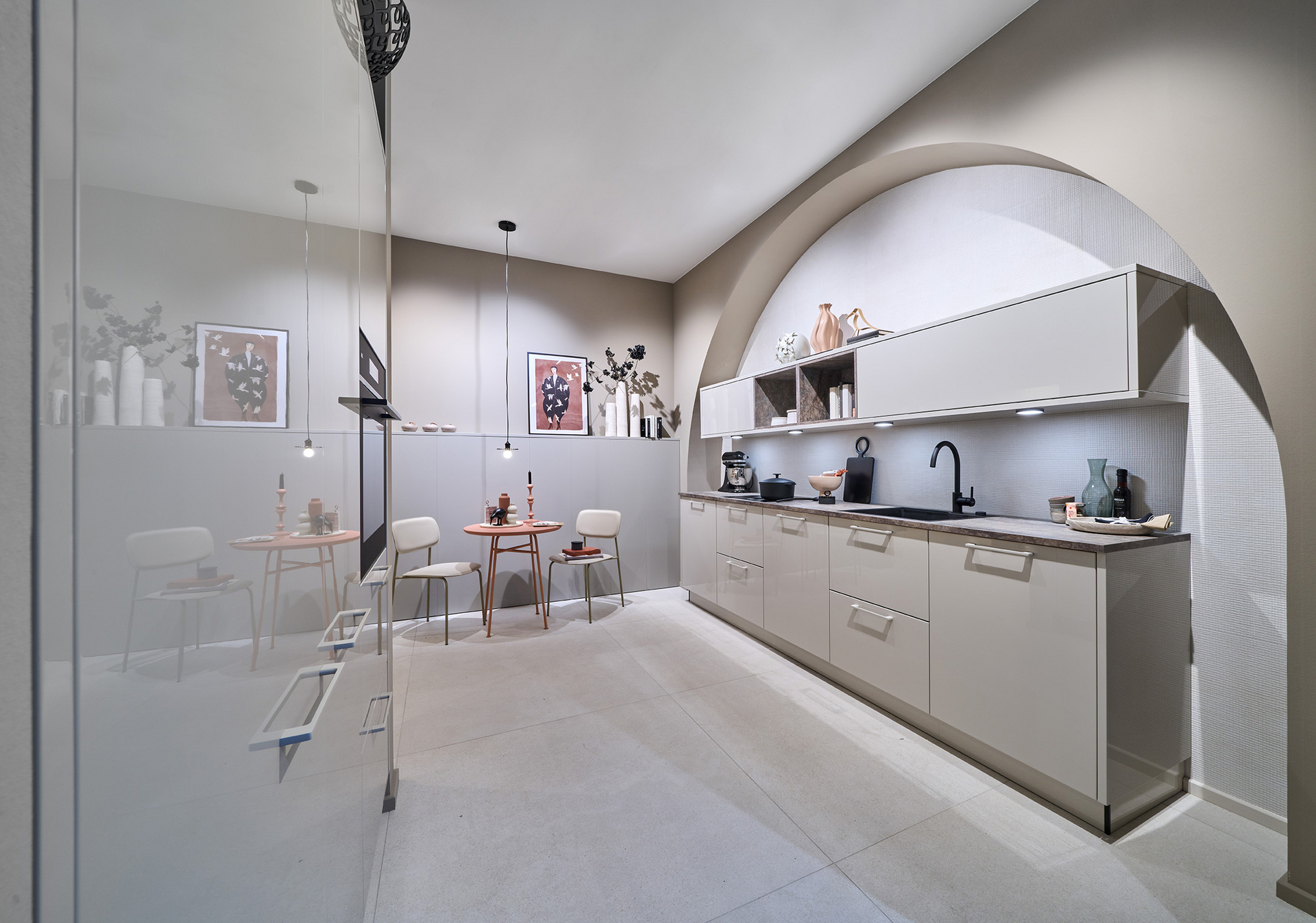

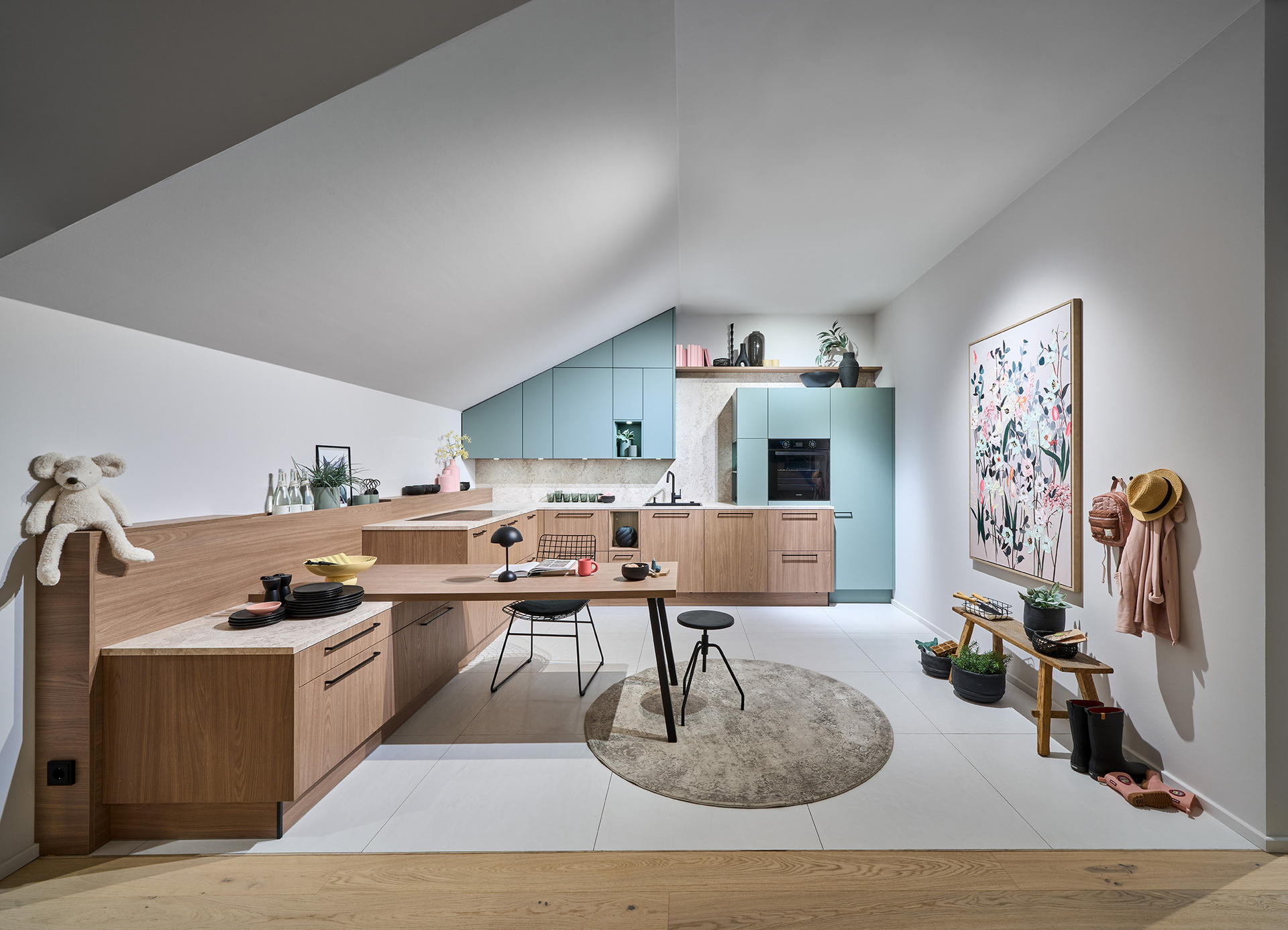
Furniture and Accessories: How to Design Your Scandinavian Kitchen
Scandinavian kitchen furniture is kept simple: handle-less fronts or subtle handles in black or metal, clean edges, no ornamentation. This understated design serves a purpose—it draws the eye to the materials, proportions, and light.
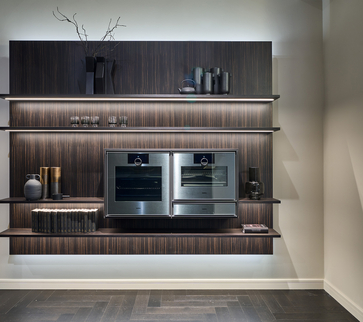
Open shelves and niches are a defining feature. A wooden shelf displaying everyday dishes, glasses, and a plant adds a personal touch to the kitchen and keeps everything within easy reach. Some designs even do away with wall cabinets entirely—to learn what this means for storage space and the overall feel of the room, read the article on kitchens without wall cabinets.
Lighting is just as important. Plan in layers: bright task lighting under the upper cabinets, a striking pendant light over the table or counter, and warm, indirect lighting on shelves and in niches. This creates a warm, cozy atmosphere in the evening.
Kitchen Styles and Design Ideas in Scandinavian Design
The Nordic style works in any kitchen layout. An L-shaped kitchen with an adjoining dining area keeps distances short and leaves room for a round table. The U-shape offers plenty of counter space and storage.
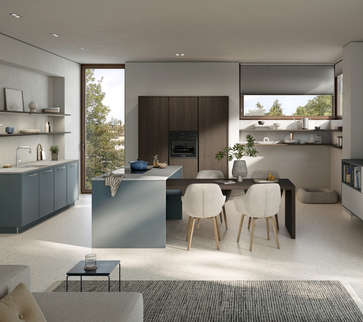
The Scandinavian kitchen truly shines as an open-concept kitchen-dining area. Cooking, dining, and living flow seamlessly into one another, with a light-colored wood floor connecting the spaces. An island or peninsula with a countertop makes for a perfect focal point—you’ll find ideas and dimensions in our article on kitchen islands.
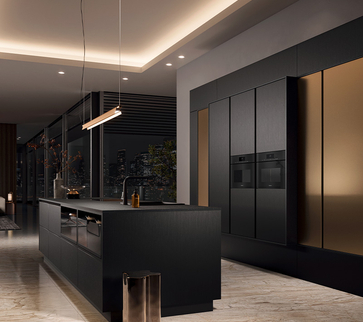
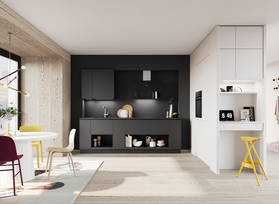
Planning a modern Scandinavian kitchen also means creating deliberate contrasts. A black faucet, dark handles, or an anthracite-colored light fixture add depth to the light-colored base. The style also works well in small rooms and under sloped ceilings. It simply radiates a sense of openness.
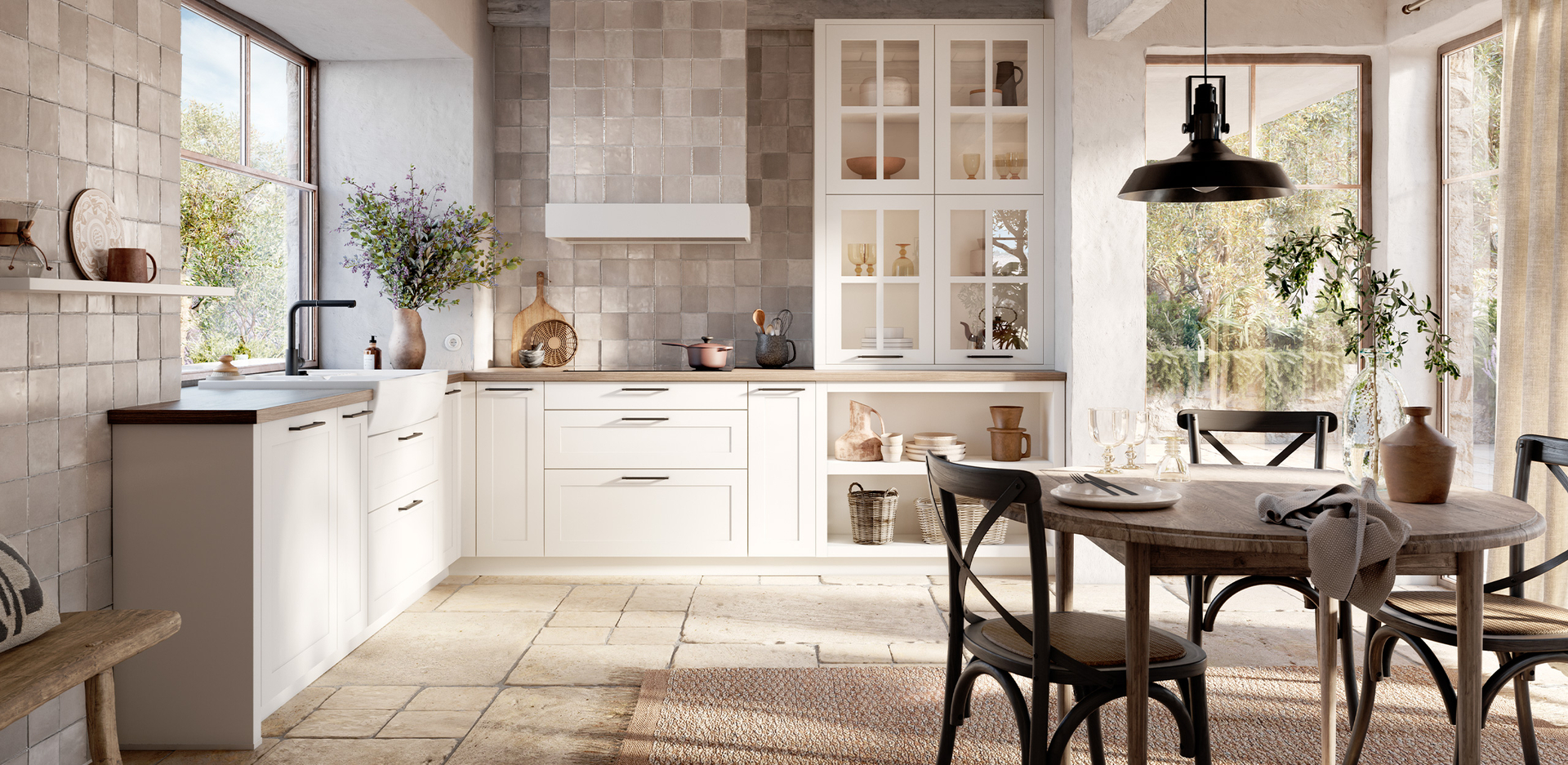
Scandinavian kitchen meets country style: the modern Scandi-country style
If you prefer a slightly more playful look, the Scandi country house style is worth checking out. It combines the bright, serene atmosphere of the North with the framed cabinet fronts and coziness of acountry house kitchen—rustic charm in a minimalist, modern form.
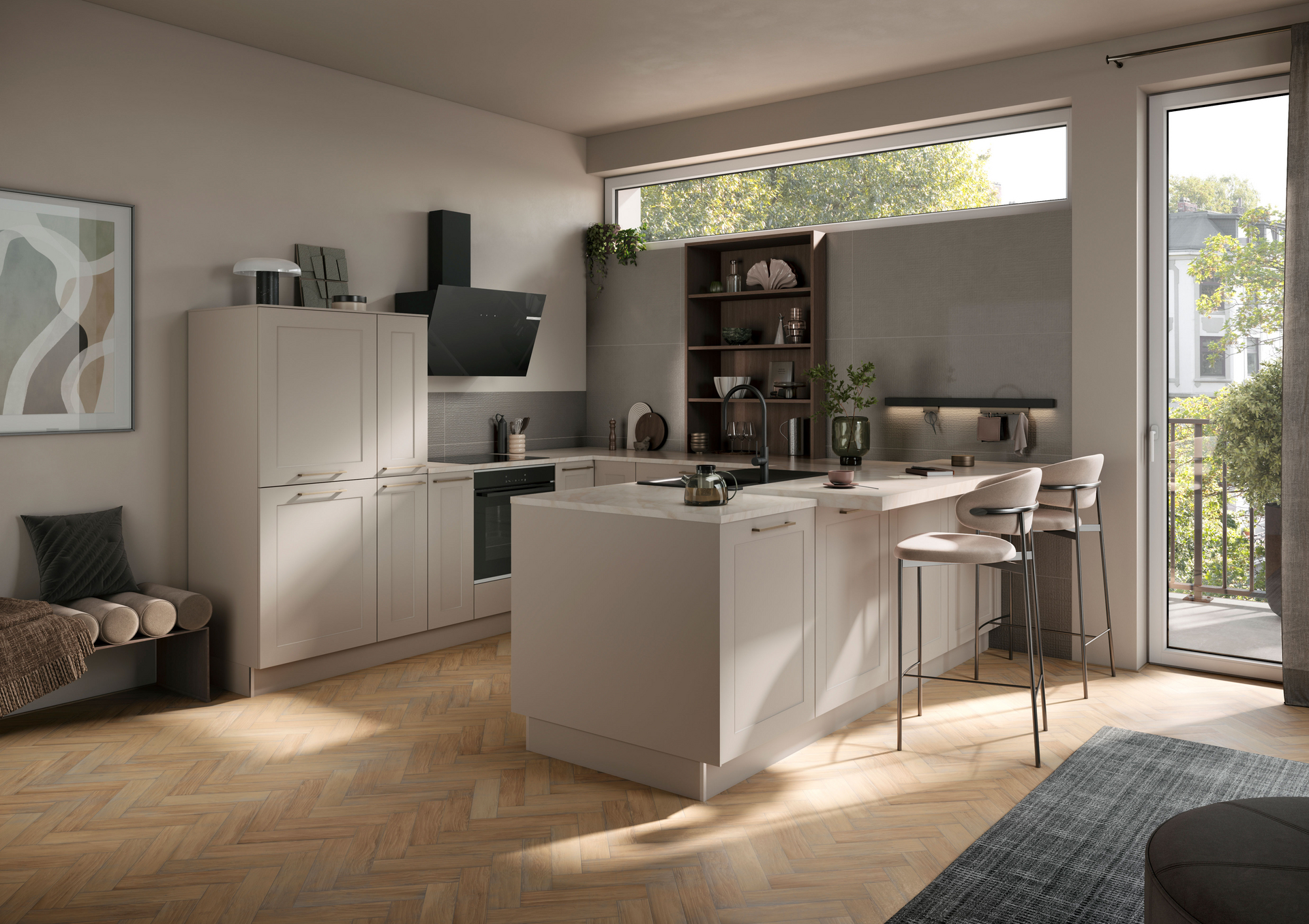
Typical elements include cream-white paneled cabinet fronts, a herringbone floor in light oak, glass-fronted cabinets displaying tableware, and a round wooden table as the focal point. Subtle details like a ceramic sink or delicate moldings are welcome—this look deliberately avoids heavy ornamentation.
This style feels friendly and lively.
Tips for implementation: How do you design a Scandinavian kitchen?
Creating your own Scandinavian kitchen is straightforward if you follow a few basic principles:
- Choose a light base: Keep cabinet fronts, walls, and countertops in white, cream, or warm beige tones, and use color only as an accent
- Use wood as a unifying element: a single wood tone that recurs in cabinet fronts, shelves, or flooring ties the look together
- Plan lighting in layers: Combine task lighting, pendant lights, and indirect lighting, all in a warm white light color
- Think generously about storage: closed base cabinets and full-extension drawers keep surfaces clear, maintaining a sense of calm
- Decorate thoughtfully: a few natural objects like ceramics, linen, and plants instead of many small trinkets
The concept130 catalog 2027 shows what a modern Scandi look can look like in the concept130 product line: matte, colored fronts combined with warm wood finishes. At Häcker, PUResist edge banding offers greater protection against moisture. Manufactured in Germany—by a family-owned company founded in 1898 as a carpentry shop.

Conclusion: Scandinavian kitchens combine brightness, wood, and coziness
Scandinavian kitchen design is more than just a decor trend—it’s an invitation to make everyday life brighter and simpler. Light wood, soothing colors, and well-thought-out features create a space where cooking, dining, and spending time together flow naturally into one another.
If you’d like to bring your ideas to life, sketch out your floor plan using Häcker’s 3D kitchen planner. And for detailed planning, use Häcker’s dealerlocator to find a specialist near you who can help you bring your Scandinavian dream to life.
FAQ on Scandinavian Kitchens
What are the typical features of a Scandinavian kitchen?
Light colors, exposed wood, simple cabinet fronts, and plenty of light. The style originates from Northern Europe and combines functionality with coziness—clean, uncluttered surfaces meet warm materials and inviting lighting.
What colors work well in a Scandinavian-style kitchen?
White, cream tones, sand, beige, and light shades of gray form the foundation. Muted pastel shades like sage green or soft blue work well as accents, as does black used sparingly—for example, on faucets, handles, or light fixtures.
What types of wood are used for Scandinavian kitchens?
Primarily light woods such as oak, ash, and birch—for cabinet fronts, countertops, shelves, or flooring. Light wood-effect finishes are also a great alternative that effectively captures the character of natural wood.
Does modern technology fit into the Scandinavian style?
Very well, as long as it’s unobtrusive: flush-mounted induction cooktops, built-in appliances behind simple cabinet fronts, and pull-out drawers blend in seamlessly. When it comes to range hoods, you have a choice of equally effective solutions—a cooktop with an integrated range hood keeps sightlines unobstructed, while a slim wall-mounted hood or a ceiling fan complements the lighting design.
Is the Scandinavian style also suitable for small kitchens?
Yes. Light colors, clean lines, and open shelves instead of upper cabinets work well even in small spaces, and a narrow counter can also serve as a workspace and dining area.