What is a warming drawer, and why do you need one?
A warming drawer—often called a heat-retaining drawer—is a shallow built-in appliance that warms food and dishes. In the Blaupunkt model, a fan heater distributes heat throughout the interior, and the temperature can be adjusted between 30 and 80 degrees.
Ovens and microwaves can also warm food, but they are primarily designed for cooking and rapid heating. The flat drawer handles keeping food warm as a secondary function, leaving the oven free for other uses.
Its uses are clearly defined: it keeps prepared meals warm, brings plates and cups up to temperature, and some models can also defrost frozen foods. In short: an unassuming appliance with multiple talents.
The Benefits of a Warm-Hold Drawer in Everyday Life
The first advantage is keeping food warm: Prepared dishes stay warm until everyone is seated at the table, and the oven is ready for the next course.
The second benefit: preheated plates. A dish cools down faster on cold plates, but stays warm longer on preheated ones.
Add to that the flexibility when cooking for guests. While the oven handles the next course, the finished one stays warm; the stovetop remains free for sauce and side dishes. You gain a time buffer if the evening runs a little late. Simply share more joy.
The benefits are especially evident in everyday family life. One person comes home from sports, another later from the office—meals are rarely eaten at the same time. Instead of heating plate after plate in the microwave, dinner stays warm in the drawer. The appliance comes in handy on weekends, too: the coffee cups are preheated and ready on the table. Simply enjoy everyday life more.
Like the wine cooler, the warming drawer is one of those appliances that puts enjoyment front and center.
More than just a plate warmer in the kitchen: an overview of its features


Keeping Food Warm
This flat built-in appliance is ideal whenever cooking and eating don’t happen at the same time: for multi-course meals, when guests are running late, or in everyday family life, when a plate is kept warm for a child who’ll be coming home late from practice.
If you want to keep food warm in the oven, you’ll tie up the oven just when it’s needed for the next course. The warming drawer takes care of keeping the food warm, leaving the oven free.
The Blaupunkt warming drawer’s user manual provides two tips for this: Preheat the drawer for about 5 to 10 minutes, and don’t place food inside until it has stopped boiling. Pots and pans should have cooled to below 80 degrees—or you can transfer the food to a container that’s still cool, such as a glass bowl.
Preheating Plates: Here’s How
Preheated plates are an easy way to ensure your meal arrives at the table warm. According to the user manual, set the Blaupunkt warming drawer to a medium temperature. How long it takes for all the plates to heat evenly depends on the quantity, size, and material of the tableware.
Even without a dedicated appliance, you can preheat plates in the oven; check beforehand to make sure the dishes are suitable for this, and remove them using oven mitts. The plate-warming drawer is simply more convenient: the dishes are kept right where they’re being warmed, and the oven remains free for the main course.
Installing a warming drawer: How to integrate the appliance into your kitchen
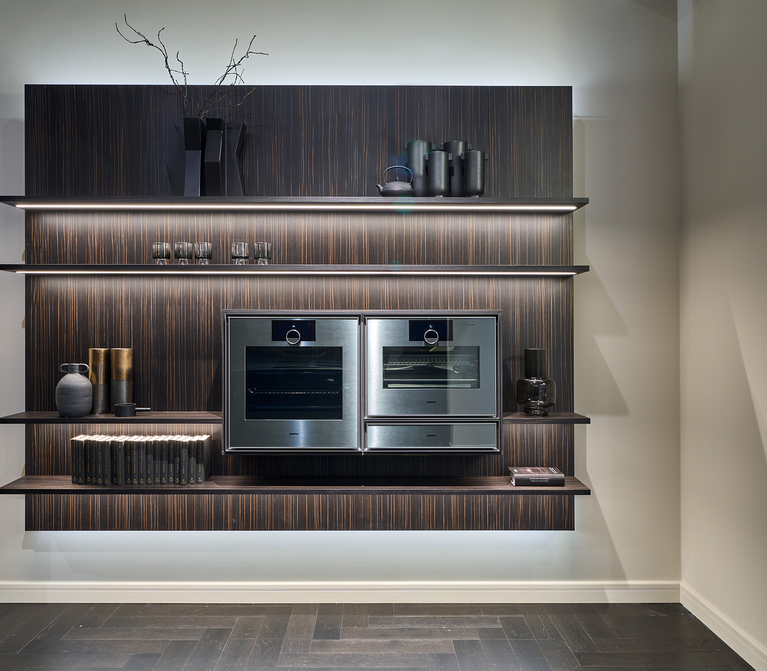
There are several options for installing the warming drawer: in combination with an oven or compact oven, or as a separate compartment in a tall appliance cabinet. For combinations with other appliances, the Blaupunkt model’s user manual refers you to a separate installation guide.
The right location depends on your workflow. Placed under the oven, freshly cooked food can be quickly transferred to the warming drawer. And when positioned at handle height in a tall cabinet, the drawer becomes a convenient serving station that you can load without having to bend over.
Here’s an example of the dimensions: The warming drawer from Blaupunkt, Häcker’s exclusive brand for built-in kitchen appliances, is 14 centimeters high and 59.4 centimeters wide, has a capacity of 20.5 liters, and can hold up to 15 kilograms of dishes. It comes with a full-extension telescopic slide—meaning the drawer can be pulled out completely—and an anti-slip mat.
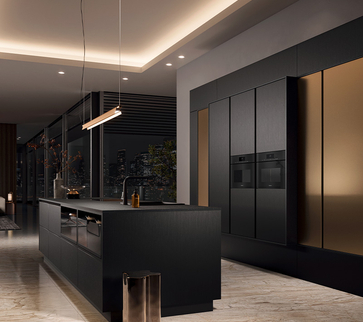
The appliance also blends in visually. The black glass front opens handle-free via a push-and-pull mechanism—that is, with gentle pressure—and complements the design of modern appliance walls.
Two points need to be considered early in the kitchen planning process: As an electrical appliance, the warming drawer requires a power outlet, and its placement in the tall cabinet affects the layout of the remaining compartments. Both factors can be accounted for if they’re taken into consideration from the very beginning. You’ll find all the relevant information on the KitchenPlanner page—and with Häcker’s 3D Kitchen Planner, you can sketch out your appliance wall right in your browser.
Heated Drawer: Yes or No? A Guide to Help You Decide
Ultimately, the question of whether or not to have a warming drawer comes down mainly to lifestyle. If you rarely cook, reheat pre-cooked meals in the microwave, and hardly ever entertain guests, you’ll probably get little use out of the appliance—and would be better off using that space for storage.
It’s a completely different story if cooking is more than just a means of sustenance for you. For people who enjoy serving full meals and families with staggered mealtimes, a warming drawer in the kitchen takes the time pressure out of the process.
Here are a few points to consider before making your decision:
- Storage space: The appliance takes up the space of a drawer or a compartment in a tall cabinet; its height—14 centimeters for the Blaupunkt model—must fit within the cabinet layout
- Capacity: Depending on the appliance’s height, you might not be able to fit all the plates inside at once for a large dinner party
- Power connection: As an electrical appliance, the drawer requires a power outlet; be sure to factor this into your kitchen planning
- Temperature control: The Blaupunkt model mentioned above allows for temperature settings between 30 and 80 degrees. Consider which features are important to you
Our comparison of induction vs. glass-ceramic cooktops also shows how to make general decisions about built-in appliances.
Conclusion: The warming drawer—the icing on the cake of your kitchen design
A warming drawer isn’t strictly necessary—the oven, microwave, and stovetop can handle the job in a pinch. But that’s exactly the point: it’s not a must-have appliance, but rather the icing on the cake. A convenience feature for anyone who loves to enjoy good food.
If you’re planning a new kitchen anyway, it’s worth making this decision early on. You can read about the step-by-step process in our guide to planning a kitchen; the page “Buying a Kitchen” describes the process from concept to installation.
And if you’d like to include a warming drawer in your kitchen plans: Use Häcker’s dealerlocator to find a specialist near you who can plan the appliance to fit your appliance wall. Perhaps the answer to the question posed at the beginning will become clear sooner than you think—at the latest when the first meal is served warm and effortlessly onto the table. Let yourself be inspired.