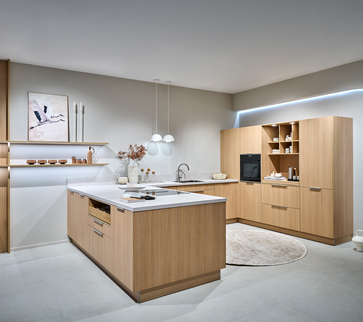
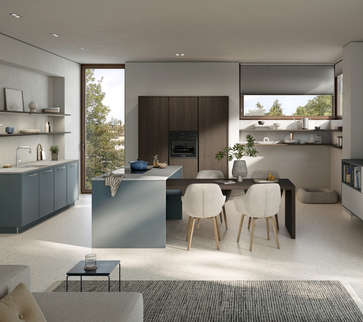
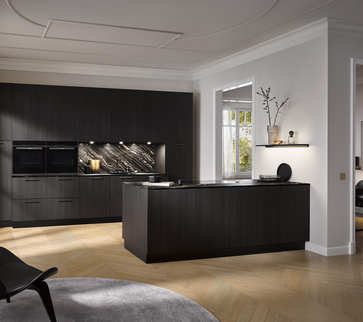
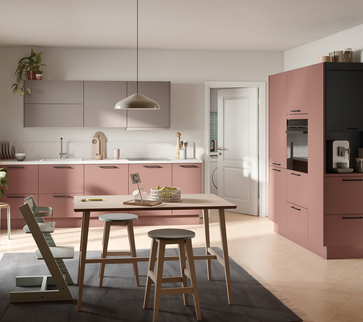
In this article, you’ll learn why a utility room can be a valuable addition to your home and how smart planning will ensure you’ll never want to be without it. We’ll give you valuable tips on choosing the right location for your utility room, whether a utility kitchen makes sense, and what equipment you’ll need to make laundry, storage, and organization as practical as possible in your daily life. We’ll also introduce you to options for planning your utility room online, so you can find the perfect solution for your household.
The Right Location for the Utility Room
Choosing the perfect location for your utility room is key to making this space a real help in your daily life. Here, you'll learn about the available options and the factors you should consider when planning.

Where should the utility room ideally be located?
Do you still have complete freedom when it comes to the floor plan because you’re currently renovating or building a new house? Then you’re spoiled for choice. There are various locations that work well as a utility room. A very popular choice is the basement. The advantage? There’s often plenty of space, and no disruptive noises seep into the living areas. Here, you’ll have room for a washer, dryer, and other appliances without them taking up space in your living areas. However, make sure the basement is well-ventilated and has access to water and electricity.
If the basement isn’t an option for you, a room right next to or behind the kitchen is an excellent alternative. This way, you’ll save yourself long trips in your daily routine for tasks like washing, sorting, and putting away household items. Separate rooms near the entrance or on the upper floor are also well-suited—especially if you plan to use your utility room primarily as a laundry room.
Water and electricity hookups
To ensure your utility room runs smoothly, it needs the right connections for water and electricity. Be sure to include connections for the washing machine, dryer, and possibly a sink. These should be easily accessible so you can operate the appliances safely. If the room is in a remote location, such as the basement, make sure the connections can be easily retrofitted.
Noise Control and Ventilation
An important consideration when choosing a location is noise protection. Washing machines and dryers can be quite loud—so it makes sense to choose a room where you won’t constantly hear the noise. A solid door or a physical separation from the living area ensures that the noise stays outside.
Ventilation also plays a major role. Washing, in particular, generates moisture that needs to be removed to prevent mold. Make sure the room is well-ventilated. If it’s located in the basement or in a windowless area, for example, it might be a good idea to install an exhaust fan as well.

Utility Room or Utility Kitchen: Which Makes More Sense?
Several factors come into play when deciding whether to set up a separate utility room or an integrated utility kitchen. Both solutions have their own pros and cons, and it depends on what best suits your needs. Let’s take a closer look at both options so you can make an informed decision.
The Difference Between a Utility Room and a Utility Kitchen
The traditional utility room is a separate room specifically designed for tasks such as doing laundry, ironing, or vacuuming. This is where the washing machine, dryer, and storage space for cleaning supplies and household appliances are located. The advantage of such a separate room lies in the clear separation between household chores and the living area. This ensures more peace and quiet in the rest of the house and clearly distinguishes household activities from daily living.
In contrast, a utility kitchen offers the option of integrating the utility room directly into the kitchen. Here, you can incorporate the functions of a utility room—such as doing laundry and storing household items—directly into your kitchen routine. This combination is a particularly popular solution in open-concept layouts or smaller apartments, as it maximizes space utilization while making kitchen work easier and minimizing long walks.
Pros and Cons of a Utility Room Kitchen
The utility room-kitchen has the advantage of allowing you to combine all essential household functions in a very small space. If space in your apartment is limited, this solution can be very practical for making efficient use of the space. The biggest advantage: You save yourself the trips back and forth between the kitchen and the utility room and can tackle many household tasks at the same time.
However, there are also some drawbacks. Noise levels can be higher in a utility kitchen, especially if you run the washer or dryer right next to the dining area or open-concept kitchen. Additionally, it can be difficult to keep things organized when the cooking area and utility room are combined. Clever planning is all the more important here to sensibly separate the different tasks and design storage space efficiently.
Optimal Use of Space Through Smart Planning
Whether you choose a separate utility room or a kitchen with an integrated utility area, proper planning is crucial. When setting up a utility room, make sure there is enough storage space to keep everything neatly organized and that workflows are arranged in a logical manner. In a utility kitchen, you may need to find creative solutions to discreetly integrate the washer and dryer without making the room feel cluttered.
If you opt for a separate utility room, it may make sense to place it right next to the kitchen to keep distances short while preserving the quiet atmosphere in the living area. With an integrated solution, it’s important to plan the space so that both kitchen and utility functions can coexist seamlessly.
Ultimately, whether you prefer a separate room or an integrated solution depends on your personal needs and the available space. Both options have their advantages—the key is to plan and furnish the space thoughtfully and tailor it to your needs. Here you’ll find the pros and cons of a utility room and a utility kitchen clearly listed in a table:
Utility Room
Advantages
- A separate room keeps the living area quiet and tidy
- Noise from the washer and dryer is less disruptive
- Perfect for larger households that need plenty of storage space
- Easy organization of groceries, cleaning supplies, and laundry
Disadvantages
- Requires additional space in the house
- May involve longer walks to the kitchen and other areas
Utility Room/Kitchen
Advantages
- Space-saving solution, as no additional space is required
- Direct access to the kitchen and a better overview of all supplies and utensils
- Ideal for small apartments or compact households
- With smart planning, the kitchen can be enhanced both functionally and aesthetically
Disadvantages
- Noise and clutter can find their way into the living area
- Less storage space and organization than in a separate utility room
- Space for a washer and dryer may be limited in the kitchen

Practical Storage Solutions: Cabinets, Shelves, and More
To organize your utility room efficiently, having enough cabinets and shelves is essential. The key is to use the space wisely by incorporating different heights and depths. Tall cabinets offer plenty of storage space for supplies or household appliances that are used less frequently. Open shelves are perfect for keeping everyday items like laundry detergent, cleaning supplies, or laundry baskets within easy reach. It makes sense to divide the storage space into clear zones—that way, you’ll always have everything at a glance.
Storage Space and Organization: How to Efficiently Organize Your Utility Room
A well-planned utility room thrives on clever storage solutions that ensure order and efficiency. Especially when it comes to organizing cleaning supplies, pantry items, or laundry, you should make the most of the available space. With the right tips and ideas, you can perfectly organize your utility room—and make your daily routine easier and more structured.

Making the Most of Vertical Space
In many utility rooms, valuable space often goes unused—especially the space above. Be sure to take advantage of the vertical space to create additional storage. Tall shelves or wall cabinets ensure that you can effectively use the upper areas as well. Pull-out shelves or drawers are also practical, as they offer easier access and are ideal for smaller items such as cleaning supplies.
Storage space for cleaning supplies and groceries
It’s especially important to set aside a dedicated space for cleaning supplies and pantry items. Make sure cleaning supplies are stored out of children’s reach and organized—cabinets with lockable compartments or pull-out shelves are ideal. For pantry items, a narrow, tall cabinet with shelves is ideal for neatly storing food items such as canned goods, flour, or pasta.


Organization Systems for Laundry and Household Appliances
Laundry systems are a great way to keep your laundry organized in the utility room. Laundry baskets with compartments—for example, for light-colored, dark, and colorful laundry—save time when sorting and make the job easier. You should also designate a specific spot for household appliances like vacuum cleaners, ironing boards, and cleaning rags to avoid clutter. A built-in cabinet with hooks, rods, or special mounts can quickly bring order to this area.


Practical Tips for Organization
- Use clear boxes: Clear boxes are ideal for smaller items like cleaning supplies or laundry accessories, helping you keep track of everything.
- Labeling: Label shelves, boxes, or drawers so you can quickly find what you need and keep things organized.
- Keep small appliances within easy reach: A wall mount for an iron or vacuum cleaner saves space and ensures quick access.
- Foldable drying racks: Use space-saving, foldable drying racks or clotheslines that can be mounted on the wall.
- Sliding doors: To maximize space, sliding doors on cabinets or shelves can help make the most of your storage area.
- Multifunctional furniture: An integrated ironing board or fold-out work surfaces make it easier to tackle additional tasks in the utility room
Extra tip: If you’re still looking for the right accessories to furnish your utility room, it’s worth checking out Häcker’s accessoryshop.

Planning a Laundry Room: The Right Equipment for the Utility Room
When planning your laundry room, it’s not just about choosing the right appliances—it’s also about designing the space to be functional and comfortable. From the optimal placement of the washer and dryer to ample counter space and a handy sink—with the right planning, your laundry room will become a real asset. Here are the most important points to keep in mind when planning your laundry room.

The Best Way to Set Up Your Washer and Dryer
A washing machine and dryer are the heart of any laundry room. Depending on the available space, you have several options for setting up these appliances. A particularly space-saving option is the stackable setup, where the dryer is placed directly on top of the washing machine. This arrangement is perfect for smaller rooms or if you want to make efficient use of your utility room. Another option is to place the appliances side by side—this leaves a generous countertop area free above them.
Make sure the appliances are easily accessible and that there is enough space to open the doors. Proximity to a water connection is also important to avoid long hose runs.
Enough counter space for folding and sorting
A spacious work surface is a must when setting up your utility room. It provides space for folding and sorting laundry and makes it easier to prepare clothes for the washer or dryer. You can also store laundry baskets, clotheslines, or other supplies here. A practical tip is to incorporate countertops above the washer and dryer to make the most of the space.
Don’t forget about storage space under the countertop—this is where you can store baskets for dirty laundry or laundry detergent and fabric softener. That way, everything stays well-organized and within easy reach.

Especially convenient: The laundry drop-off cabinet from Häcker
A laundry drop-in cabinet is the ideal solution for collecting your laundry directly and in an organized manner—without any mess. This practical cabinet features convenient openings at the top of each compartment, allowing you to sort dirty laundry quickly and easily into the appropriate compartments. Inside the cabinet, there are three levels of fixed shelves on which laundry baskets can be stacked on top of each other to save space. This allows you, for example, to store towels, bedding, and clothing separately from the start, saving you time and effort when sorting later.
For optimal organization, we recommend the matching laundry basket from Häcker, which fits perfectly into this cabinet system. The baskets are sturdy, easy to remove, and perfectly tailored to the dimensions of the laundry drop-in cabinet. This keeps your utility room not only tidy but also functional.
With this clever solution, doing laundry becomes much easier, and your utility room will always stay tidy.
Incorporate a sink or drying area
A sink in the utility room is a real lifesaver, especially if you want to wash delicate items by hand or pre-treat stains. The sink should be large enough to comfortably wash even larger items such as bedding or towels. Place it near the washing machine to keep your workflow as efficient as possible.
If you have a lot of laundry to dry, you might also consider incorporating a drying room or a separate drying area. These spaces provide room for drying racks or retractable clotheslines and allow you to gently air-dry your laundry. If space is limited, fold-away drying solutions are a smart alternative.
Practical Tips for Planning Your Laundry Room
- Choose quiet appliances: If your laundry room is located near living areas, look for quiet washers and dryers (https://www.blaupunkt-einbaugeraete.com/de/produkte/waschen-trocknen.html) to enhance comfort.
- Plan for water and electrical connections: Ensure that the washing machine, dryer, and sink are properly connected to water and electricity to ensure the room functions properly.
- Lighting and ventilation: Make sure your laundry room is well-lit and has adequate ventilation to prevent moisture and odors.
With the right planning, your laundry room will not only be practical but also a comfortable workspace where all necessary laundry tasks can be easily handled.

Conclusion: Use your utility room as your ace in the hole
A utility room offers many advantages: It keeps things organized, saves time, and makes everyday life easier. Whether you choose a separate room or a utility kitchen—proper planning makes all the difference. With smart storage solutions, well-thought-out appliance layout, and an optimal layout, your utility room will become a functional hub for laundry, groceries, and cleaning supplies.
From choosing the right location to efficient organization and equipping your laundry room—all these aspects ensure that your utility room becomes an indispensable helper in your home. Now is the perfect time to plan your utility room and transform it into a well-organized, practical space that makes your daily life easier.