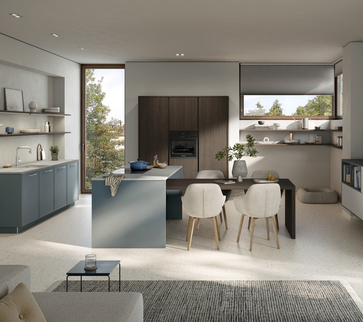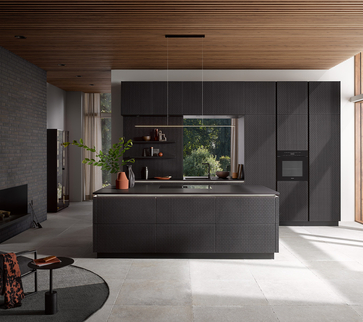
In this guide, we’ll walk you through the process from your initial considerations to the final installation in your kitchen. You’ll learn what a wine refrigerator does, what models and options are available, and what to look for when making a purchase. If you’d like to get a preview of high-quality appliances: Blaupunkt, as the in-house brand for Häcker Kitchens, provides the perfect built-in appliances, and Blaupunkt’s winerefrigerators demonstrate how technology and design can be seamlessly combined.
What is a wine refrigerator, and why is it worth buying one?
A wine refrigerator is a cooling appliance designed specifically for storing wine. Unlike a standard refrigerator, it doesn’t cool down to such low temperatures but instead maintains a constant, wine-friendly temperature—usually in the range of about 5 to 18 degrees. That may sound like a small difference, but in the glass, it makes all the difference. A standard refrigerator is designed for food: cold, dry, and with constantly fluctuating temperatures because the door is opened repeatedly. These are not ideal conditions for wine. The dry air causes corks to dry out, the cold slows the development of aKORFUs, and odors from other foods easily transfer to the wine. A wine refrigerator avoids all of this because it is designed exclusively for the needs of wine.
The Benefits at a Glance
Four factors determine proper storage—and a wine refrigerator takes care of them all:
- Consistent temperature: Consistency is more important than a specific “ideal” temperature. Temperature fluctuations are wine’s greatest enemy, and a wine refrigerator reliably keeps them at bay.
- Protection from light: UV radiation causes wine to age prematurely. Doors with tinted or UV-treated glass shield the bottles.
- Proper humidity: A humidity level of around 50 to 70 percent keeps the cork flexible, preventing air from reaching the wine.
- Quiet operation and vibration protection: Vibrations disrupt the aging process. A quiet-running unit allows the wine to rest undisturbed.

Wine refrigerator or wine cellar?
The classic wine cellar remains the dream of many wine connoisseurs—but very few apartments and houses have a cool, dark, natural cellar with a stable climate. This is exactly the gap that a wine refrigerator fills. It creates cellar-like conditions in even the smallest of spaces, can be precisely controlled, and can be placed exactly where you need it: in the kitchen, dining room, or living area. Whereas a real cellar depends on its location and structural integrity, this technology ensures consistent, controlled conditions.
Wine refrigerator or wine climate cabinet—what's the difference?
Both terms are often used interchangeably, but they refer to different primary functions. A wine refrigerator is primarily designed for cooling and serving—it brings the wine to the proper drinking temperature and stores it for a limited period of time. A wine climate cabinet goes a step further: It also regulates humidity and is designed for long-term storage and aging, often over the course of several years. For everyday use and enjoying wine, a well-equipped wine refrigerator is usually sufficient—especially a convenient dual-zone model.
Which wine refrigerator is right for you? – An Overview of Models and Variants
There’s no such thing as “the one right wine refrigerator.” Which model is right for you depends on how much wine you want to store, where you plan to place the appliance, and how it fits into your kitchen. Two questions will reliably guide you to the right choice: freestanding or built-in—and how many temperature zones.
Freestanding or built-in wine refrigerator?
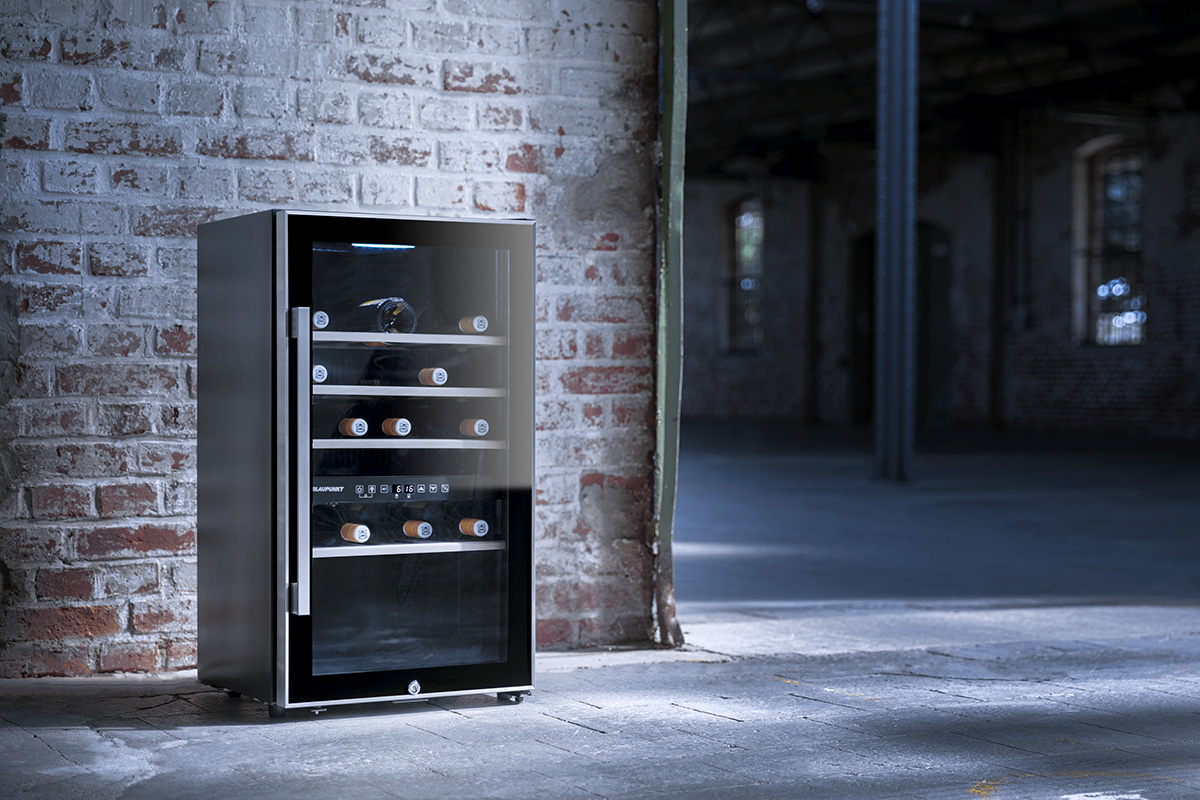
A freestanding wine refrigerator offers flexibility. You can place it wherever you want and simply take it with you when you move. As a standalone piece, it makes a bold statement—for example, next to the kitchen island, in the dining area, or as an elegant transition to the living room. Ventilation is key here: A freestanding unit needs some space all around it so that heat can escape.
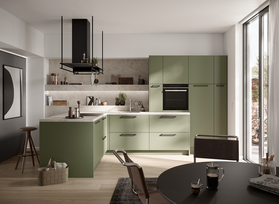
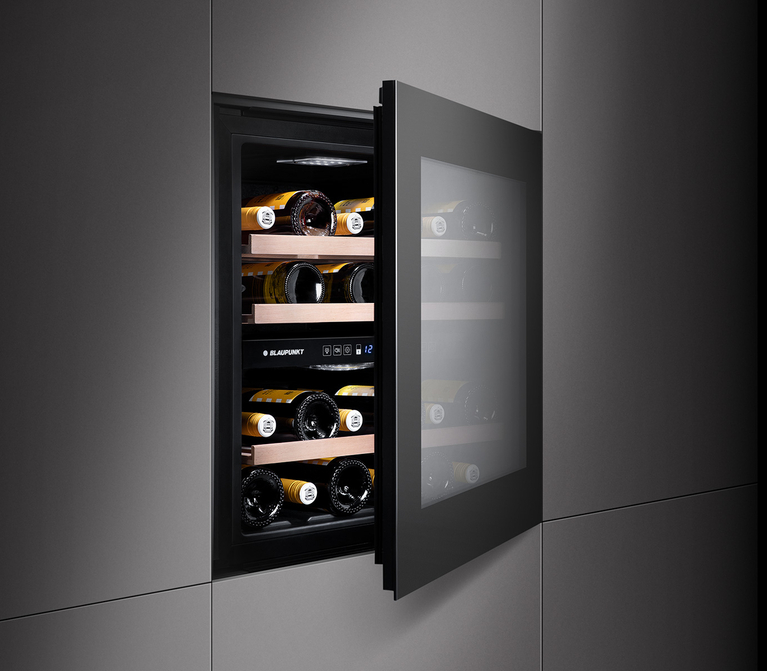
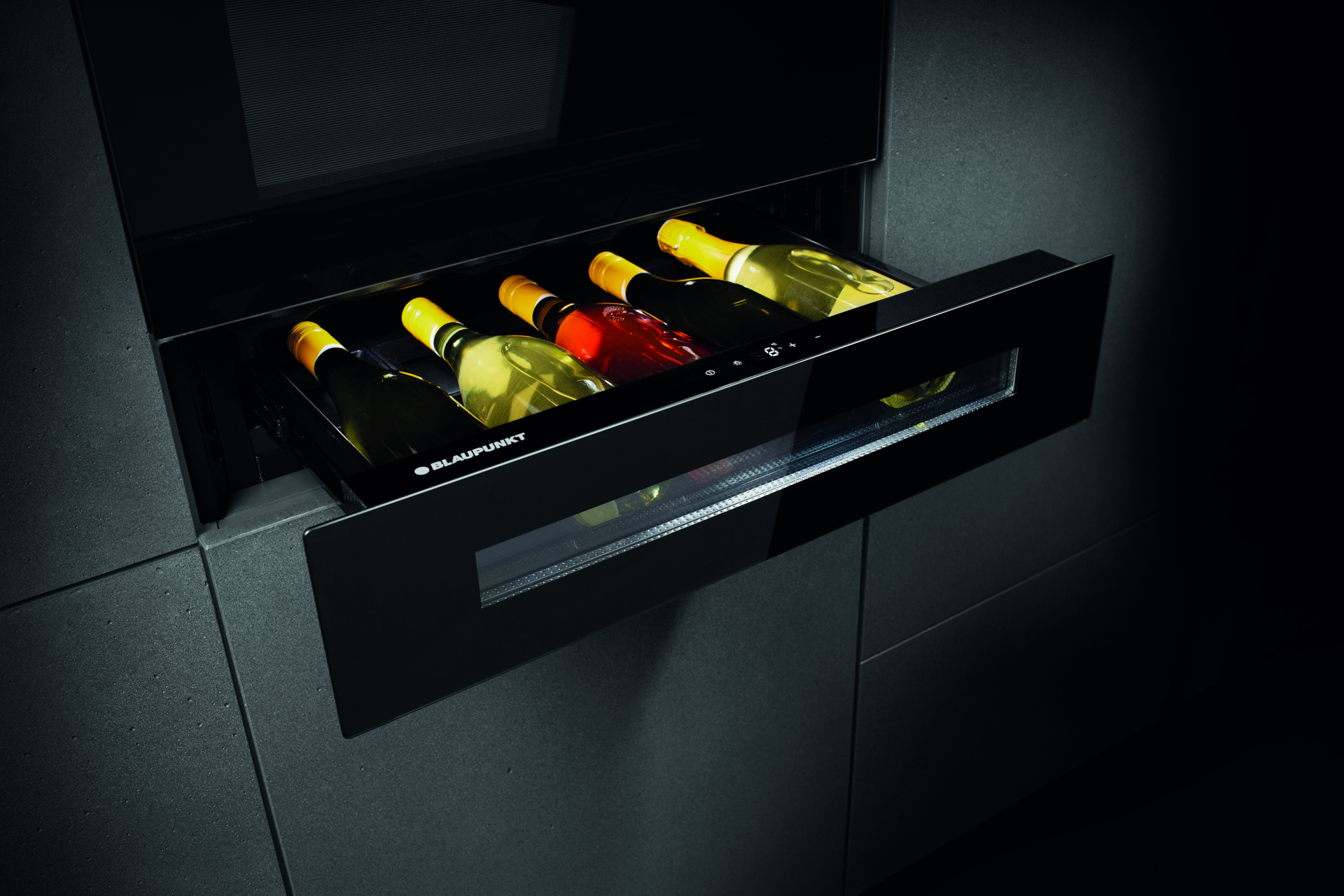
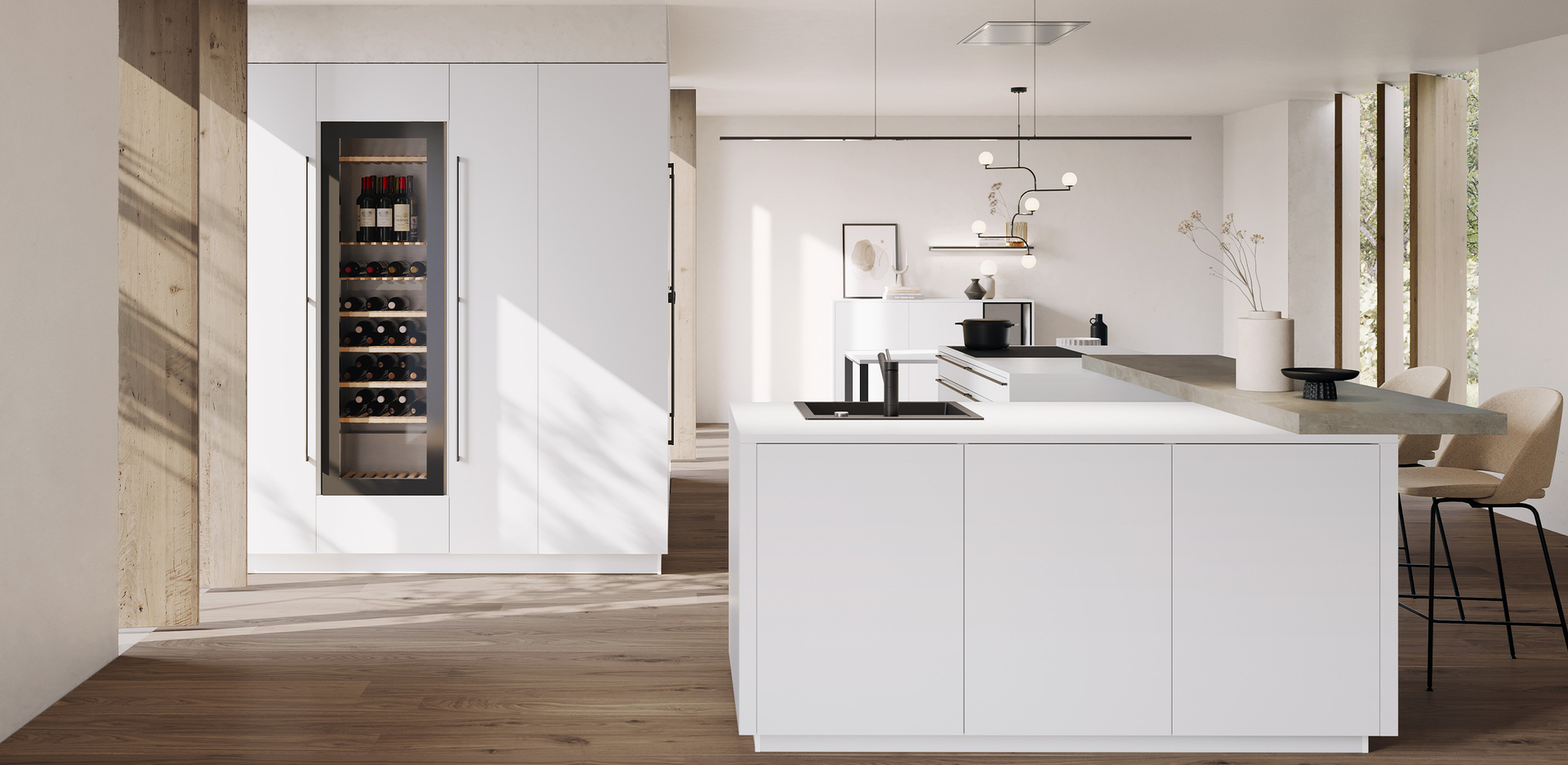
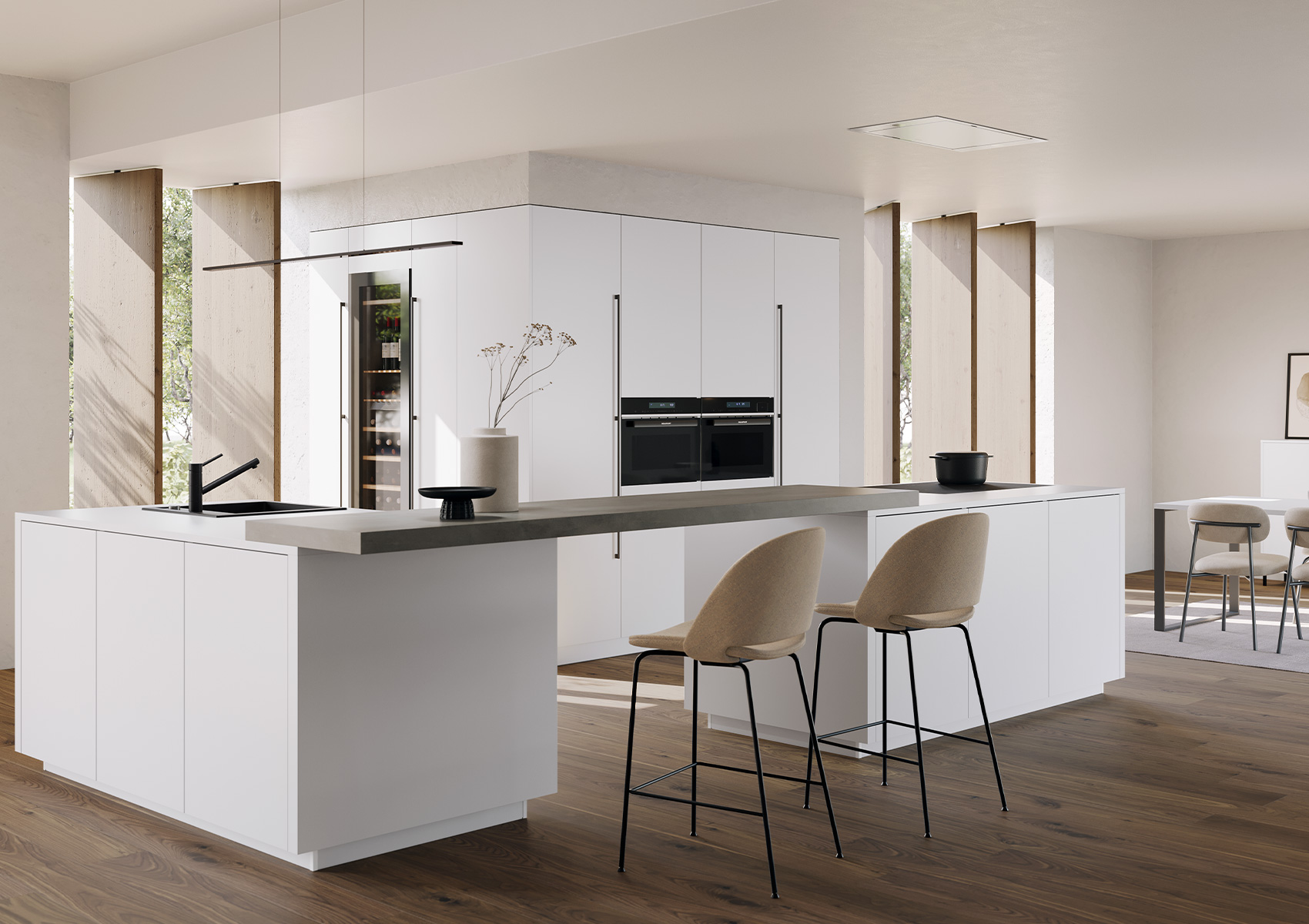
A built-in wine refrigerator, on the other hand, blends seamlessly into the kitchen layout. It can be integrated under the countertop or into a row of tall cabinets, becoming part of a calm, cohesive kitchen design. This solution is particularly appealing if you value a clean, architectural look. Built-in units are designed for use in a niche and dissipate heat toward the front. A particularly elegant option is the wine drawer: it fits into the cabinet front like a standard pull-out drawer and reveals its contents only when opened.
It’s best to plan exactly where the appliance will go right from the start. To learn how to effectively coordinate storage space, appliances, and traffic flow, read our guide on kitchen planning. This way, the wine refrigerator isn’t crammed in later, but is part of a cohesive design from the very beginning.
A wine refrigerator with one, two, or more zones—which is better?
The number of temperature zones determines how versatile your wine refrigerator is. It’s worth taking a closer look here, as this feature has the greatest impact on everyday use.
- Single-zone models maintain a single temperature throughout the entire interior. They’re a good choice if you mainly store one type of wine or use the cabinet primarily for storage.
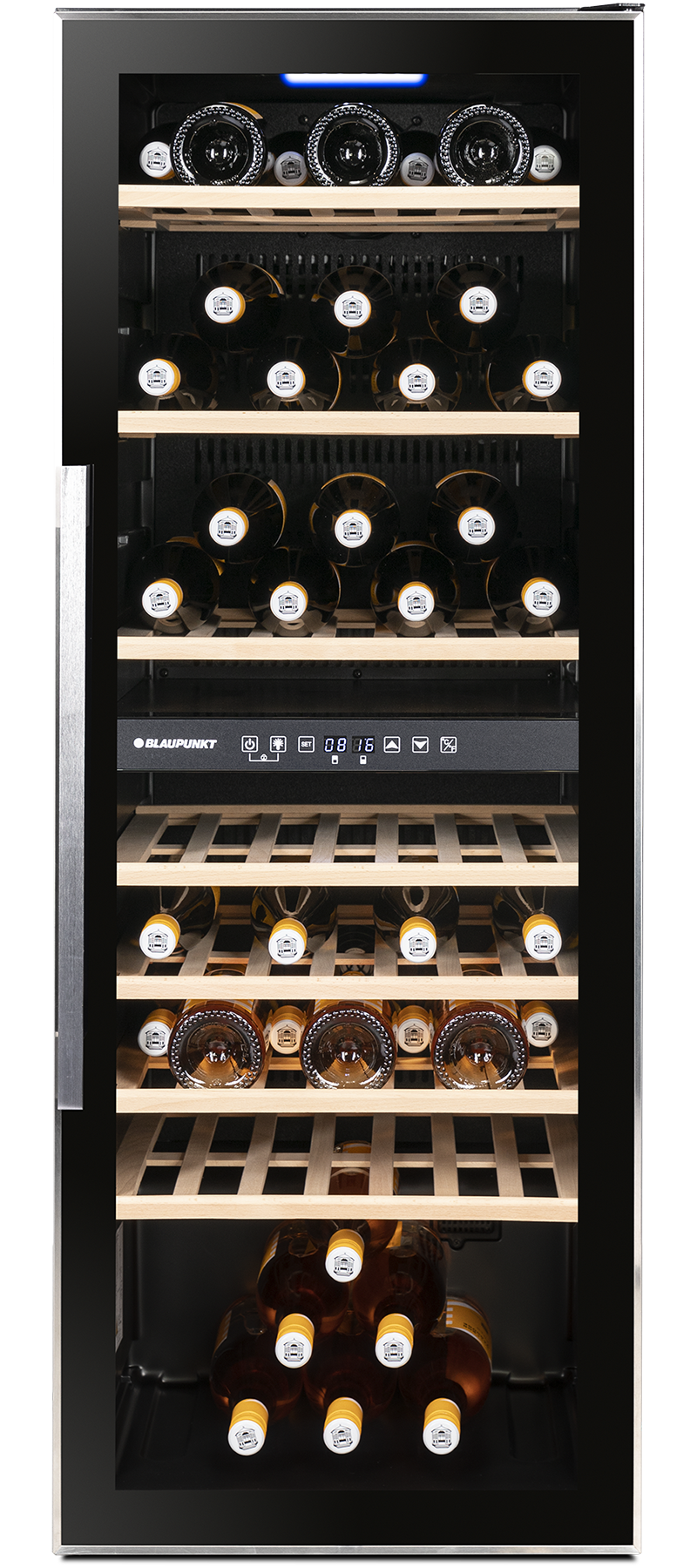
- Two-zone models divide the interior into two separately adjustable zones. For example, you can store red wine in the upper compartment and white wine in the lower one—each at its ideal serving temperature. A two-zone wine refrigerator is therefore the most convenient choice for most wine enthusiasts.
- Multi-zone models offer even finer temperature control and bring several types of wine to their respective optimal temperatures simultaneously.
Why different temperatures at all? Because every wine has its own ideal temperature range. As a rule of thumb: the lighter the wine, the cooler it should be served. Sparkling, white, and rosé wines are best enjoyed between about 5 and 14 degrees, while red wines are at their best at around 12 to 18 degrees. A 2-zone wine cooler covers exactly this range in a single unit.
| Wine Type | Recommended Serving Temperature |
|---|---|
| Sparkling wine, Champagne | approx. 5–8 °C |
| White wine, rosé wine | approx. 8–14 °C |
| Red wine | approx. 12–18 °C |
A small but useful tip from real-world experience rounds out the picture: Hold the glass by the stem, not by the bowl or base. This prevents the warmth of your hand from transferring to the wine, ensuring that the carefully set temperature is maintained until the first sip. So the right temperature starts in the wine refrigerator—and ends with the way you hold the glass.
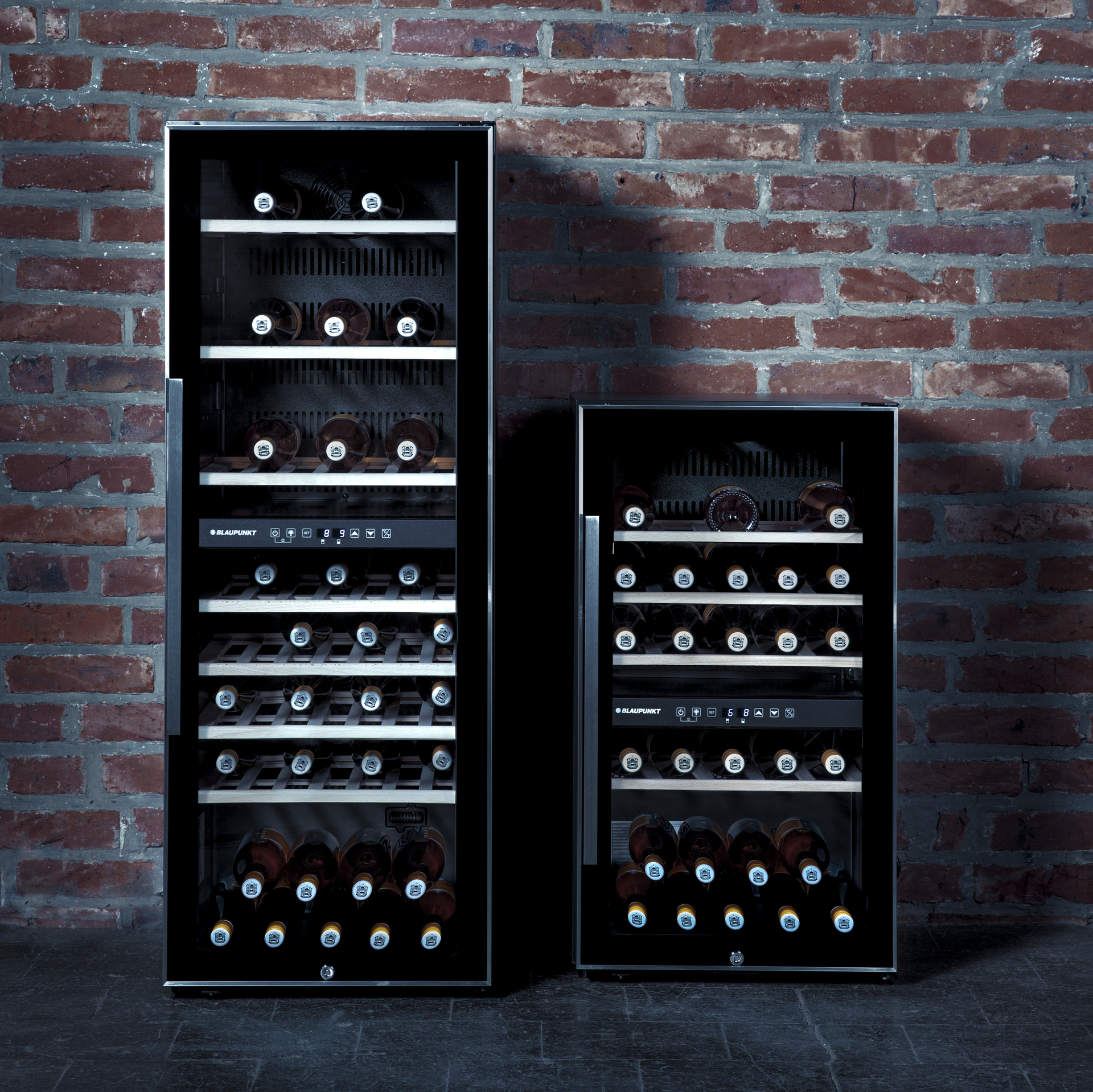
This is easy to see in practice: Blaupunkt’s freestanding dual-zone models, for example, hold around 49 or 75 bottles depending on size and divide their interior into two separately adjustable zones—so you can control both storage and serving temperatures at the same time.
What to Look for When Buying a Wine Refrigerator? – A Checklist for Beginners
If you're buying a wine refrigerator for the first time, you'll be faced with a lot of terms and numbers. The following checklist will help you find the right unit and avoid making a bad purchase.
Capacity and Number of Bottles
First, think about how much wine you typically want to keep on hand—and plan for a little extra, because a collection tends to grow. Compact units hold one to two dozen bottles and fit under the countertop. A large wine refrigerator holds 75 bottles or more and serves as a standalone piece of furniture. Keep in mind: The specified number of bottles usually refers to slender Bordeaux bottles. Bulbous Burgundy or Champagne bottles require more space, so the actual capacity will be slightly lower.
Temperature Range, Humidity, and Protective Features
Make sure the temperature range is sufficiently wide and finely adjustable—ideally with separate zones. Equally important are controlled humidity, effective UV protection provided by the glass door, and good vibration protection. These three factors determine whether your wine is merely cooled or truly well-stored.
Operation, Power, and Noise Level
Precise controls, such as a touchscreen display, make everyday use a pleasure. Also, be sure to check the energy efficiency rating, since the wine refrigerator runs around the clock. If you plan to place the unit in an open-concept living-dining area, it’s worth checking the noise level: levels around 41 decibels—such as those achieved by the freestanding Blaupunkt models—are pleasantly quiet and won’t disturb your evening.
Lockable for households with children
In households with children, a lockable wine refrigerator is a good idea. A built-in lock not only protects the valuable contents but also ensures that the set temperature is maintained, since the door won't be opened accidentally.
Care, Cleaning, and Maintenance of a Wine Refrigerator
To ensure your wine refrigerator operates reliably for many years, it needs a little regular attention—it doesn’t take much. It’s best to turn off the appliance for a thorough cleaning and temporarily set the bottles aside in a cool place.
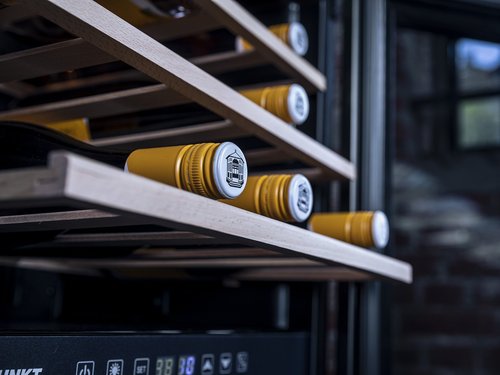
Wipe down the interior with lukewarm water and a mild, odorless cleaner. Avoid harsh or strongly scented cleaners, as their scent could transfer to the wine. Remove the wooden shelves for cleaning and dry them thoroughly. The door gasket also deserves a check: when kept clean and flexible, it closes reliably and maintains a stable climate inside.
Good air circulation is important to prevent odors and mold. After cleaning, leave the door open briefly until everything is completely dry. Also, keep the ventilation slots clear and dust them off occasionally. This ensures consistent cooling performance and low energy consumption.
Conclusion – Wine Fridge: A Gimmick or a Worthwhile Investment?
Do you really need a wine refrigerator? That depends on how you look at it. Anyone who appreciates wine as a luxury item will quickly realize that it’s less of a status symbol and more of an investment in enjoyment. It protects what matters to you, brings every drop to its ideal temperature, and turns a bottle of wine into a little experience. Consistent temperature, protection from light, optimal humidity, and quiet—these benefits pay off with every glass.
So, for whom is this purchase worthwhile? Beginners will find a compact two-zone unit to be the ideal companion for elevated everyday enjoyment. Collectors opt for a large wine refrigerator or a climate-controlled wine cabinet for long-term aging. And those who value design can make the unit a deliberate focal point in the kitchen or living room. One thing unites all three: the desire to enjoy wine exactly as it was meant to be enjoyed.
A wine refrigerator really comes into its own when it’s incorporated into your kitchen design from the very beginning. Capture your ideas with Häcker’s kitchenplanner and discover the perfect appliances in Blaupunkt’s world ofwinerefrigerators. If you’d like to take your planning a step further, a specialist advisor near you will guide you—it’s easy to find one using Häcker’s dealerlocator.
Frequently Asked Questions About Wine Refrigerators (FAQ)
How many bottles fit in a wine refrigerator?
That depends heavily on the model. Compact under-counter units hold about 18 to 30 bottles, medium-sized units hold about 40 to 50, and large freestanding models hold 75 bottles or more. Keep in mind that manufacturers’ specifications usually refer to slender Bordeaux bottles. If you store many bulbous Burgundy or Champagne bottles, the actual capacity will be slightly lower.
What is the difference between a wine cabinet and a wine bar?
A wine cabinet—whether a wine refrigerator or a climate-controlled wine cabinet—is designed for proper storage and temperature control. A wine bar is more of a piece of furniture or a designated area for displaying and serving wine, often with space for glasses and accessories. Many wine enthusiasts combine both: a wine refrigerator for the right climate and a wine bar corner for socializing.
How does a 2-zone wine climate cabinet work?
A unit with two zones has two separately adjustable cooling compartments, usually arranged one above the other. Each zone can be set to its own temperature. For example, you can store red wine in the warmer upper compartment and white wine in the cooler lower compartment—both at their ideal serving temperatures, without compromise.
Do I need a special wine cabinet for red wine?
No, you don’t need a separate cabinet just for red wine. The only important thing is the right temperature, around 12 to 18 degrees. If you want to keep both red and white wine at the optimal temperature at the same time, a 2-zone wine refrigerator is the most convenient solution because it combines both zones in a single unit.
Is a wine refrigerator too loud for the living room?
Modern units operate pleasantly quietly. Noise levels around 41 decibels are roughly equivalent to a quiet conversation and are hardly noticeable in the living or dining area. If you plan to place the unit in an open living space, be sure to check the specified noise level and look for good vibration protection when making your purchase.
How cool should wine be stored?
For long-term storage, a constant temperature of about 10 to 14 degrees is considered ideal, with a humidity level of around 50 to 70 percent. When ready to drink, the wine is then brought to its respective serving temperature: sparkling, white, and rosé wines between about 5 and 14 degrees, and red wines between about 12 and 18 degrees. What matters most is not the exact temperature but consistency—you should definitely avoid large fluctuations.