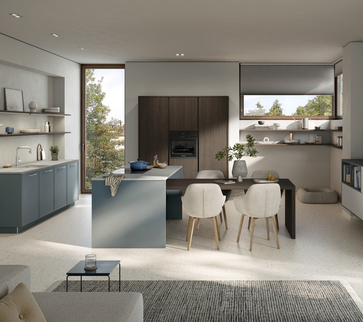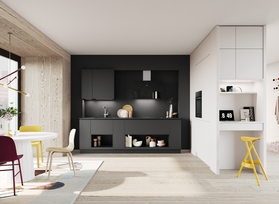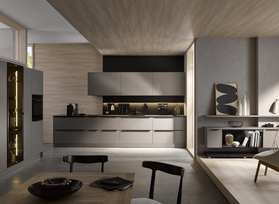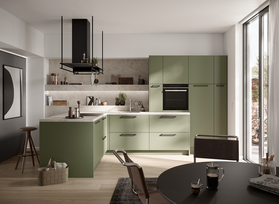
Discover industrial-style kitchens at Häcker Küchen
At Häcker, you’ll find the industrial style in both product lines: concept130 offers an urban and accessible take on it—for example, with the handle-less TOP SOFT in graphite or the metallic fronts of the VEGAS. The premium “systemat” line reinterprets it with cement, stone, and textured wood surfaces featuring precise craftsmanship.
Get an overview of Häcker’s kitchenstyles and let yourself be inspired—from the minimalist loft look to a characterful kitchen with vintage touches.
What is an industrial-style kitchen?
The industrial style has its origins in the converted factory floors and warehouses of major American cities. When artists and creatives moved into these spaces in the 1970s, steel beams, brick walls, and concrete floors remained exposed—pragmatism became a stylistic principle. This loft heritage continues to shape the industrial kitchen to this day.
Typical features are easily recognizable: exposed concrete or a concrete-look finish, metal in black or with a patina, brick walls, dark color tones, and open shelves that deliberately display dishes and pantry items. Added to this are clean-lined, handle-less, or deliberately technical cabinet fronts and sturdy countertops. Everything looks tidy but never sterile—the space is allowed to tell its story.
This is what clearly sets the industrial-style kitchen apart from other design styles. The country-style kitchen relies on framed cabinet fronts, light tones, and traditional details—as our article on the country-style kitchen demonstrates. The Scandinavian kitchen remains bright, friendly, and wood-accented. The industrial style, on the other hand, works with contrast and depth: darker, more striking, and more urban.

Materials & Colors in the Industrial Style
Metal, Wood & Concrete – The Perfect Combination
The industrial kitchen thrives on the tension between raw and warm. Steel, cast iron, and blackened metal bring in the technical aspect, while concrete and cement surfaces provide architectural calm. Wood—ideally with visible grain or as reclaimed wood with signs of wear—provides the warm counterpoint that keeps the space feeling alive.
It’s all about this balance: A kitchen made entirely of metal and concrete can quickly feel cold and uninviting. Only when combined with wood does the look become suitable for everyday use. At Häcker, this is achieved, for example, with finely textured wood fronts like LINEA in natural walnut, which can be paired with metallic surfaces and black steel shelves. The “systemat” line also offers fronts with a cement and stone look, which precisely capture the character of concrete and natural stone in kitchen design.
An overview of the key materials in industrial-style kitchens and their effects:
| Material | Effect in the Room | How to Use It |
|---|---|---|
| Steel and blackened metal | technical, precise, urban | Wall shelves, handles, fixtures, lighting, bar stools |
| Concrete and cement look | architectural, understated, expansive | Cabinet fronts, countertops, flooring |
| Wood with grain or reclaimed wood | Warm, vibrant, grounding | Cabinet fronts, shelves, countertop, dining table |
| Stone and granite look | Solid, monolithic | Kitchen island, countertop, backsplash |
| Brick and clay brick | Rough, steeped in history | Wall surfaces, kitchen backsplash, room dividers |
| Copper and brass | A warm accent in a dark color scheme | Faucets, handles, light fixtures, accessories |

Color Palette for Industrial-Style Kitchens
The color palette of the industrial style is muted and deep. Black, gray, and anthracite form the foundation, complemented by dark brown and earthy metallic tones. This palette lends the kitchen its distinctive sense of calm—and makes materials like wood and stone stand out all the more.
Add accents strategically: copper and brass bring warmth to the dark color scheme, for example through faucets, light fixtures, or handles. Muted shades like dark green also work well, as long as they remain matte and earthy. Our article on colorful kitchens shows you how to use color confidently in the kitchen.
Industrial-Style Kitchen Furniture
Industrial-style kitchen furniture follows a simple principle: exposed structure instead of decorative paneling. Open shelves made of blackened metal or dark wood display what other kitchens hide. Solid countertops, cabinet fronts—either handle-less or fitted with sturdy metal handles—and clean-lined cabinet modules form the basic framework.

Behind the rugged look, the technology can be state-of-the-art. Full-extension drawers—drawers that slide out completely—well-thought-out interior organization, and illuminated niches with metal railings combine the look with the comfort of a modern built-in kitchen. This ensures that the kitchen remains just as impressive in everyday use as it is at first glance.

These go well with standalone pieces that have a workshop-style feel: a kitchen island on casters, bar stools with metal frames, or an old factory cabinet used for storage. It’s precisely these kinds of vintage pieces that give the kitchen its unique character—it should look like a collection rather than a uniform whole. It’s important to have a simple, understated foundation made of just a few materials so that the individual pieces really stand out.

Kitchenette or Open-Concept Kitchen-Dining Area? Space Solutions with an Industrial Look
The Industrial-Style Kitchen Unit
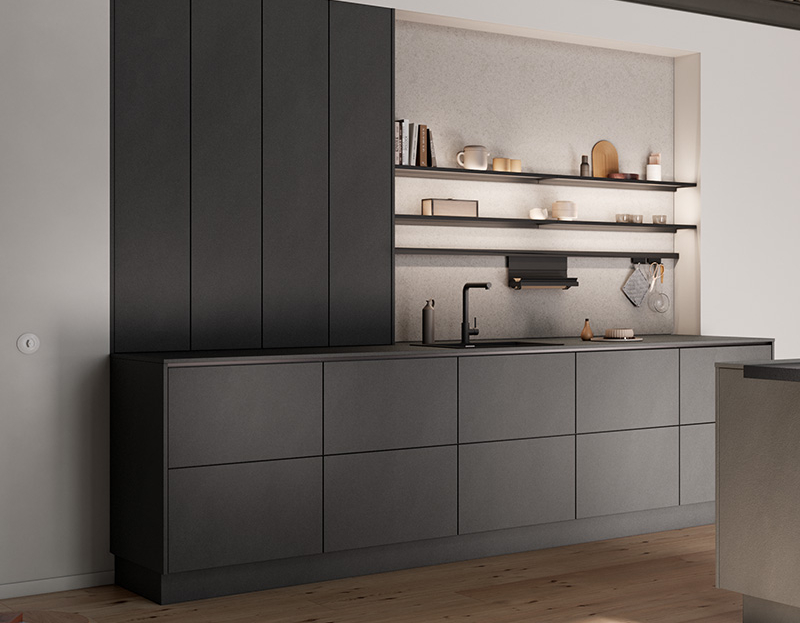
You don’t need a loft to pull off the industrial style. An industrial-style kitchen works just as well in a compact space—precisely because the style emphasizes clean lines and minimalist design. A dark kitchen unit with handle-less fronts, a niche with a metal railing and open shelves, plus black fixtures: that’s all it takes to set the tone.
In small spaces, the style’s clean, organized aesthetic pays off twice over. Tall cabinets make the most of the ceiling height, closed cabinet fronts keep the look uncluttered, and open elements are used sparingly. You’ll find many more ideas for compact layouts in our guide to kitchens for singles.
Loft-style open kitchen
The industrial style really comes into its own in an open-concept kitchen-dining-living area. When the cooking, dining, and living areas flow seamlessly into one another, it creates exactly the spacious feel that defines the loft concept. An open-concept industrial-style kitchen uses materials that flow seamlessly throughout the space: the concrete floor continues uninterrupted, and the dark color scheme ties the zones together.
The centerpiece is usually a spacious kitchen island—serving as a workspace, a gathering spot, and an architectural statement all at once. A kitchen counter with metal bar stools also fits perfectly: it defines the open space without dividing it. Combine the kitchen with living room furniture in the same style—dark wood, metal frames, leather—so that the space feels like a cohesive whole.
Lighting & Accessories: The Cherry on Top of Industrial Design
In industrial design, light is more than just a function—it’s part of the overall presentation. Filament bulbs with visible filaments, pendant lights made of smoked glass or metal, and track lighting systems mounted on the ceiling evoke a workshop aesthetic and add warm accents to the dark color scheme. Above the kitchen island, several pendant lights arranged in a row create a particularly striking effect.
When it comes to accessories, the rule is: few pieces, but each full of character. An old factory clock, enamel signs, metal shelves with glassware and dishes, or cutting boards made of solid wood continue to tell the story of this style. The niche above the countertop can also be designed in a workshop style with a railing, hooks, and shelves—both practical and stylish. You’ll find more inspiration in our ideas for kitchen decor.
Industrial-Style Kitchens: Examples & Inspiration
Three examples from the Häcker product lines demonstrate just how differently this style can be interpreted. The spectrum ranges from modern-minimalist to rustic-vintage—and clearly illustrates just how much leeway there is between these two extremes.
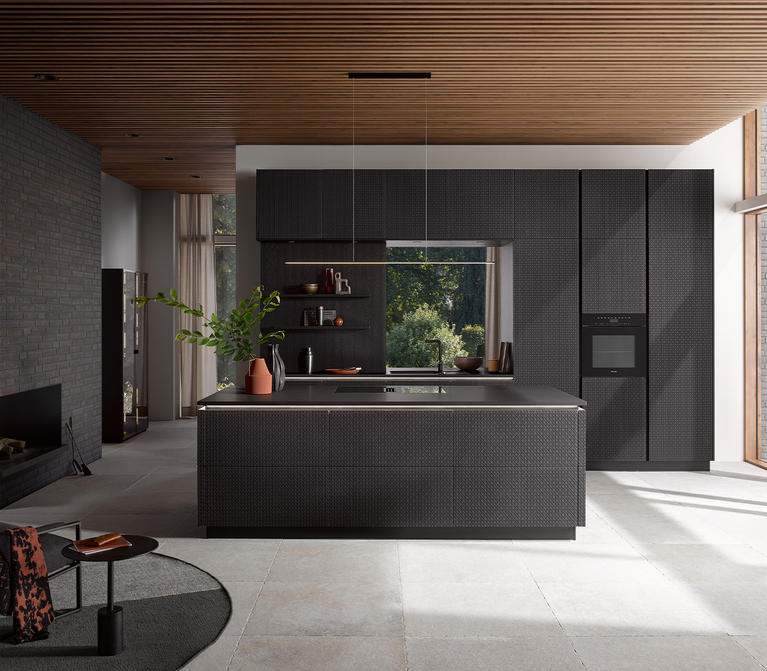
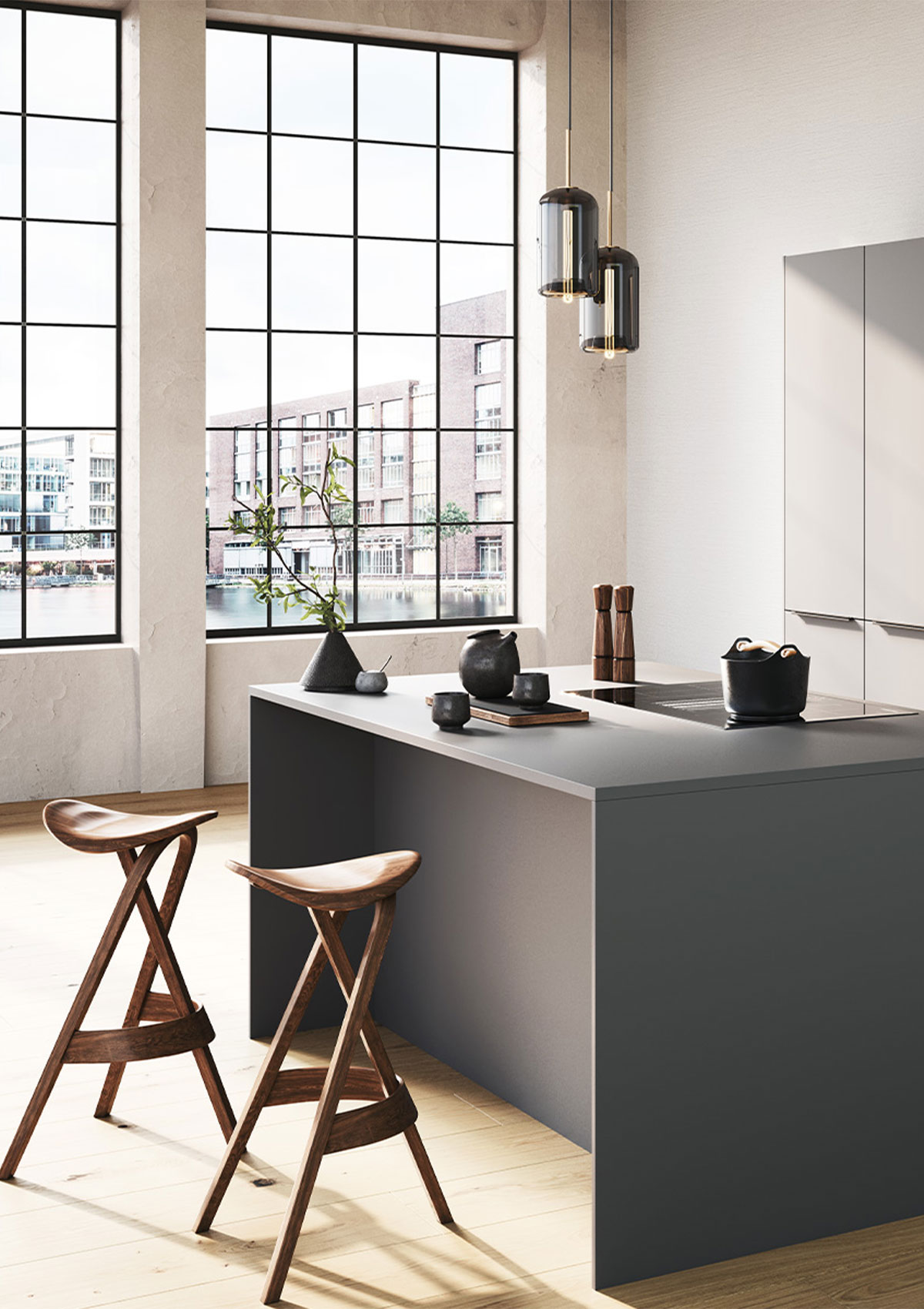
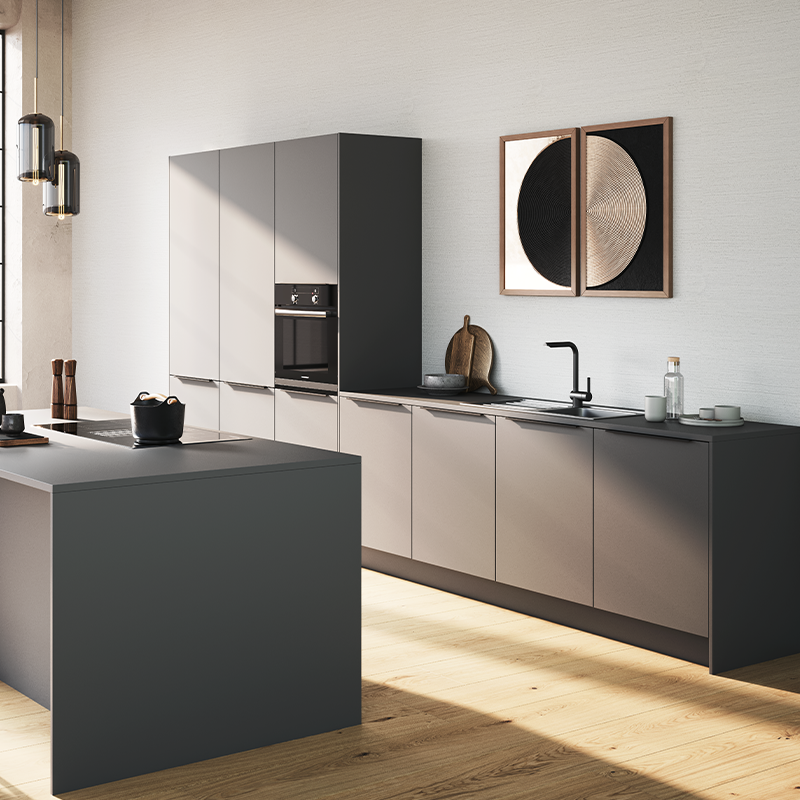
Modern-minimalist: The handle-less TOP SOFT in graphite from the concept130 line embodies the minimalist interpretation—a monolithic cooking island, clean lines of tall cabinets, and dark matte surfaces. Set against factory windows and brick walls, it exudes a classic loft aesthetic.
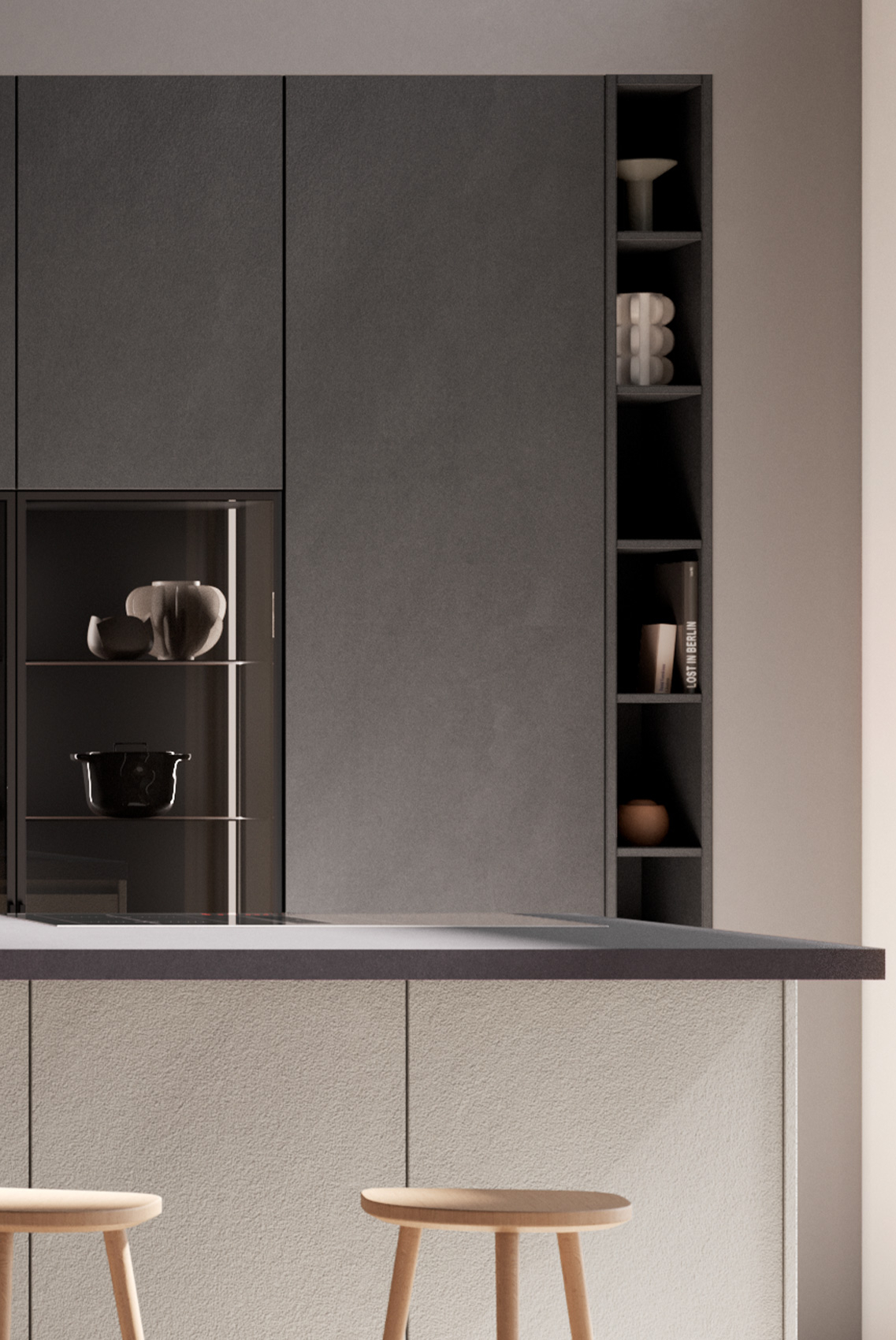
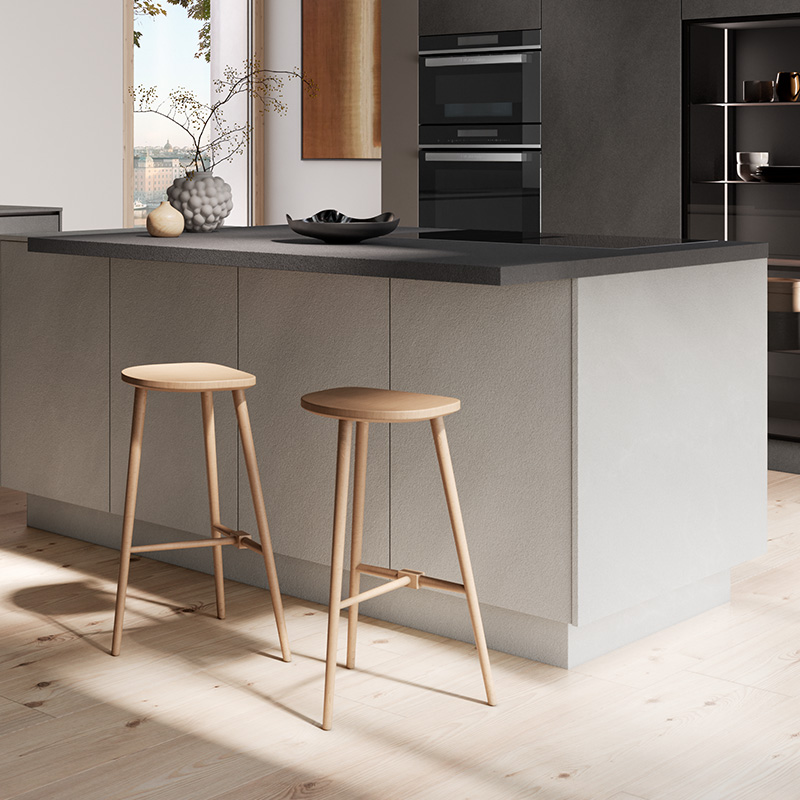
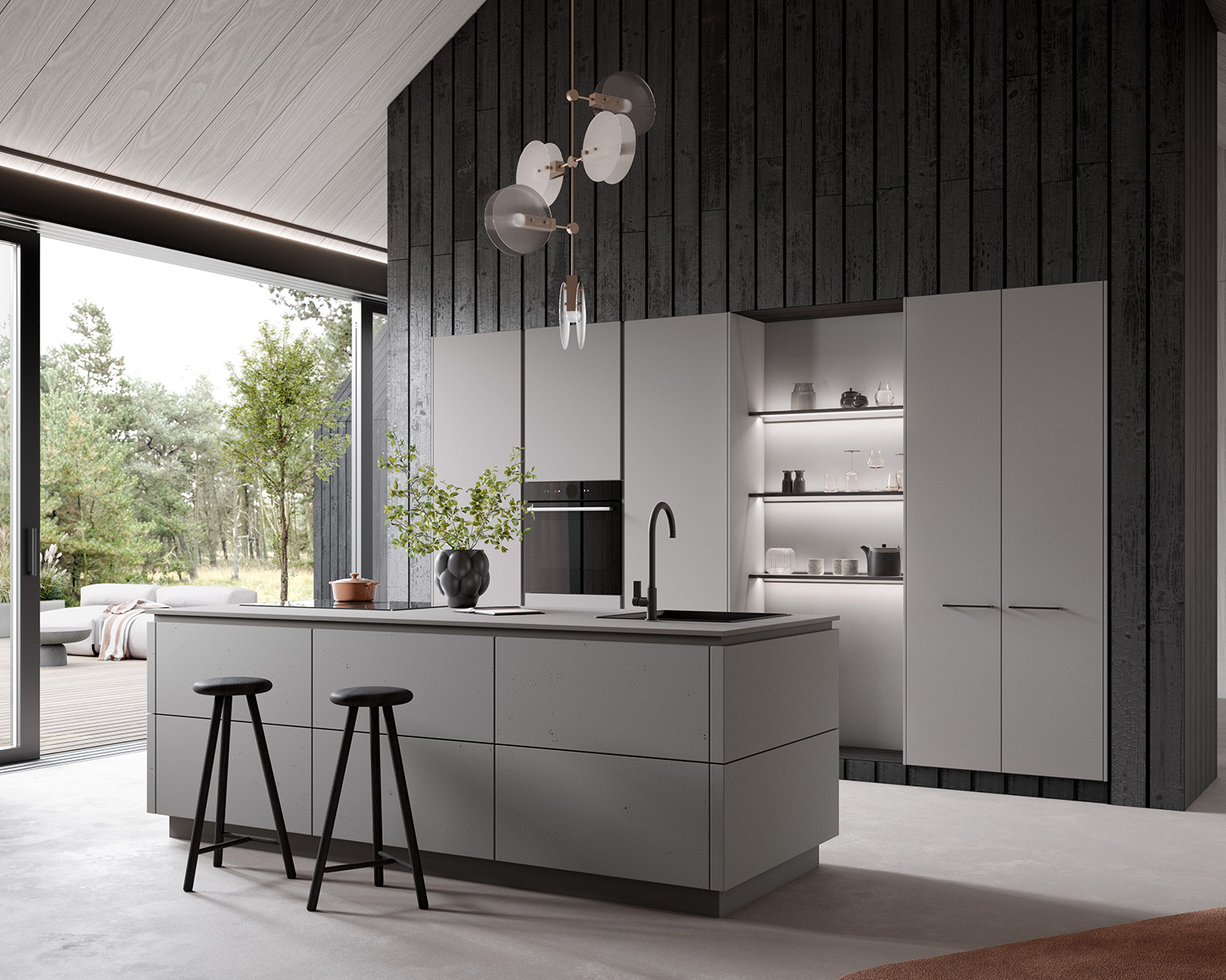
Architectural precision: The premium “systemat” line translates this style into materials: The AV 2010-GL in dark gray cement brings a concrete aesthetic to the front, while the AV 3050 in dark gray granite transforms the kitchen island into a monolith with a stone-like appearance. Thanks to systemat’s exclusive RAL and NCS paint finishes produced in-house, the color palette can be precisely coordinated.
Warm and vintage-inspired: Those who prefer more character can combine wood and metal—such as the finely textured LINEA in natural walnut with metallic fronts from the VEGAS line, or the textured AV 6085-GL in black oak set against a brick wall. Here, the industrial kitchen takes on a noticeably warmer, almost workshop-like feel.

How to Design Your Industrial-Style Kitchen
It all starts with the floor plan. Determine which kitchen layout suits your space—from a straight line to an L-shape to an open layout with an island. Our article on kitchenlayouts provides a structured overview; to learn how to turn your initial idea into a cohesive concept, read our guide to planning a kitchen.
Next come the style-defining decisions: the combination of materials—metal, wood, and concrete-look finishes—the color palette ranging from black to anthracite, plus cabinet fronts, countertops, and niche design. Be sure to plan your storage space thoughtfully—closed tall cabinets with full-extension drawers keep the backs of cabinets out of sight, allowing open shelves to make the most impact. When it comes to appliances, dark, clean-lined models consistently carry the look forward.
You can easily jot down your initial ideas in Häcker’s kitchen planner. For detailed planning, it’s worth visiting a specialty retailer: your consultant will precisely tailor materials, dimensions, and features to your space. When you’re ready to buy your kitchen, you can find the right contact person near you directly through the Häcker website.

Conclusion – Industrial Style: Raw Aesthetics, Meticulously Planned
The industrial-style kitchen combines two qualities that rarely go hand in hand: striking character and clear functionality. Metal, concrete, and wood, along with dark colors and open layouts, create a space with presence—from a compact apartment to an open-concept loft.
The key is striking a balance between raw and refined. Behind the cement-look finishes and steel shelving, Häcker offers precise planning, high-quality craftsmanship, and technology that makes everyday life easier. Let yourself be inspired—and use the industrial style to create your own interpretation of urban living.
Frequently Asked Questions About Industrial-Style Kitchens (FAQ)
How much does an industrial-style kitchen cost?
That depends on the size, materials, and features—there’s no set price. The main factors affecting the price are the cabinet fronts (ranging from decorative finishes to metallic, cement, or stone looks), the countertop, the appliances, and the number of cabinets and pull-out drawers. You can get a reliable estimate for your space during a personal consultation with a Häcker dealer, who will work with you to finalize the design and budget.
Which appliances go well with the industrial look?
Appliances in dark finishes look most harmonious: ovens and cooktops in black or dark stainless steel, preferably with a clean, technical aesthetic. Retro appliances with distinctive controls also suit the style, provided the rest of the kitchen remains understated. When it comes to range hoods, you have two equally valid options: a striking hood as a visible statement above the cooktop—or a cooktop with an integrated range hood that draws fumes directly downward and keeps the sightlines unobstructed in an open-concept space. For Häcker kitchens, the in-house brand Blaupunkt offers both solutions, including matching ovens, cooktops, and refrigerators.
How can I redesign an existing kitchen in an industrial style?
Often, targeted changes are all it takes. Swap out handles for black metal ones or bar-style handles, replace the lights with filament or metal pendant lights, and redesign the niche—for example, with a dark backsplash, a metal railing, and open shelves. An open steel shelf, bar stools with metal frames, and accessories like a factory clock also significantly change the look. If you want to take it a step further, focus on the countertop or wall design: concrete-look finishes or brick elements can bring that loft-style character into the room, even as a retrofit.
What is a vintage industrial-style kitchen?
The vintage version combines industrial design with retro elements and visible history. Instead of pristine surfaces, materials are allowed to show patina: weathered wood, matte metal, and finds from the flea market. Typical features include old workbenches or factory cabinets used as kitchen furniture, retro appliances, and a warm lighting ambiance created by filament bulbs. The result is a kitchen that feels less austere than the minimalist version—it’s unique, organic, and full of narrative charm.