The Charm of Days Gone By: What Does "Vintage" Mean?
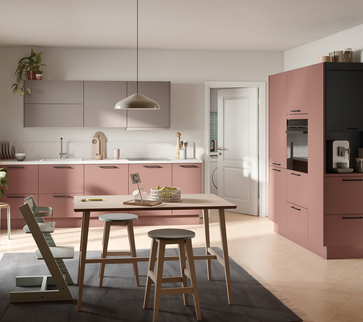
Vintage doesn't mean old. Vintage means: stylishly old-fashioned. It refers to a design that draws on the shapes, colors, and materials of past decades and adapts them to a modern kitchen. Typical features include soft, slightly muted shades, charming details, gentle curves, and materials like wood, enamel, and ceramic.
The term is often confused with related styles, and it’s worth understanding the differences. A retro kitchen is usually bolder: bold colors, geometric patterns, and sharp contrasts—if you like this style, you’ll find inspiration in our article on colorful kitchens. The antique look, on the other hand, relies on genuine historical furniture and dark, heavy woods. Shabby chic thrives on deliberate imperfection, worn edges, and distressed details. And the country house style is designed to be rustic and traditional; our guide to country-style kitchens shows how to incorporate this look into modern designs.
Within the vintage style, there are also distinct stylistic signatures from specific decades. A 1950s-style kitchen features pastel tones, soft shapes, and chrome accents. The 1960s bring clean lines and bolder color blocks. The ’70s are characterized by warm earth tones—mustard yellow, orange, olive—and large expanses of wood.
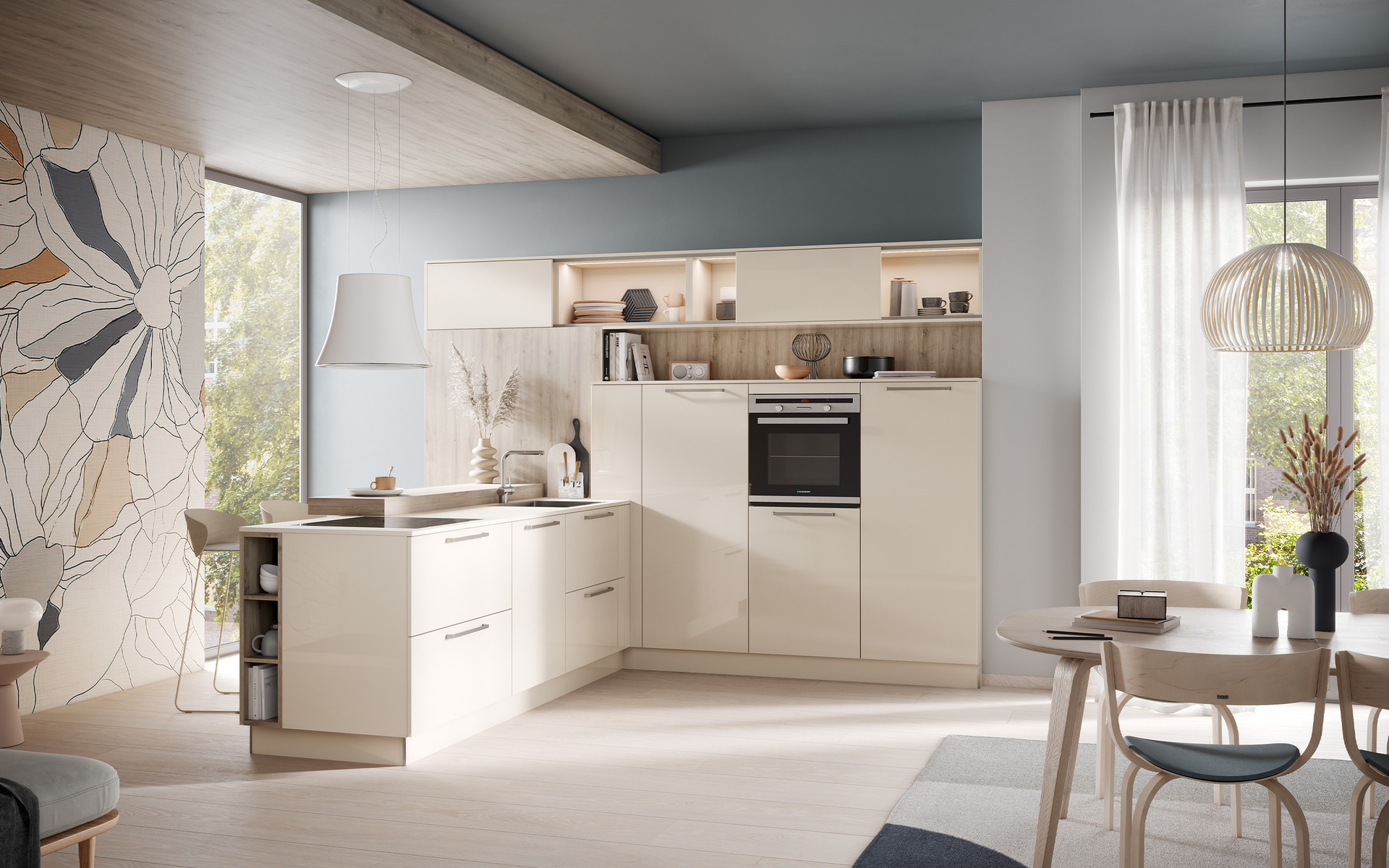
Why does this work so well today? Because this style achieves something that many modern kitchens struggle to create: warmth. Muted colors and familiar shapes take the edge off the room’s austerity and turn it into a place to linger. We also describe how to intentionally enhance this feeling in our article on the cozy kitchen.
A second reason is practical in nature. Vintage kitchens are more forgiving than high-gloss, strictly flush-mounted designs. Matte surfaces and patterned floors show fingerprints and crumbs less clearly, while open shelves make everyday life visible rather than hiding it. Anyone who cooks with children or enjoys having guests around often finds this a relief.
And finally, you can tailor the style to your liking. Some design their entire kitchen in a retro style, while others incorporate just two or three touches—a pendant light, a tile backsplash, a few handles. Both approaches are valid. It’s not a set of rules, but rather a collection of ideas from which you can draw inspiration.
An Overview of the Most Important Vintage Kitchen Elements
A vintage-style kitchen is rarely created with just a single piece of furniture. It comes together through the interplay of cabinet fronts, appliances, surfaces, and decor. The following three elements will help you build this style step by step.
Furniture for the Vintage Look
Vintage kitchen furniture likes to show that it’s furniture. Instead of a wall of tall cabinets that’s completely flush with the surface, here it’s okay for something to stand, hang, or remain visible. A freestanding-style buffet cabinet with glass doors, a display cabinet above the countertop, or a retro-style kitchen island instantly adds character to the room.
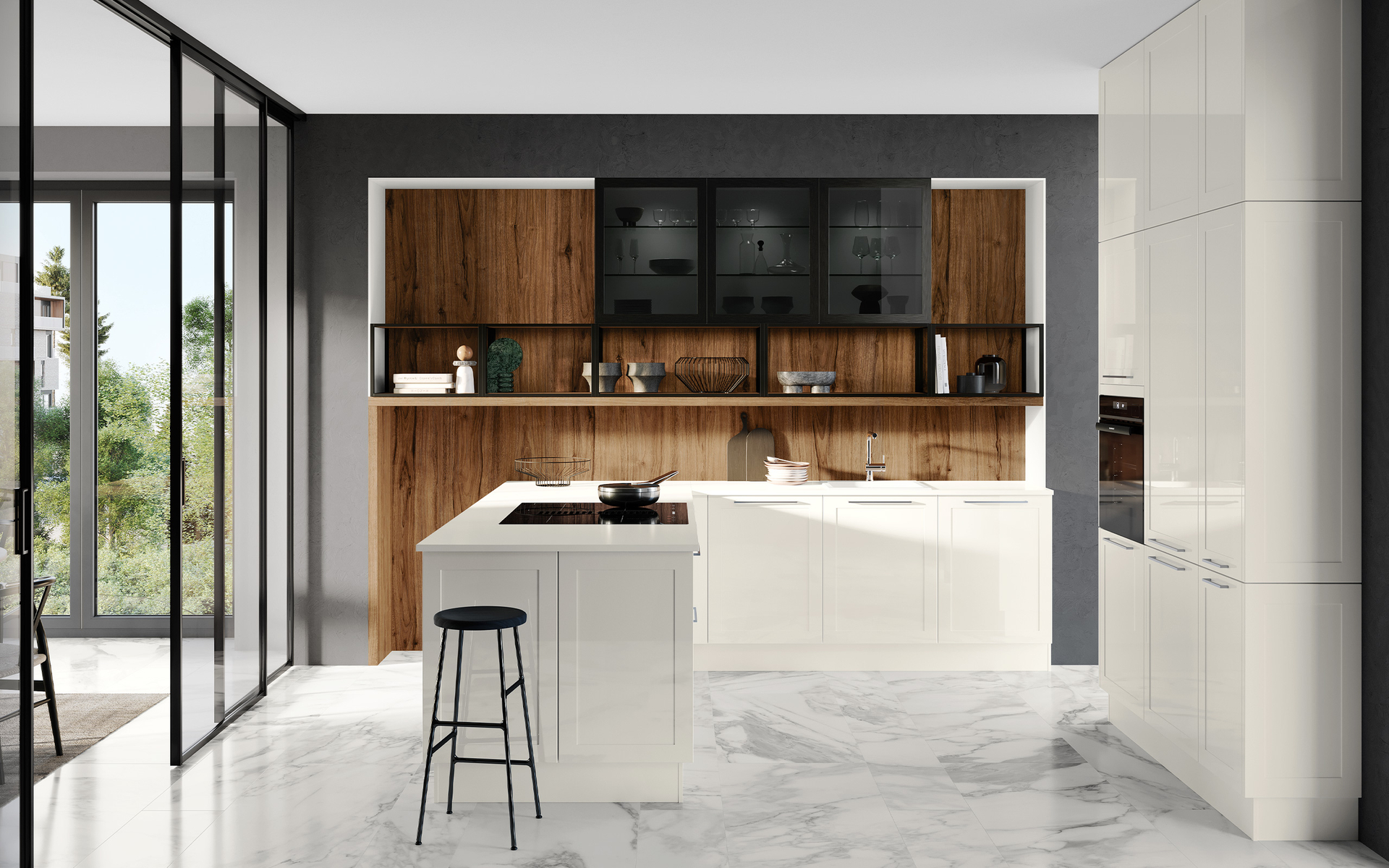
Framed fronts—that is, fronts where a surrounding frame encloses a recessed central panel—are particularly defining of the style. They create shadowed edges and thus a sense of depth that smooth fronts lack. When combined with illuminated glass display cabinets, this creates the impression of a piece of furniture that has grown into the space rather than a built-in unit.
Open shelves are also part of the look: dishes, glasses, and storage jars become part of the design. If you take this concept to its logical conclusion, you’ll do away with traditional upper cabinets entirely—read our article on kitchens without wall cabinets to learn about the alternatives. And a kitchen island doesn’t have to look sleek and modern at all: with warm wood, a muted color, and a counter for seating, it quickly takes on a nostalgic feel.
Retro-style appliances
Refrigerators with rounded corners, pastel-colored toasters, espresso machines with chrome levers: Retro-style appliances are often the quickest way to achieve that vintage feel. They catch the eye because they deliberately stand out from flush-mounted built-in appliances.
The appeal lies in the contrast: nostalgic on the outside, state-of-the-art on the inside. Modern appliances with a vintage look meet current safety and operating standards, and their energy efficiency rating is clearly labeled, just like any new appliance. In terms of everyday practicality, this means you’re buying the look—not the drawbacks of old technology.
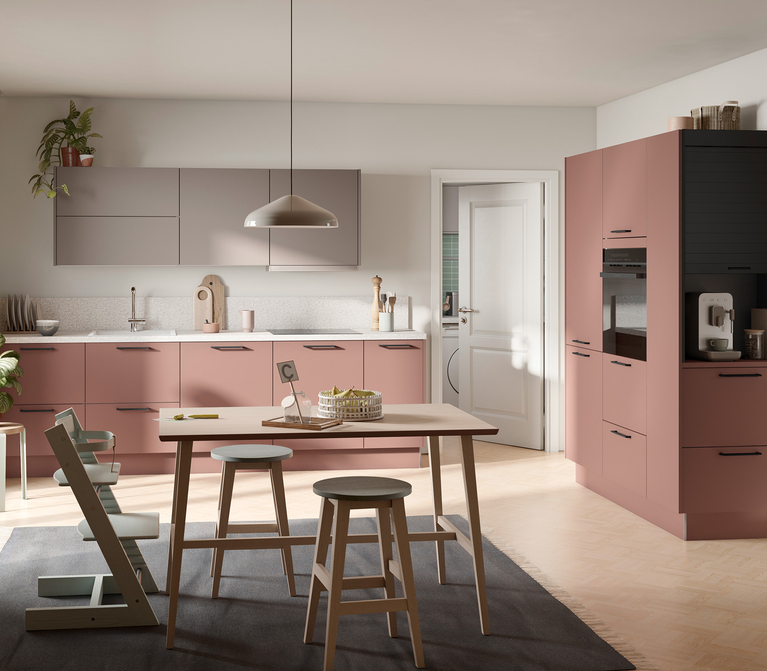
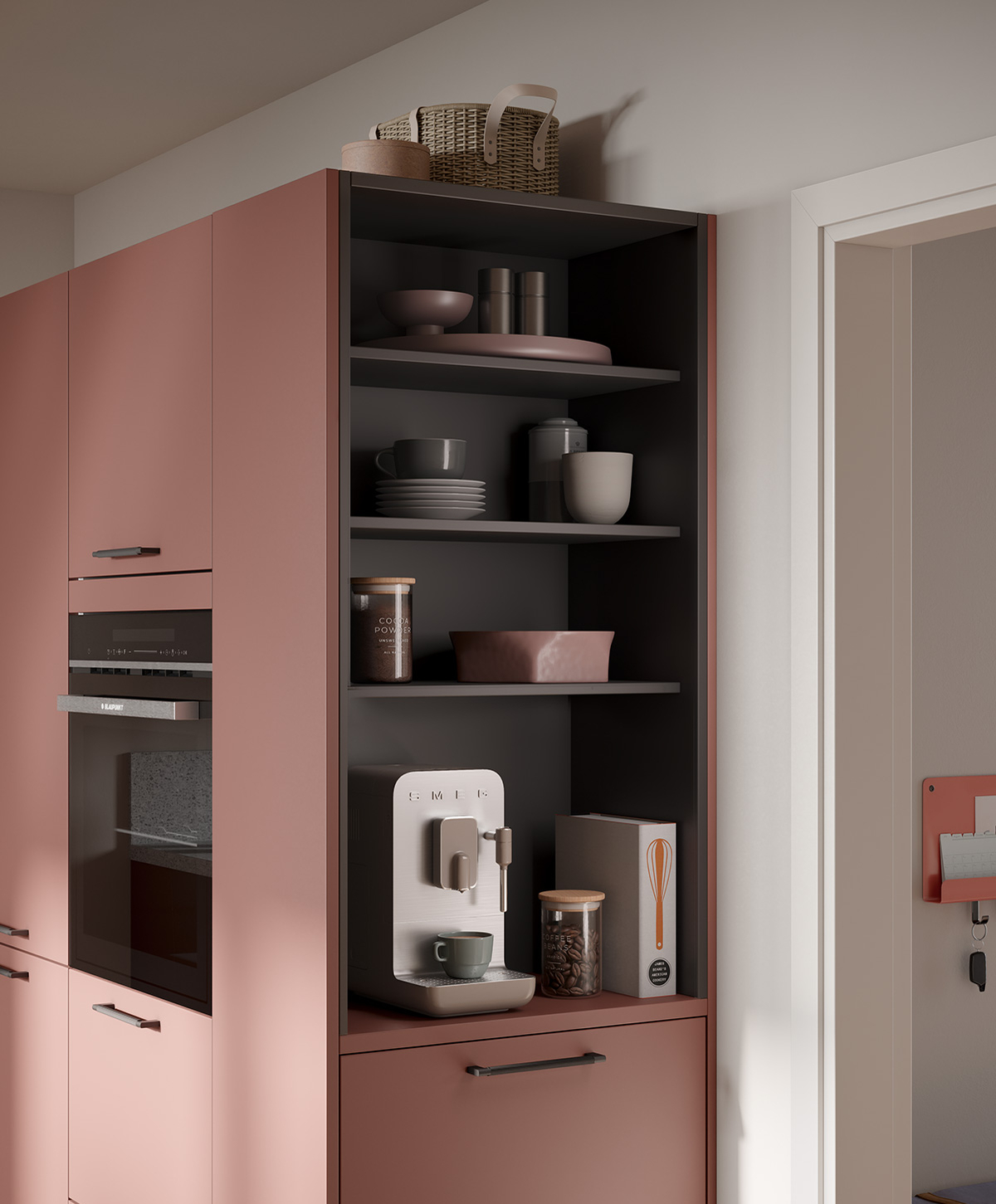
To keep the look cohesive, one simple rule has proven effective: one or two freestanding retro appliances as accents, with the rest built-in. The oven, dishwasher, and refrigerator are then hidden behind cabinet fronts—at Häcker, for example, with built-in appliances from their in-house brand Blaupunkt, which have a discreet design. A roller-shutter cabinet is ideal for this: Behind its slats, the coffee maker and toaster are within easy reach and can be hidden from view in a single motion.
There’s also creative freedom when it comes to cooking itself. A striking wall-mounted range hood complements the nostalgic look and can remain visible. On the other hand, those who prefer to keep the line of sight unobstructed can choose a cooktop vent—also known as under-counter ventilation—which extracts steam directly downward; a ceiling fan is another option. Both solutions are equally valid; the deciding factors are the floor plan, cooking habits, and personal taste.
Vintage Charm for a Makeover: Floors, Walls, Handles, and Retro-Style Decor
Not every kitchen needs to be completely remodeled to have a nostalgic feel. Much of the look comes from surfaces and details that can be replaced individually.
For the floor, classic wooden planks or wood-look planks set a calm, warm tone. If you want a bolder look, choose black-and-white checkerboard tiles or cement tiles with a nostalgic pattern. Terrazzo is also making a comeback: this speckled flooring was a hallmark of kitchens in the ’50s and ’60s and looks surprisingly fresh today. A retro vinyl floor is the practical alternative if the subfloor doesn’t allow for extensive renovation.
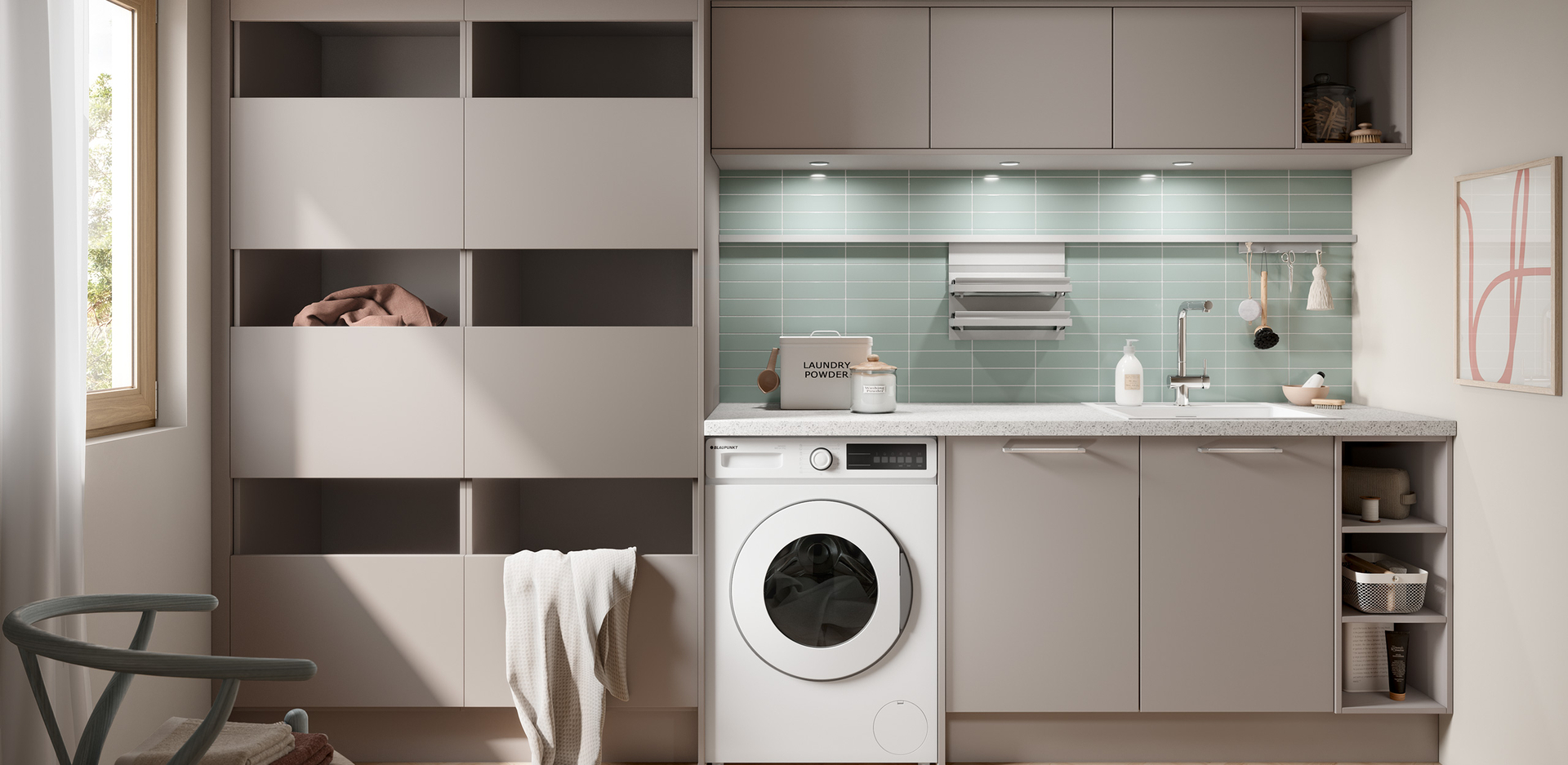
On the walls, the tile backsplash sets the tone. Pastel-colored metro-style tiles—in shades like mint, sage, or dusty pink—are arguably the most iconic hallmark of this style, especially when paired with contrasting grout. Alternatively, patterned wallpaper with floral or graphic motifs adds a touch of flair, usually on a single wall.
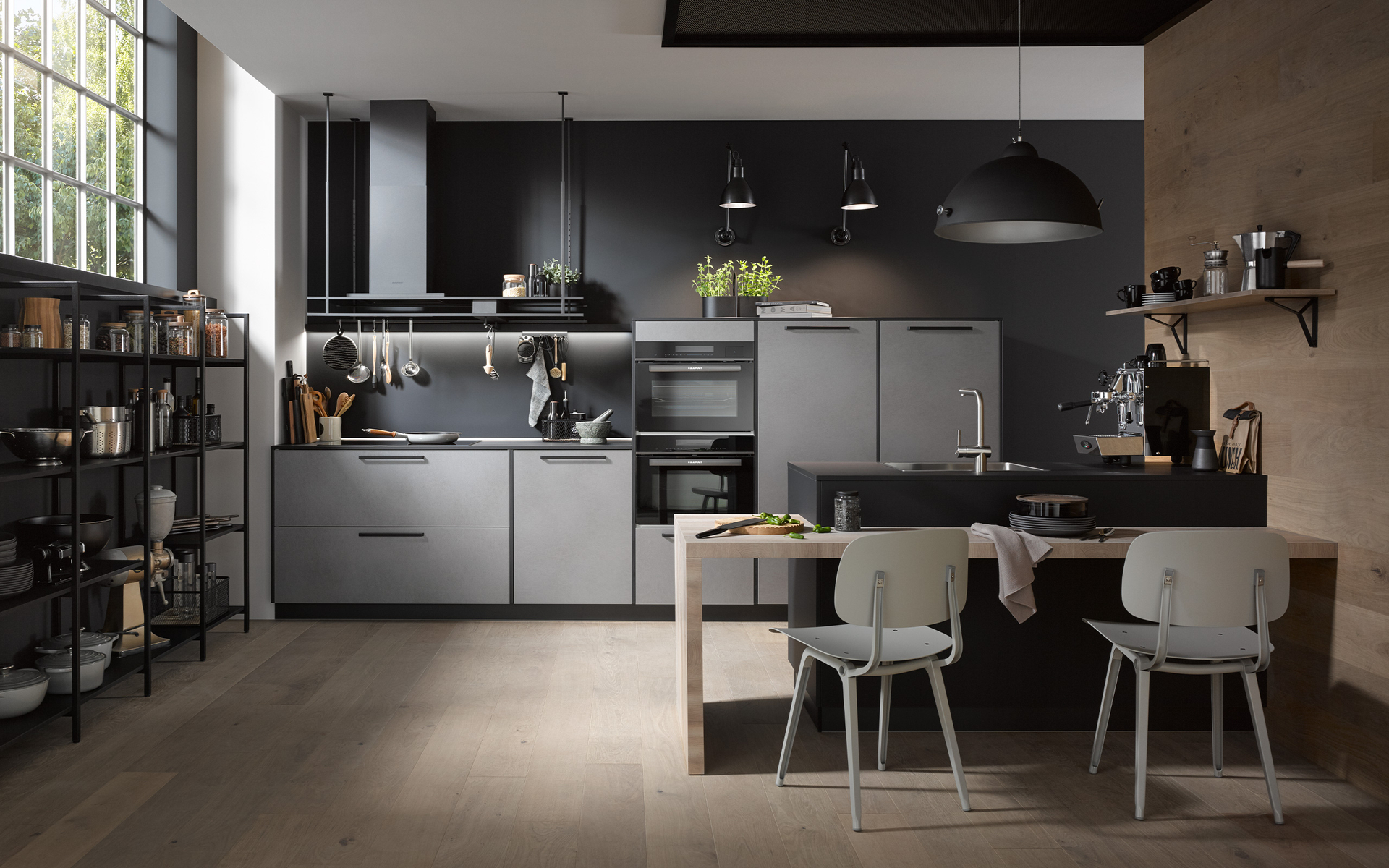
When it comes to lighting, pay attention to the shape of the fixtures: pendant lights made of enamel or metal, glass shades with a light patina, and industrial-style wall sconces with swivel arms. It’s still important that work surfaces are well lit—our article on kitchen lighting shows how to combine ambiance and functionality.
And then there are the little things that make all the difference:
- Faucets in brass, copper, or matte black with a curved spout
- Ceramic handles, shell-shaped handles, or metal brackets on drawers and doors
- Enamel pitchers, vintage storage tins, a kitchen scale, or a coffee grinder as eye-catching accents
- Cloth napkins, lace tablecloths, and a retro-style clock
- Herbs and plants in pots with a patina
Less is more here: Three to five well-chosen pieces make a stronger impression than a cluttered surface. You’ll find more ideas on this topic in our article on kitchen decor.
How to Design Your Vintage-Style Kitchen
Vintage is a style that requires careful decisions—otherwise, nostalgia can quickly turn into a hodgepodge. Two questions can help: How much should change? And what ties the whole thing together?
Should you remodel your existing kitchen or start from scratch?
If the cabinetry, pull-out drawers, and appliances are in good shape, you can go a long way with surprisingly little. New handles instantly change the character of a cabinet front. A different backsplash, a new pendant light, a coat of paint on the wall in a muted shade: such changes are manageable and make a big impact.
There are other reasons to start from scratch: a layout that no longer works; counter heights that don’t suit you; a lack of storage space; or simply the desire for a cohesive design. After all, a vintage look and modern comfort aren’t mutually exclusive. Full-extension drawers—that is, drawers that pull out completely—soft-close mechanisms, and well-thought-out interior layouts are possible with any cabinet front, even a framed front in pastel colors.
To learn how such a planning process typically unfolds, which steps make sense in what order, and when the right time is to consult a specialty retailer, read our guide to planning a kitchen.
If you’re looking to buy a kitchen with a vintage look, there are three things you should clarify early on. First: Is the front you want available in the color you want—and can it be combined with other kitchen lines? Second: How is the kitchen organized on the inside—in other words, how much storage space is actually behind that beautiful surface? And third: Do the features suit your daily routine, from the counter height to the lighting to the range hood solution? Specialized retailers will take measurements and present the design in a 3D view before anything is ordered.
The final cost of such a kitchen depends on its size, cabinet fronts, countertop, appliances, and the level of customization—a reliable estimate can only be determined based on your floor plan. Häcker sells exclusively through specialty retailers, where your design is calculated transparently and alternatives are compared.
Tips for a Cohesive Overall Concept
It all starts with color. Choose a base color—dusty rose, sage, cream, mustard, or a muted blue—and add no more than two additional shades. At Häcker, you can mix and match cabinet fronts across all collections; in the concept130 line, for example, muted colors such as amaranth, Crema-Magnolia, or Eucalyptus are part of the standard offering; in the systemat line, fronts lacquered in-house are available in over 2,000 NCS shades (Natural Color System, a finely graded color standard) and more than 190 RAL shades. This makes it possible to match a historical color very precisely.
Next come the materials. Two or three are enough: wood and lacquer, plus stone or ceramic for the countertop. Metals should form a cohesive family—either warm (brass, copper) or cool (chrome, stainless steel, matte black)—not a mixed bag.
And finally, the deliberate stylistic contrast. A modern faucet on a framed cabinet front, a flush-mounted cooktop in a kitchen with a display cabinet, a simple countertop beneath whimsical cabinet fronts: it is precisely these contrasts that prevent the kitchen from looking like a museum set. Vintage has the strongest impact when it pays homage—not when it copies. You can find an overview of other styles and their characteristics on our page about kitchenstyles.

Conclusion: How to Create a Stylish Vintage-Style Kitchen
Vintage is more than just a trend—it’s a lifestyle. When you combine muted colors, authentic materials, and details full of character, you get a kitchen that feels instantly familiar yet still meets today’s standards. The key lies in the blend of old and new: a nostalgic look on the outside, sophisticated technology on the inside.
And the best part is: you don’t have to change everything at once. New handles, a pastel-colored backsplash, an enamel light fixture above the table—often, it’s the small changes that make a big impact. If you’re thinking on a larger scale, start developing your initial ideas using Häcker’s 3D kitchen planner or learn more on the kitchenplanner page. We describe the process from concept to installed kitchen on the “Buy a Kitchen” page—and you can find a specialist advisor near you using Häcker’s dealerlocator.