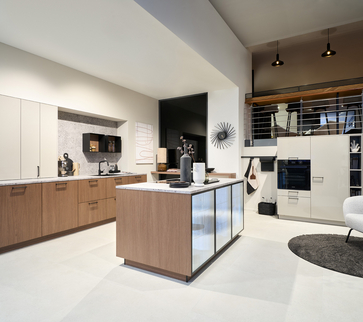
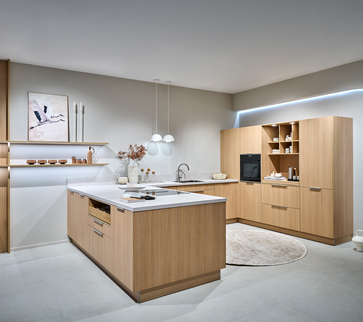
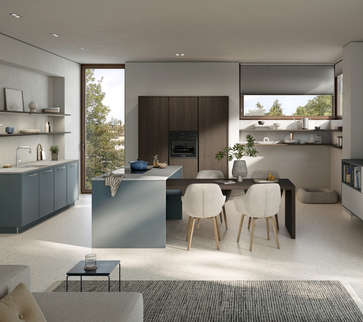
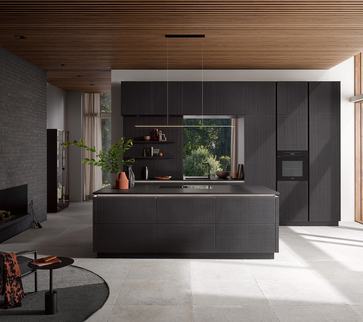
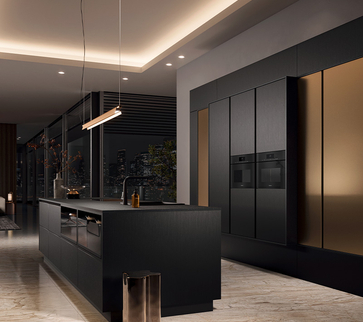
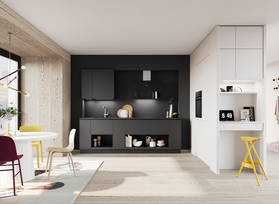
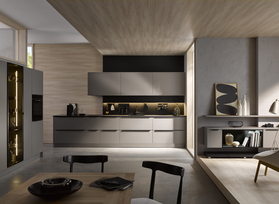
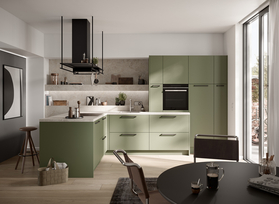
We’ll highlight key aspects such as planning lighting zones, offer tips on arranging spotlights, and help you choose the right light color and brightness for different areas of your kitchen. Dive into the world of kitchen lighting and discover valuable ideas and tips that will make your kitchen lighting shine like never before!
Why is the right kitchen lighting so important?
A well-thought-out lighting concept in the kitchen is more than just a practical detail—it’s essential for a functional and inviting kitchen. There are two key aspects to consider: functional kitchen lighting and mood lighting. While functional lighting is primarily focused on work areas such as the stove and countertop, mood lighting creates a pleasant atmosphere throughout the entire kitchen. Both types of lighting play a central role in making your kitchen both safe and cozy.

Lighting in the kitchen affects work performance and the atmosphere
Did you know? The right lighting has a direct impact on your productivity and safety in the kitchen. Bright, targeted lighting ensures that you have a clear view of everything while cutting, cooking, and preparing food, helping you avoid mistakes or accidents. At the same time, warm, soft light in the right places creates a cozy atmosphere where you feel comfortable and can use the kitchen not only for work but also for relaxing.
Benefits of Well-Designed Lighting
Carefully planned lighting offers numerous benefits. Not only does it create ideal lighting conditions for your daily tasks, but it also plays a significant role in enhancing the aesthetics of your kitchen. By combining different light sources, you can flexibly adapt to varying needs and customize your kitchen—whether you’re preparing a festive meal or enjoying a relaxed evening with friends.
All in all, the right kitchen lighting is therefore a key factor that significantly enhances both the functionality and the atmosphere in your kitchen.

Planning Kitchen Lighting: Basic Considerations
Carefully thought-out kitchen lighting design is the key to a kitchen that is both functional and inviting. To get the most out of your lighting, it’s important to take a systematic approach and consider various factors. Here are the most important steps to keep in mind when planning:
Step 1: Assess the layout of the space and its functional zones
Before you start choosing the right lights, you should first get a clear picture of your kitchen. What functional zones are there? Where are the cooking and work areas, the dining area, or decorative elements located? Each zone requires a different type of lighting. In addition, the size of the room plays an important role: Small kitchens often require a different lighting concept than open-concept kitchen-dining areas.
Step 2: Incorporating Natural and Artificial Light
Daylight is a valuable factor that should be taken into account when planning kitchen lighting. Consider where and when natural light enters your kitchen, and supplement it with appropriate artificial light sources. This will help you achieve the ideal level of brightness at any time of day. Especially in work areas where daylight is insufficient or the sun has set in the evening, you should opt for functional, bright kitchen lighting.
Step 3: A combination of general lighting, accent lighting, and task lighting
A successful lighting design for the kitchen is based on a balanced combination of three types of lighting: general lighting, accent lighting, and task lighting. General lighting ensures even brightness throughout the entire room, while accent lighting creates focused points of light and enhances the ambiance in the kitchen or dining area. Task lighting is essential for functional areas such as the countertop and stove to ensure safe work conditions. You should carefully combine these three types of lighting to create a harmonious and functional lighting environment.

Checklist for Planning Kitchen Lighting:
- Analyze the room’s layout and functional zones: Which areas of the kitchen require functional lighting, and where are mood-enhancing accents needed?
- Consider natural light: Where does natural light enter, and how can you supplement it with artificial lighting?
- Plan for general lighting: Ensure even illumination throughout the entire room.
- Use accent lighting: Create atmospheric light spots to highlight specific areas or decorative elements.
- Integrate task lighting: Bright, direct lighting for countertops, the stove, and the sink ensures safety and comfort while working.
- Combine light sources: Aim for a harmonious balance between the different types of lighting to create a cohesive overall look.
Lighting Zones in the Kitchen
To ensure your kitchen is perfectly lit, it’s important to consider the different lighting zones. Each zone requires a different type of lighting to optimize both functionality and ambiance. Below, you’ll learn which lighting solutions are best suited for the various areas of your kitchen:

Work Surface Lighting: Bright, Direct Lighting for Safe Work
Work surface lighting is a must for creating optimal lighting conditions when preparing food. Under-cabinet lights, which can be mounted directly beneath the upper cabinets, are particularly practical. LED strips are also a popular solution, as they provide bright, even light that doesn’t cast shadows on the countertop. This type of lighting ensures that you always have a clear view of everything while chopping, cooking, and preparing food.
Ceiling Lighting: General Lighting for the Entire Kitchen
Ceiling lighting plays a central role in your lighting design, as it ensures even illumination throughout the entire kitchen. Here, you can choose from various ceiling lighting options for the kitchen: Recessed spotlights are particularly unobtrusive and blend well with the overall look. Pendant lights, on the other hand, add visual interest, while spotlights can be flexibly adjusted to illuminate specific areas. These light sources provide solid general lighting for the entire kitchen.
Accent Lighting: Creating Atmospheric Highlights
With the right accent lighting, you can create atmospheric lighting accents in your kitchen. Light strips are ideal for shelves, display cases, or open cabinet units to subtly highlight specific areas. This not only creates a cozy atmosphere but also a modern, stylish look. LED strips are also slim and easy to install.
A special highlight of our kitchens is the illuminated cove lighting. This not only provides your kitchen with soft, indirect lighting but also adds elegant accents along countertops or base cabinets. With their even, warm light, the cove lighting creates a cozy atmosphere that simultaneously enhances the style of your kitchen.
In addition, the pull-out lighting—available exclusively in our systemat kitchens—adds functional accents. It activates automatically when cabinets and drawers are opened, bringing light to otherwise shadowy corners. This practical lighting solution ensures that you always have a clear view of your kitchen accessories and supplies—all with an elegant design that complements your kitchen’s aesthetic.
With our innovative lighting solutions, you can add both functional and decorative accents to your kitchen that enhance the overall atmosphere and make your kitchen even more inviting.
Dining Area Lighting: Cozy Lighting for Shared Meals
Atmospheric lighting is especially important for the dining area in the kitchen, since this is usually where you enjoy meals together or spend cozy evenings. Pendant lights or hanging lamps above the dining table are a classic choice, as they illuminate the area well while also being visually appealing. Dimmable lights offer additional flexibility, allowing you to adjust the light to be brighter or cozier depending on the occasion.
To get the best advice on choosing the right lighting system, take a look at Häcker’s selection, which offers high-quality lights for every area of the kitchen.
By combining these different lighting zones—work surface lighting, ceiling lighting, accent lighting, and dining area lighting—you’ll not only create optimal lighting conditions in your kitchen but also an inviting and atmospheric ambiance.


Tips for Choosing the Right Light Color and Brightness
Choosing the right light color and brightness is crucial for lighting your kitchen in a way that is both functional and atmospheric. In this section, you’ll learn how to select the right light color for the different areas of your kitchen and what brightness levels are best suited for task and ambient lighting.
What color of light should I use in the kitchen?
The color of light has a major impact on the atmosphere in the kitchen. Depending on the color temperature, the light can appear warm, neutral, or cool. Here are the most common light colors used in the kitchen:
- Warm white (2,700 to 3,000 Kelvin): This light color creates a cozy, inviting atmosphere and is particularly well-suited for the dining area or as accent lighting. Warm white light resembles the light from candles or incandescent bulbs and creates a sense of comfort.
- Neutral white (3,300 to 4,000 Kelvin): Neutral white light is ideal for areas where functionality is key, such as work surfaces. It has a fresh and neutral feel without appearing too cold and promotes focused work.
- Cool white (4,000 Kelvin and above): Cool white light is primarily used in work areas where high concentration is required. This light color resembles daylight and provides clear, cool illumination in which every movement is clearly visible. Cold white is a particularly good choice for task lighting in kitchens with little natural light.
How many lumens for the kitchen?
The brightness of light sources is measured in lumens and should vary depending on the lighting zone. Here are some recommendations for how many lumens are needed in the different areas of your kitchen:
- Task lighting: For work surfaces such as the kitchen island or the sink, you should opt for bright lighting with at least 300 to 500 lumens per square meter. LED under-cabinet lights or bright ceiling spotlights are ideal here for creating optimal visibility.
- Ambient lighting: For general lighting throughout the entire kitchen, about 100 to 150 lumens per square meter is sufficient. This softer lighting provides a pleasant level of brightness without causing glare.
- Accent lighting: For atmospheric accents, such as light strips on shelves or in display cabinets, lower lumen outputs of about 50 to 100 lumens are sufficient to create a cozy atmosphere.
Info: What exactly is the difference between lumens and kelvins?
When it comes to choosing the right lighting for your kitchen, lumens and kelvins are two important terms you should know:
- Lumens (lm) measure the brightness of a light source. The more lumens, the brighter the light. For kitchen lighting, you should aim for a brightness of about 300 to 500 lumens per square meter, depending on your needs, especially in work areas such as the countertop.
- Kelvin (K) indicates the color of the light. The lower the value, the warmer and more yellow the light (e.g., 2,700 K for a cozy, warm light). A higher Kelvin value (e.g., 4,000 K to 6,000 K) produces a cooler, more neutral light, which is often preferred for work surfaces because it renders colors more clearly and promotes concentration.
The right combination of lumens and Kelvin ensures that your kitchen is lit in a way that is both functional and atmospheric.

Which lighting is best for which areas?
Different kitchen areas require different types of lighting. Here’s an overview of which lighting works best in each area:
- Task lighting: Clear, bright lighting is essential for work areas such as the countertop, stove, and sink. Cool-white light ensures optimal visibility and safety while cooking. Bright LED spotlights or under-cabinet lights are ideal for this purpose.
- Mood lighting: Warm white light is suitable for dining areas or as accent lighting, creating a cozy and inviting atmosphere. Dimmable pendant lights or light strips are a good choice here, allowing you to flexibly adjust the ambiance.
By tailoring the light color and brightness to the specific zones and tasks in your kitchen, you can create the perfect balance between functionality and a comfortable atmosphere. This way, your kitchen lighting isn’t just practical—it’s also a real eye-catcher.

Lighting Systems for the Kitchen: Choosing the Right Products
Choosing the right lighting system plays a crucial role in providing optimal lighting for your kitchen. From classic LED lights to smart lighting solutions and flat LED panels, there are a wide variety of options that can be customized to your needs and the style of your kitchen. Here, you’ll learn about the different lighting systems available and their respective pros and cons.
Selection of light sources: LED, halogen, smart lighting systems
- LED bulbs: LEDs are now the most popular choice for kitchen lighting. They are known for their high luminous efficacy and versatile light colors—ranging from warm white to cool white. They’re also available in many forms, such as spotlights, strips, or panels, making them ideal for a wide variety of lighting zones in the kitchen.
- Halogen lights: Halogen bulbs offer excellent light quality but consume significantly more energy than LEDs. They are particularly suitable if you want an intense, warm light color, but are increasingly being replaced by more efficient LEDs.
- Smart lighting systems: Smart lighting lets you conveniently control your light sources via an app or voice control. You can adjust not only the brightness but also the light color, depending on the time of day or your mood. They’re especially practical when combined with dimmable LEDs or light strips that can be customized individually.
- Tip: Häcker offers a wide selection of lights that you can flexibly integrate into your kitchen design.
Characteristics of the Various Lamps (Energy Efficiency, Light Color)
- Energy Efficiency: LED lights are by far the most energy-efficient option on the market. They use up to 80% less electricity than traditional incandescent bulbs and have a lifespan of up to 50,000 hours. Halogen bulbs, on the other hand, consume more energy and need to be replaced more often.
- Light Color: LEDs offer the advantage of being available in various light colors, ranging from warm white to neutral white to cool white. This makes them versatile, depending on whether you need mood lighting or functional lighting. Halogen bulbs provide a natural, warm light color but do not offer adjustable color temperature.

Advantages and Disadvantages of Modern Lighting Systems Such as LED Strips and Panels
- LED strips: These flexible light strips are ideal for creating accent lighting, such as under upper cabinets or on open shelves. They are easy to install, provide even light distribution, and are available in various light colors. A major advantage is that they are dimmable and can therefore create an atmospheric ambiance. The downside is that they often require an additional light source, as they are not sufficient for general lighting.
- LED panels: These modern lighting solutions are particularly well-suited for ceiling lighting or large areas. They provide even illumination without distracting shadow edges. The advantage lies in their slim design, which blends discreetly into any kitchen layout. The downside is that they are somewhat more complicated to install than conventional lamps.
Recommendations for the Right Lighting Solutions
To find the right lighting systems for your kitchen, it’s worth taking a look at Häcker’s extensive selection. Here you’ll find a wide variety of high-quality lighting solutions for every area of your kitchen:
- Illuminated cove lighting: Perfect for creating atmospheric accents in and along the kitchen cabinet fronts.
- Recessed lights in upper cabinets: Ideal for optimally illuminating the work surfaces beneath upper cabinets and ensuring the necessary safety while cooking.
- Smart Home Lighting: Integrate smart lighting solutions that you can conveniently control and adjust to ensure modern and flexible lighting.
With the right selection of lighting systems, you’ll not only create optimal lighting conditions in your kitchen but also add stylish accents that perfectly highlight the room’s ambiance.

Conclusion: The right kitchen lighting combines practicality with ambiance
Well-planned kitchen lighting is more than just a matter of aesthetics—it affects both your productivity and the atmosphere in the kitchen. The combination of general lighting, accent lighting, and task lighting ensures that every area of your kitchen is optimally lit.
By choosing the right light color and brightness, you can not only make your kitchen functional but also create a warm, inviting atmosphere. Modern lighting systems, such as LED lights or smart lighting systems, play a central role in saving energy and flexibly adapting the lighting to your needs.
The benefits of well-planned kitchen lighting are clear: it not only improves working conditions but also enhances the entire kitchen as a living space. Use our tips and ideas to find the perfect lighting for your kitchen.
If you’re ready to plan your kitchen lighting, don’t hesitate to seek professional assistance. Experienced Häcker kitchen dealers will help you develop the ideal lighting concept for your kitchen. Use the contact form to find a dealer and get advice on planning your dream kitchen. Get started today—your perfectly lit kitchen is waiting for you!