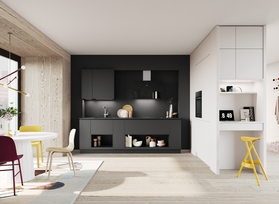
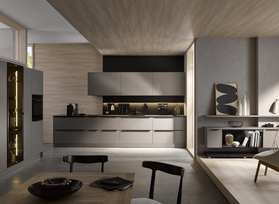
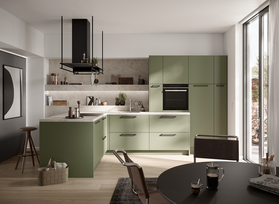
Kitchen decor starts with a question: What kind of atmosphere do you want your kitchen to have?
Before you buy decorative accessories for the kitchen, it’s worth taking a moment to think it through. Do you prefer a sense of calm and simplicity, or more color and vibrancy? Should the kitchen decor have a warm, minimalist, or lively feel?
A simple guideline can help: Choose a central theme, such as nature, graphite, brass, or ceramics. This creates harmony, even as you add pieces over the course of months.
Rule 1: Fewer pieces, greater impact
Many decorative items in the kitchen only look good when they have enough space. Two or three thoughtfully placed decorative elements often make a stronger impression than ten small trinkets.
Practical examples:
- A large bowl of lemons or seasonal fruit
- A tray with oil, salt, pepper, and a grinder
- A statement piece, such as a vase or a ceramic sculpture
Tip: If you’re unsure, start with one element per area: countertop, windowsill, dining table, and sideboard.
Rule 2: Decorating ideas for the kitchen work best when organized by zone
Kitchens usually have several distinct areas: cooking, washing dishes, storage, dining, and the transition to the living area. When each zone has a clear purpose, the kitchen decor automatically looks more organized.
The Work Zone
Here, open space is key. Decor in the kitchen should, above all, be practical. A nice cutting board, a ceramic pot for cooking spoons, a jar for herbs.
The Rinsing Zone
Less is more. A vase, a sponge holder, or a small plant. Please don't place textiles right next to splashing water, as that can quickly create a sense of restlessness.
The Residential Zone
Kitchen decor can be a bit more sentimental here. Pictures, books, candles, a high-quality glass or wooden object. Especially in open-concept kitchens, this creates a transition similar to that in the living room.
Rule 3: Colors and materials set the mood
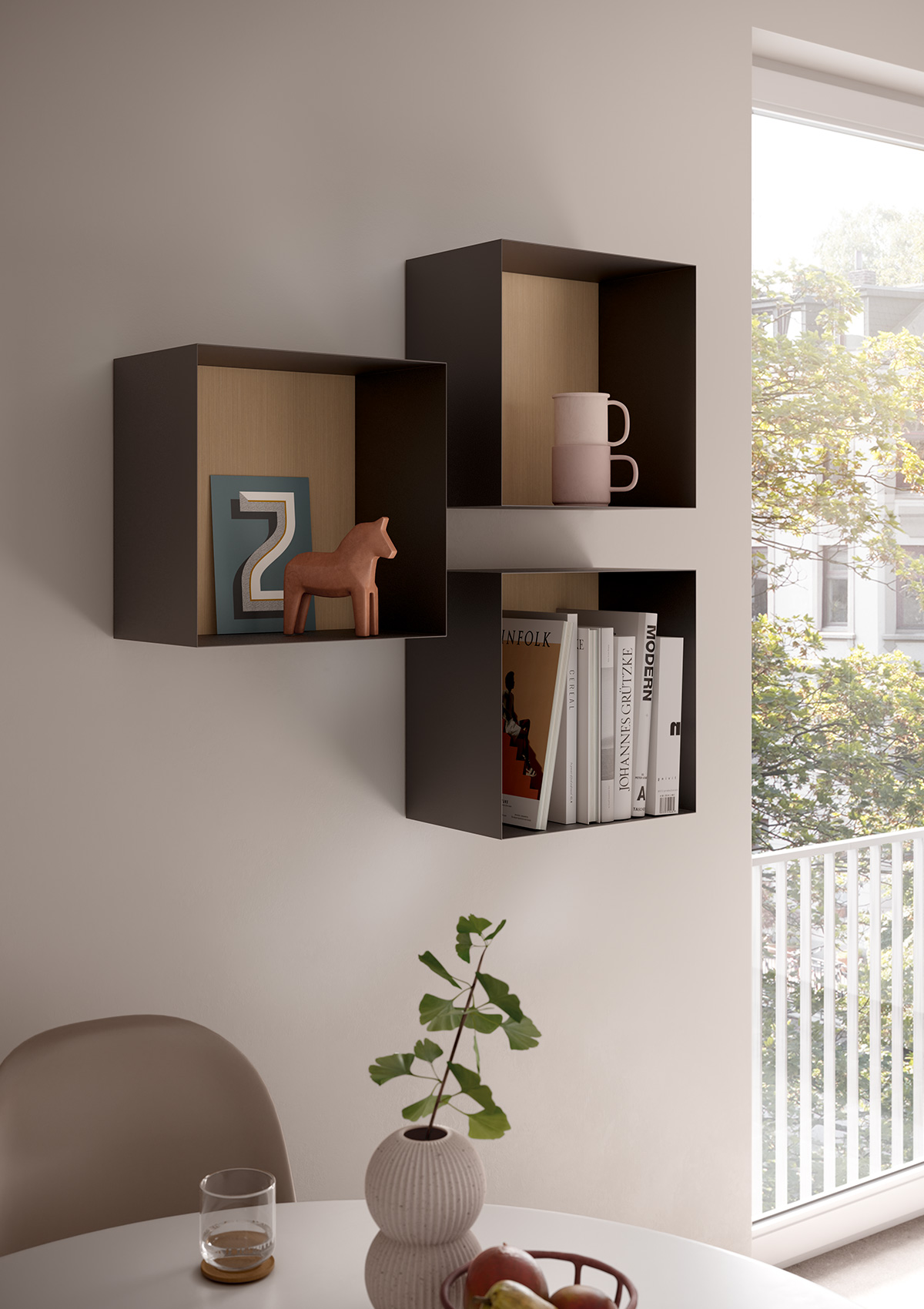
Kitchen decor ideas work like spices in cooking. Just a little bit can transform the entire room and bring warmth, style, and personality to the overall look. Too much, however, robs the kitchen of its clarity and quickly turns a calm composition into a jumble. If you use decor like a fine pinch of spice, everything looks more thoughtfully arranged. Countertops stay clear, lines remain visible, and each piece gets to shine.
Tone-on-Tone for a Calm Atmosphere
If your kitchen already has bold cabinet fronts, stick to a single color scheme. Beige, greige, sand, gray, black, wood, glass. Metallic accents in brass or stainless steel add a touch of elegance—subtle and precise.

Be bold with color, but do it strategically
If you love color, use it strategically to add accents. For example, by incorporating two or three recurring colors. A vase, a picture, a pot, or a piece of fabric in the same shade is often enough to make your kitchen feel more lively. You can find even more ideas and coordinating color combinations in our article on colorful kitchens.
Retro and Vintage as Style Elements
The vintage style thrives on warm woods, glass, ceramics, and subtle contrasts. It’s important that it doesn’t look like a hodgepodge. Choose a recurring material—such as a walnut finish or smoked glass—and deliberately incorporate elements of it throughout the space.
Rule 4: Light as an Underrated Kitchen Decor Element
Kitchen decor is only as good as the lighting that accompanies it. Warm, well-placed lighting transforms a purely functional space into one with real atmosphere.
Three simple lighting ideas:
- Indirect lighting, for example in display cases or on shelves
- Spotlighting special objects
- A small, warm light fixture in the living area
More on kitchen lighting
Rule 5: Tidiness sets the stage for decoration
Kitchen decor only works if the background is uncluttered. If there are ten things lying around, the space quickly looks cluttered, and even beautiful decorative items don't stand out as much.
A quick organization check:
- What do you use daily, what weekly, and what only rarely?
- Anything you use rarely goes into closed storage
- Everything you use daily gets a designated spot, ideally in one designated area
More inspiration for a well-organized kitchen:
Seasonal Kitchen Decor Ideas
Decorating for the season feels like a little fresh start with each new season. You don't have to change your kitchen—just the atmosphere.
Spring
Light-colored ceramics, fresh herbs, glass vases, light fabrics.
A bowl of greenery, such as eucalyptus or fresh tulips.
Summer
Citrus fruits, light-colored woods, clear glass objects.
Few, but larger pieces, to keep the space airy.
Fall
Warm colors, earthenware, wood, matte finishes.
A bowl of nuts, a vase with branches—but in a more minimalist style.
Winter
Candles, indirect lighting, darker accents, textured glass.
A small wreath or a twig as a focal point is often all it takes.
Kitchen Decor Ideas by Kitchen Style
Different interior design styles call for different decorative approaches. Find your own style so you can thoughtfully combine colors, materials, and accessories.
Minimalist
Geometry, clean lines, understated materials, and just a few statement pieces.
An object that feels like architecture, not just decoration.


Modern
Glass, metal, clean lines, a minimalist color palette.
A touch of black or bronze adds a very high-end look.
Country-style, yet timeless
Wood, ceramics, and linen; warm lighting; a few rustic elements. It’s the balance that matters, not the quantity.

Kitchen Decor in Small Spaces
In a small kitchen, space is key. Decor should be arranged vertically rather than on the countertop. A narrow hook rack, a small wall shelf, or a magnetic strip create a lighter look. A portrait-oriented picture can also make the room appear more spacious.
It’s better to choose a few larger items. Lots of small items can quickly look cluttered, even if everything is clean. Glass, light-colored ceramics, and understated textiles create a sense of lightness. Reflective surfaces—such as glass vases—add depth to the room.
Kitchen Decor That Matches the Shape of Your Kitchen
The layout of your kitchen sets the tone, even when it comes to decorating. In a galley kitchen, clean, linear arrangements work particularly well. It’s better to display a curated set rather than many individual pieces side by side.
In an L-shaped kitchen, a calm focal point in the corner is a good idea. A bowl, a vase, or a plant acts like a period at the end of a sentence. In a U-shaped kitchen, there are several work areas. Here, it looks most harmonious when only one zone is decoratively highlighted.
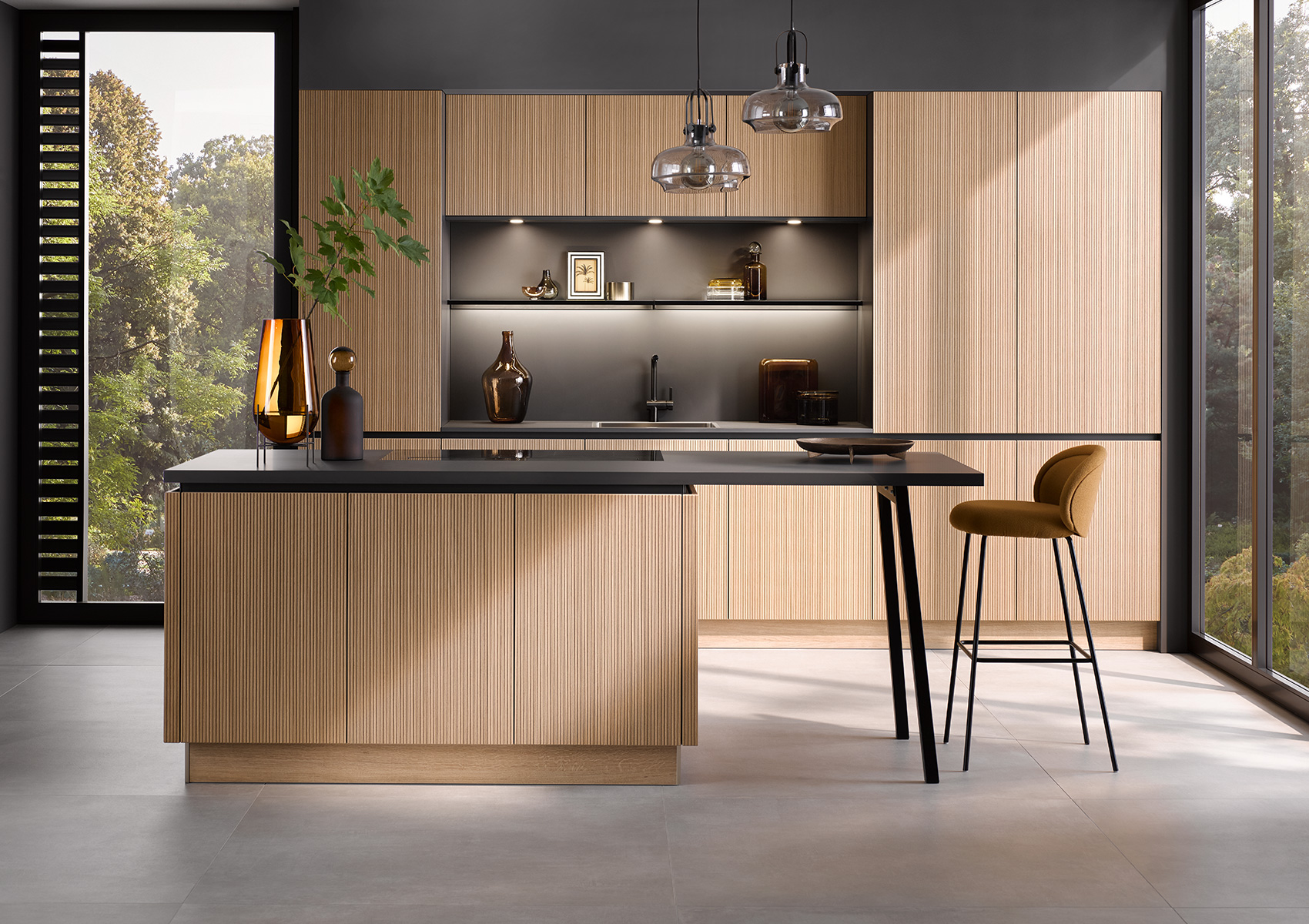
Island kitchens are natural stages. A shallow bowl, a tray, or a single light fixture is often enough. If a kitchen counter is integrated, it can serve as a transition to the living area. One or two seat cushions, a small light fixture, a book—that’s all it takes.
Guidelines for Kitchen Layouts
Ideas for Kitchen Counters
Kitchen Decor Without Wall Cabinets
Open spaces look modern, but they need a clear organization system. If there are no wall cabinets in the kitchen, the wall becomes the focal point. A niche, a shelf, or a subtle row of pictures creates structure. The rule of thumb: stick to recurring shapes and materials rather than a colorful mix.
Open shelves look best when they aren’t overcrowded. Deliberately leave some space so that each item stands out. Decorative accessories in the kitchen can certainly serve a functional purpose. Beautiful glasses, ceramic bowls, or two or three cookbooks are often enough.
Kitchen decor that doesn't change every season
Good kitchen decor doesn’t have to be constantly new. Often, just a few well-chosen pieces make the biggest impact. Ceramic, glass, and solid wood age gracefully and remain timeless. Linens made of linen or cotton can be used for a long time.
Secondhand items can also look very high-quality. An inherited bowl or a flea market find adds character. Make sure the colors match your kitchen’s overall design. That way, a single piece becomes part of the overall composition.
Another key strategy is minimalism. If you own fewer items, you’ll need less storage space. This creates a lighter, more serene atmosphere—and conserves resources in the process.

Bottom line: Kitchen decor is best when it makes your life easier
The best kitchen decor makes your everyday life easier. It creates calm, structure, and an atmosphere that suits you. Just like a good recipe: clear, balanced, with its own unique twist.
If you’re already planning or thinking about remodeling your kitchen, it’s worth taking the next step.
Buy a kitchen

FAQ on Kitchen Decor
Here, we answer the most common questions about kitchen decor.
How much decor is appropriate for the kitchen?
In the kitchen, a few carefully placed items have the greatest impact. Two or three decorative items per area are usually enough to keep the look uncluttered and let each piece stand out.
How do I decorate a kitchen in a modern style?
Opt for clean lines, muted colors, and materials such as glass, ceramic, wood, or metal. It looks especially modern if you choose recurring accents and keep the countertops as uncluttered as possible.
What kinds of kitchen decor work well in small kitchens?
In small kitchens, it’s better to have a few larger pieces rather than lots of small items, because this creates a more visually uncluttered look. Use wall space or niches for decorative accessories so that the countertop stays clear and the room feels more spacious.
Which decorative accessories are particularly easy to care for?
Low-maintenance kitchen decor is made of materials that can be wiped down quickly, such as glass, ceramic, and metal. Textiles and baskets create a cozy atmosphere, but they require more care because they absorb splashes and dust more easily.
How do I combine decor with functionality in the kitchen?
Decorative items that you use every day—such as cutting boards, mills, herb pots, or storage jars—work best. Give these items a designated spot, and your kitchen will always look tidy and cohesive.
How do I find my own style for kitchen decor?
Take inspiration from your kitchen’s existing cabinet fronts, colors, and materials, and choose a unifying theme. If you consistently repeat two to three colors and a few materials, you’ll create a harmonious design that will remain modern for years to come.