What is a ceiling fan?
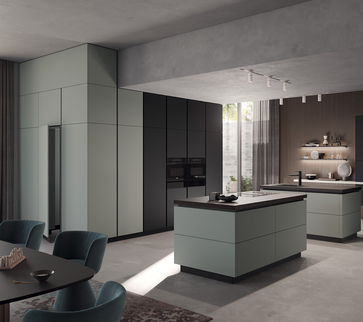
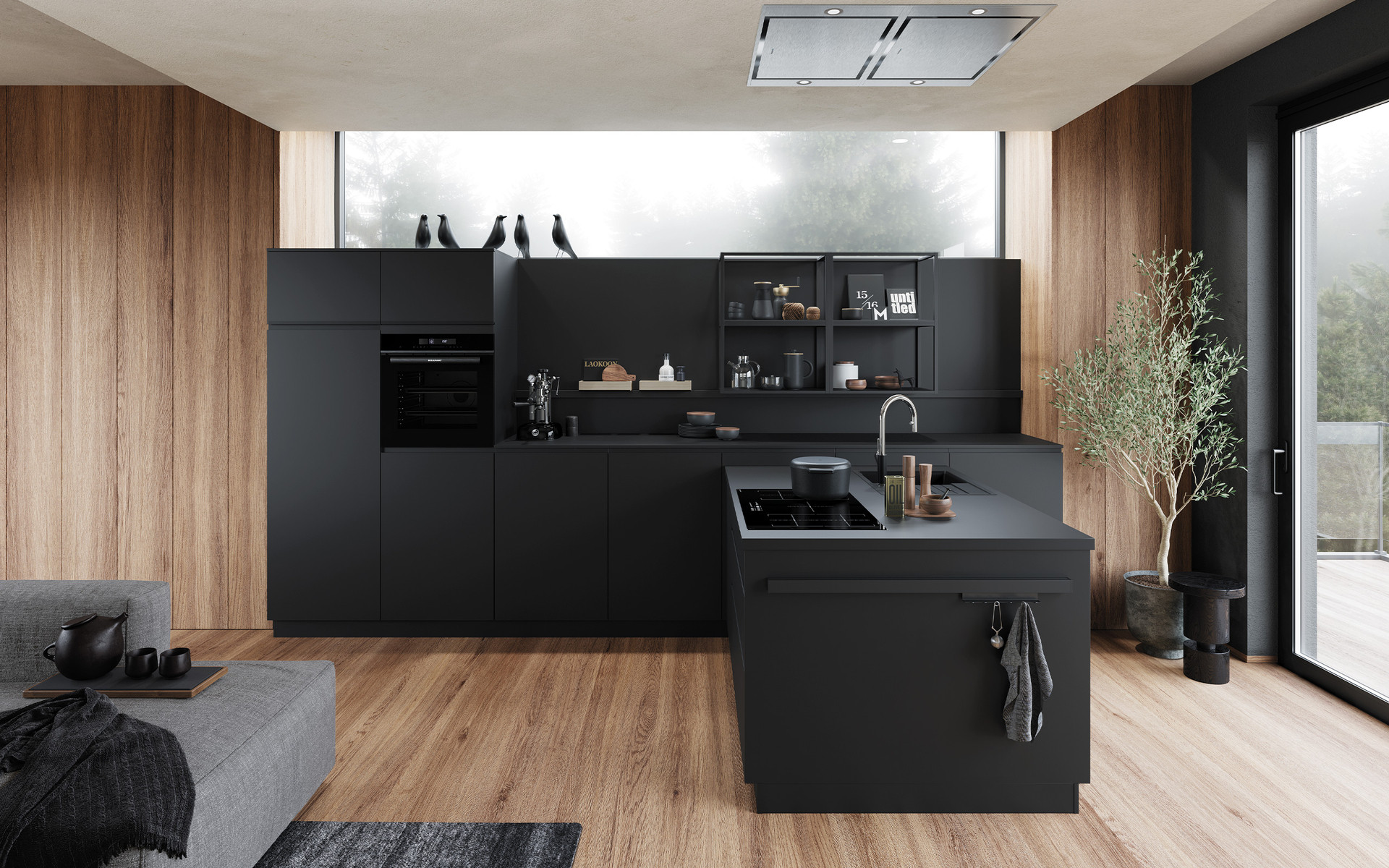
A ceiling-mounted range hood is a range hood that is not mounted on the wall or suspended above the stove, but is built directly into the ceiling. The unit sits flush with the ceiling or is fitted with a discreet trim—from below, usually only a narrow frame or an openwork panel is visible. The key difference from a traditional range hood is that this unit extracts cooking fumes from above without obstructing the view into the room. This makes it the ideal solution for open-concept kitchens, kitchen islands, and any floor plan where an unobstructed line of sight is desired.
Like any range hood, it operates in two modes: exhaust and recirculation—more on that in the next section.
Why Choose a Ceiling Fan? The Benefits of a Ceiling Exhaust Fan
The most obvious advantage is clear: no appliance blocking your view. But a ceiling-mounted range hood offers far more than just an unobstructed line of sight.
- Headroom and freedom of movement: Anyone who has ever cooked at a kitchen island and bumped into a hanging island range hood knows how valuable this freedom is. A ceiling-mounted range hood gives you back the entire space above the cooktop—for you and your guests.
- Quieter operation: Because it’s installed high up in the ceiling, the sound of the running motor is absorbed much more effectively. Many ceiling-mounted range hoods are quieter in operation than comparable wall-mounted or island hoods—a real improvement in comfort in open-concept living-dining-kitchen areas.
- The ideal solution for kitchen islands: The kitchen island is the centerpiece of many modern kitchens. It’s often freestanding in the room—a classic range hood would be the visually dominant element here. A ceiling-mounted range hood provides the perfect solution: a large extraction area, invisible integration, and full functionality. Effective air purification thanks to a large extraction area. Ceiling-mounted range hoods typically have a more generous extraction area than standard hoods. This ensures even, reliable air purification—even during intense cooking on multiple burners at the same time.
- Convenient operation: Many models can be controlled via remote, and the fan speed is adjustable in several levels. You don’t have to reach for the unit or search for a switch. Light from above. High-end models are equipped with LED lights that illuminate the cooktop brightly and evenly. This not only improves working conditions right at the stove but also blends seamlessly into a well-thought-out kitchen lighting design.
A ceiling-mounted range hood is thus an attractive—but not the only—option for keeping an open kitchen free of distracting elements. Equally common is the cooktop hood, where the ventilation system is built directly into the cooktop. Which solution is best depends on the floor plan, cooking habits, and design preferences.
What types of ceiling fans are there?
Exhaust or recirculation—which mode is better?
Which operating mode is the right one depends primarily on the structural conditions—not on a blanket recommendation. Exhaust ventilation means that the contaminated air is vented to the outside through a duct. This option is more powerful and completely purifies the indoor air. This requires an exhaust duct at ceiling level. Exhaust ventilation works particularly well when it is planned from the outset during new construction or a major renovation—in which case it can be seamlessly integrated into the ceiling structure. Recirculating air draws in air, passes it through an activated carbon filter, and blows the purified air back into the room. This option offers greater flexibility since no external connection is required. However, activated carbon filters must be replaced regularly—typically every three to six months.
Various Designs & Configurations
Not all ceiling fans are the same. Depending on the manufacturer and model, the installation depth, frame size, and features vary considerably.
Flush installation:
The unit is flush with the ceiling surface—ideal for suspended ceilings and minimalist kitchen designs where you don't want to break up the ceiling line.
Surface-Mounted Installation:
A discreet trim protrudes slightly from the ceiling. It's easier to install, yet still much less conspicuous than any wall-mounted hood.
Equipment options:
LED lighting, remote control, app control, or touch panel—the range of options is vast. Those looking for maximum convenience will find models that integrate seamlessly into smart kitchens.
Ceiling fan or another type of range hood? An overview of the options
A ceiling-mounted range hood is one of several ways to reliably remove cooking fumes. Which range hood is right for you depends on your floor plan, cooking habits, and design preferences. Here’s a brief overview of the most common types:
Wall-mounted range hood:
The classic solution above a wall-mounted cooktop—tried-and-true and powerful, but quite noticeable.

Cooktop with built-in range hood:
The vent is built right into the cooktop and draws fumes downward—a solution that’s particularly popular in modern kitchens and, like a ceiling fan, keeps the line of sight completely unobstructed. Read more about this in our article on cooktop vents.

Ceiling fan:
Flush-mounted in the ceiling—the most unobtrusive solution for open-concept kitchens and freestanding islands when you want to keep the ceiling unobstructed.
In short: wall-mounted and overhead range hoods are at their best when mounted on the wall, while island range hoods and ceiling fans are best suited for use above the island. If you’d prefer not to see the range hood at all, a cooktop range hood or ceiling fan offers the most unobtrusive solutions.
Requirements and Installation: What Do You Need to Keep in Mind?
Choosing a ceiling fan isn’t a decision you make right before your kitchen is delivered. It needs to be planned—and preferably well in advance. Check the installation depth. Ceiling fans require space inside the ceiling—between 15 and 35 cm, depending on the model. This can be a challenge with solid ceilings without a suspended structure; however, it’s easily solved in new construction or with suspended ceilings. Power connection and exhaust air ducting. For exhaust mode, a duct must be planned at ceiling level to vent the air outside. The electrical connection should also be handled by a professional contractor. Ceiling load-bearing capacity. The units are compact but still weigh several kilograms. The load-bearing capacity of the ceiling structure should be checked before installation. Ceiling height and distance to the cooktop. The ideal distance between the unit and the cooktop is 1.40 to 1.60 m. In rooms with very high or very low ceilings, this value should be taken into account from the very beginning of the kitchen planning process. Installation recommendation. A ceiling fan should always be installed by a professional contractor. Anyone planning a new kitchen or undertaking a renovation where the ceiling will be suspended anyway has the best conditions for a clean, invisible integration.
Planning Ceiling Fans Properly: What You Need to Know
You’ve decided on a range hood—but which model is right for your kitchen and your daily routine? These factors will help you make the right choice.
- Capacity and Room Size: Fan capacity is measured in cubic meters per hour (m³/h). As a general guideline, the airflow should be at least ten times the volume of the room. For an open-concept kitchen-dining area measuring 40 m² with a ceiling height of 2.60 m, that would be approximately 1,040 m³/h. A specialist can help you calculate this value for your specific space.
- Noise Level: The sound pressure level is measured in decibels (dB). A value below 50 dB on the lowest setting is considered comfortable. The Blaupunkt 5DD 72557 ceiling fan is designed for powerful extraction performance with minimal noise—making it particularly well-suited for open living areas.
- Filter technology: Metal filters can be cleaned in the dishwasher and reused repeatedly. Activated carbon filters for recirculation mode must be replaced every three to six months—an expense that can be planned for in advance.
- Controls: Whether via a switch, remote control, or app—choose the control option that fits your daily routine. Especially in open-concept kitchens, where the unit is physically far away, a remote control makes all the difference.
- Exhaust or recirculation: For exhaust mode, you’ll need a duct at ceiling level that leads outside. For recirculation, an activated carbon filter is sufficient. The Blaupunkt 5DD 72557 is designed for both operating modes and can therefore be flexibly integrated into a variety of building situations.
- Ceiling height and installation: Ideally, it should be installed at a distance of 1.40 to 1.60 m from the cooktop. Plan the ceiling structure and the range hood installation together from the very beginning—preferably before drywall installation or the kitchen is delivered.
Conclusion: Is a ceiling fan the right choice for your kitchen?
A ceiling fan is the right choice if you want to consistently combine function and design. Whether you’re planning an open-concept kitchen, incorporating a kitchen island, or aiming for a clean, uncluttered look, this is the most harmonious solution. It preserves the sense of space, allows for full freedom of movement, operates reliably—and blends seamlessly into any well-thought-out kitchen design without drawing attention to itself. The key is to plan early, involve experts, and understand the right specifications. If you’d like to equip your kitchen with a ceiling-mounted range hood, Häcker’s kitchenplanner offers initial guidance. Use the dealer locator to find a specialist consultant who can assist you with the overall planning.
Frequently Asked Questions About Ceiling Fans (FAQ)
A ceiling range hood is built into the ceiling and draws cooking fumes, odors, and moisture upward. Depending on the operating mode, the cooking fumes are either vented outside through an exhaust duct (exhaust mode) or purified through an activated carbon filter and recirculated back into the room (recirculation). The intake area is usually generously sized, which allows for even air purification even over larger cooking surfaces.
At the lowest setting, the sound pressure level of high-quality appliances is often below 50 decibels—comparable to a quiet conversation in a room. Ceiling installation also absorbs sound more effectively than wall-mounted hoods. This makes a noticeable difference, especially in open-concept living spaces where sounds are more noticeable.
No exhaust duct? No problem: Many models also operate in recirculation mode. The air is then passed through an activated carbon filter and released back into the room after being purified. The filter should be replaced every three to six months, depending on how often the unit is used.
In principle, this is possible, but it involves more work than a new installation. The key factors are the ceiling’s installation depth, the feasibility of installing an exhaust duct, and the load-bearing capacity of the ceiling structure. It is strongly recommended to seek expert advice beforehand. If you’re already modernizing your kitchen and updating the ceiling as part of that project, you’re in the best position to do this.