AV 6070-GL Blackwood and AV 7070 Bronze: the marble kitchen where materials set the tone
Just be more courageous
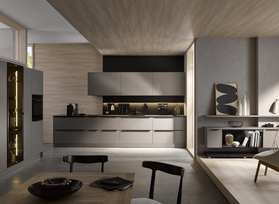
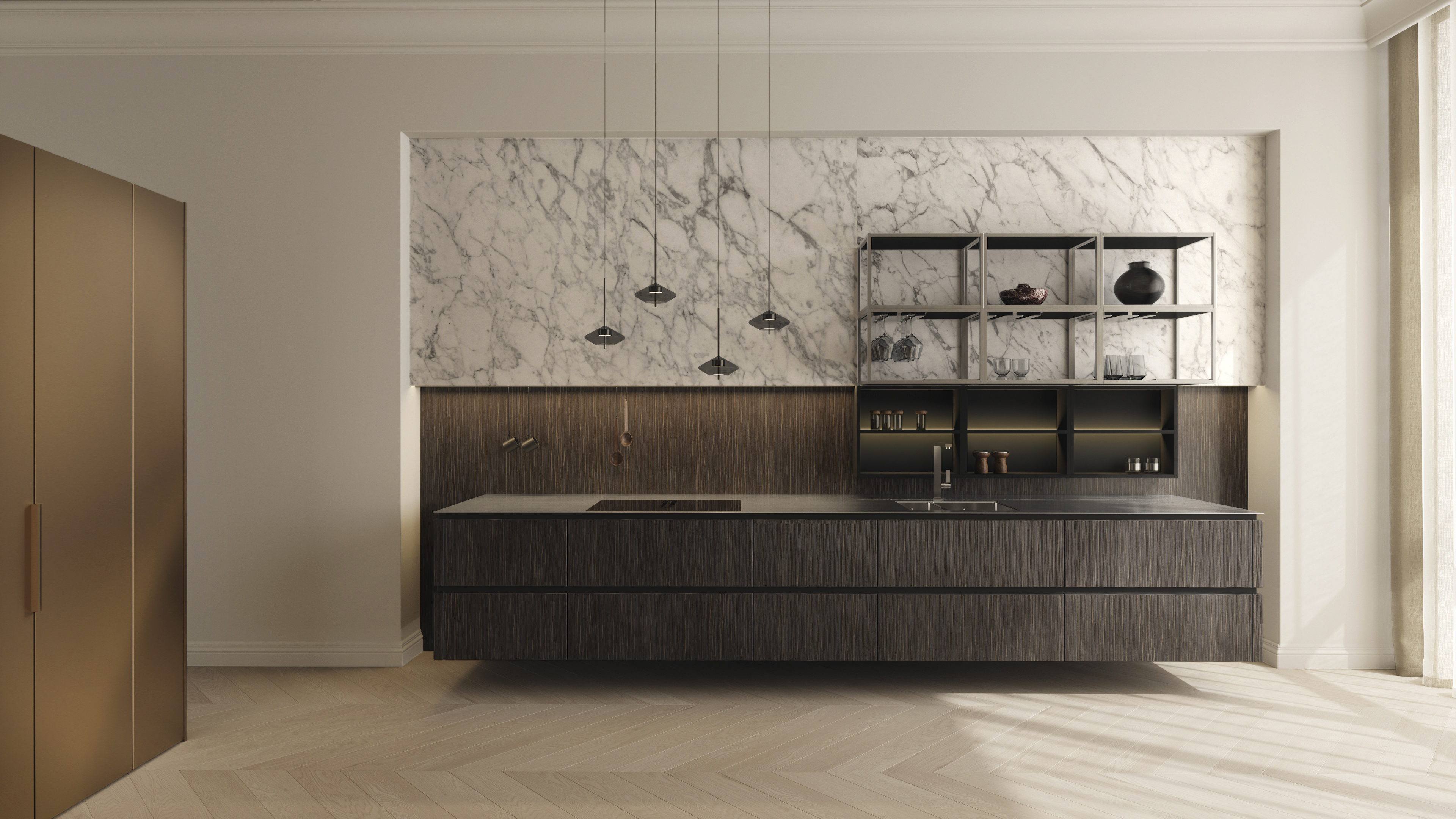
Courage isn’t shown through loud gestures. This kitchen is a good example of that: Blackwood, a dark real wood veneer with an embossed grain, meets warm bronze tones and the coolness of stainless steel. Above the floating kitchen island, a niche clad in Calacatta marble makes a striking impression. The true achievement of this design lies in how these materials harmonize together. They sit unusually close to one another yet come together to create a serene composition. This is due to the precision with which the cabinet fronts, surfaces, and lighting are coordinated. The result is a marble kitchen that seeks not merely to please, but to make a statement. The depth of design in this premium line is evident in Häcker’s systematproductrange—take your time to find inspiration there.
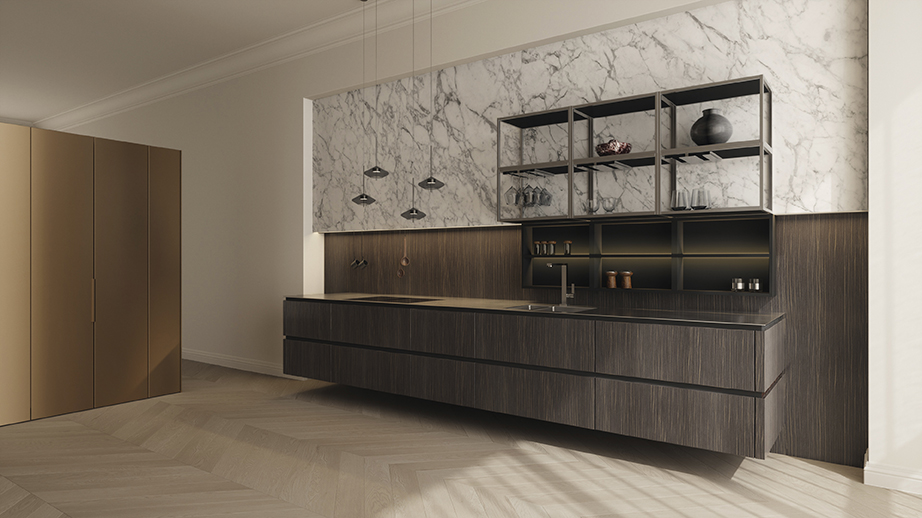
Blackwood: Real wood veneer with a distinct grain
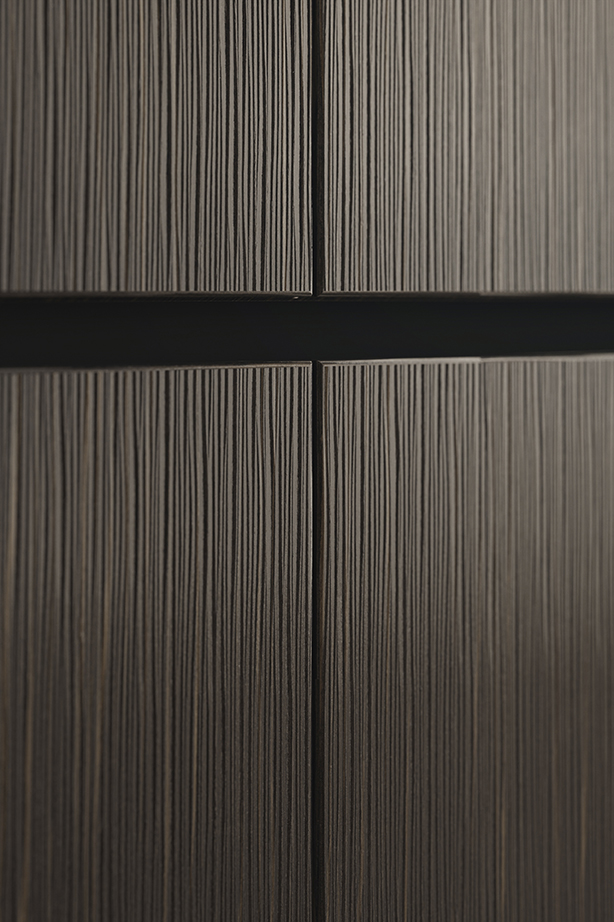
Blackwood is a dark real wood veneer—not a paint finish or a replica. The grain runs vertically across the front and is clearly visible and palpable. When you run your hand over it, you can feel the texture of the real wood.
The kitchen unit features these fronts along its entire length. Because it appears to float freely, with no contact with the floor, the dark surface appears lighter than its material would suggest—almost sculptural. Behind it lies ample storage space. The unit serves as both a design element and a workspace, creating the perfect symbiosis of function and aesthetics.
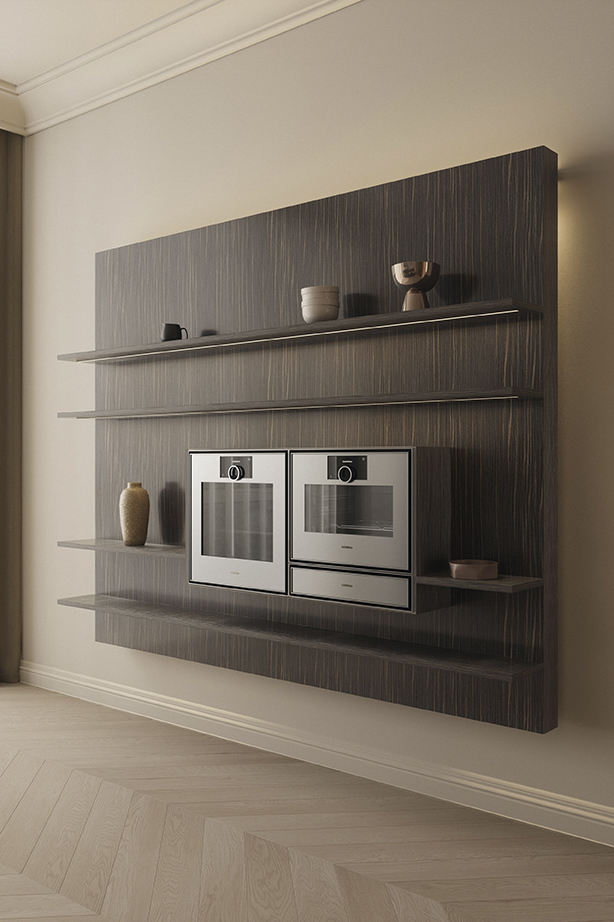
The front panel isn’t limited to the kitchen unit. A floor-to-ceiling wall panel continues the same veneer and accommodates illuminated shelves and the built-in ovens. The kitchen and wall thus become a single surface—a principle that makes the room appear more serene than the number of appliances would suggest.
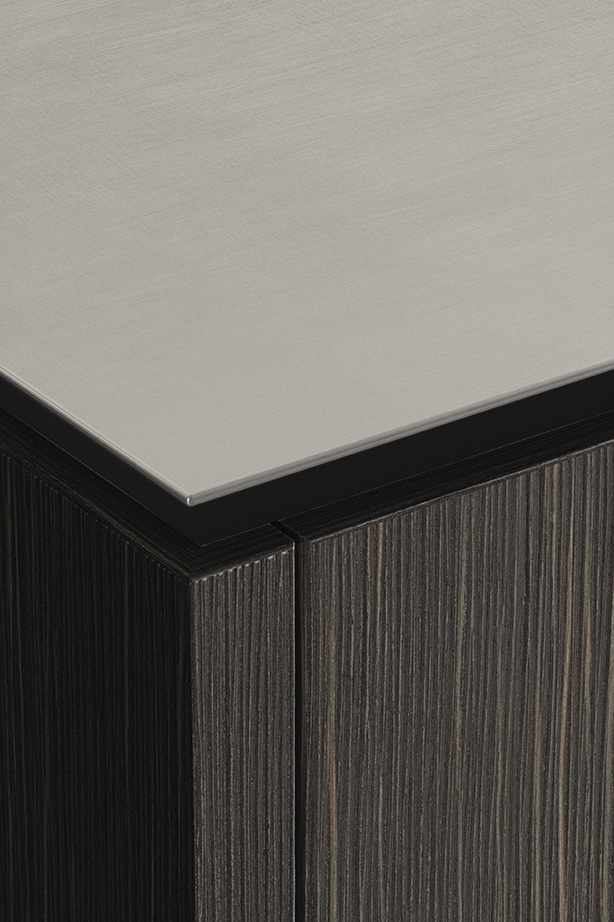
A continuous baseboard in brushed graphite—the trim beneath the countertop—opens the pull-out drawers while simultaneously drawing a calm line through the room. Read about what makes a handle-less kitchen work in everyday life in the kitchen magazine.
Simply discover more points of contact.
Bronze and stainless steel: the antithesis of the row
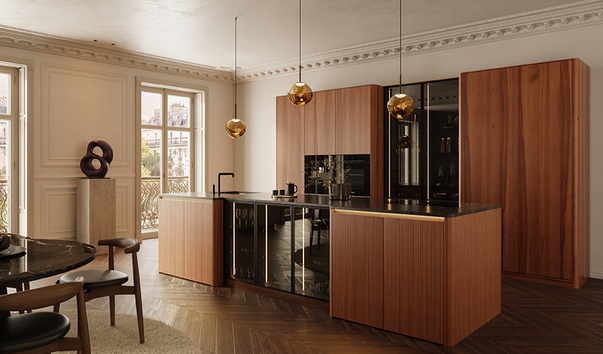
The tall cabinets provide a striking contrast in this design. The cabinet fronts—AV 7070 in bronze, a polished, glossy metallic lacquer finish—shimmer in the light: understated by day, warm and deep by evening. Here, bronze is not merely an accent but serves as the second front in this kitchen, forming the entire wall of tall cabinets.
Complementing this is the stainless steel countertop in FineSteel “Whirlfinish”—both functional and artisanal. Dark wood, bronze, stainless steel: three materials rarely seen together in a single space—yet here they create a unified look rather than competing with one another.
Why this works has less to do with visual impact than with coordinated planning. Cabinet heights, joints, material edges—every dimension is tailored to the next. In this kitchen, boldness doesn’t mean flashiness, but consistency.
Calacatta marble: the light-colored counterpart
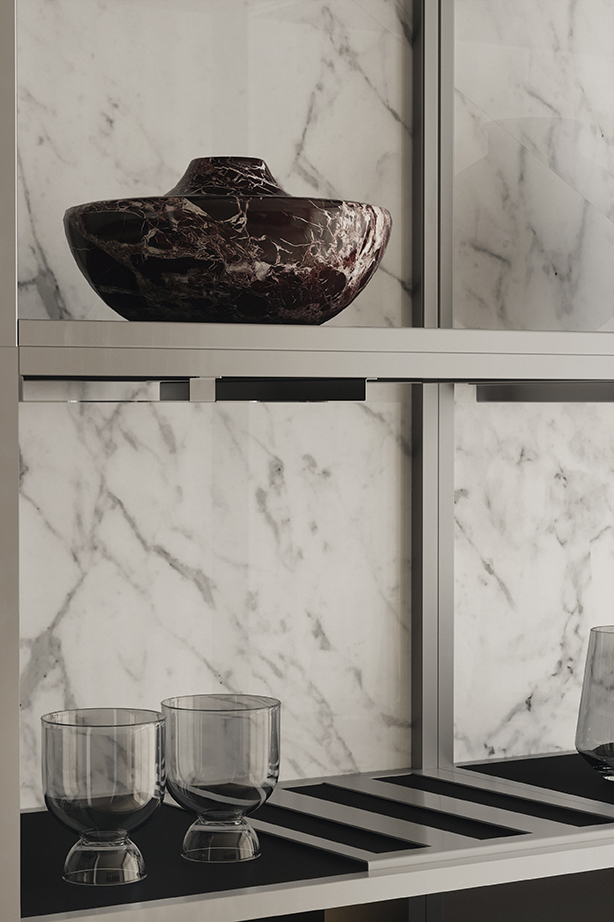
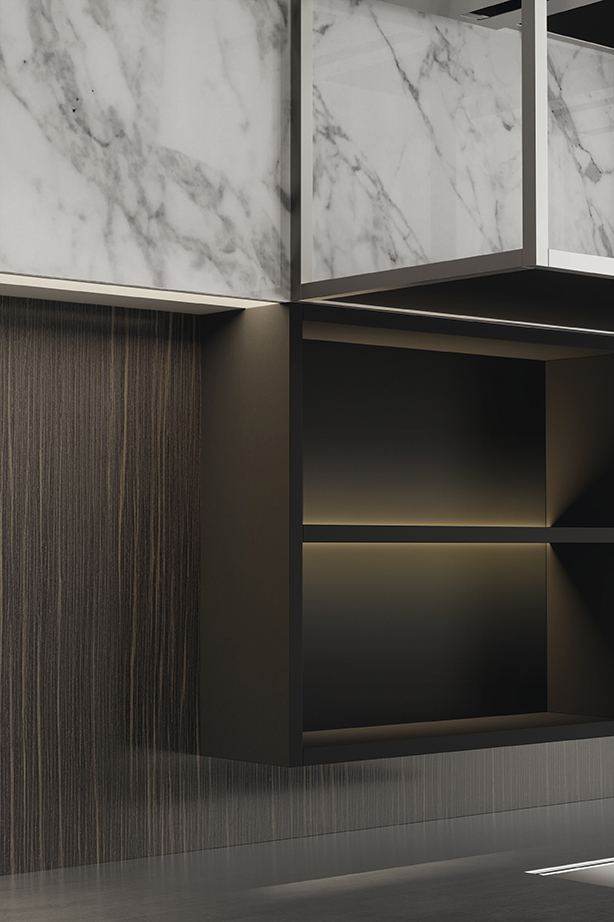
Above the kitchen island, the Calacatta marble niche cladding rises to the ceiling. Its vibrant veining provides a light contrast to the dark wood. And because the surface doesn’t end at the level of the grout lines, it looks less like cladding and more like a painting.
In front of it stand open metal shelves, delicate and transparent. They break up the dense visual impact of the materials rather than obscuring it. They are complemented by open shelving compartments in the kitchen unit itself, which showcase glass jars and stone bowls.
After all, in this marble kitchen, light is part of the material itself. Indirect lighting in the shelves and beneath the upper cabinets highlights textures that are barely noticeable in daylight. Control is handled via a remote control, light switch, or smart home system—depending on how the outlets are configured in the room. This is precisely why lighting should be addressed early in the planning process.
Planning: What This Composition Needs in the Space
Dark cabinet fronts need space and light to make an impact. In a spacious room with natural light coming in from the side, Blackwood reveals its depth; in a small, dark room, it loses it. This kitchen is therefore not a color choice, but a spatial decision.
Lighting design is part of the process from the very beginning. Where light enhances the material’s effect, the placement of the electrical connections also helps determine how the kitchen will look later on. The floating kitchen unit also has its own requirements: its base cabinets are mounted on the wall rather than standing on the floor. This requires a load-bearing wall and a mounting solution that’s determined early on.
And finally, the niche itself. Calacatta is natural stone; every slab has a unique pattern, and no two are alike. Which slab is placed where determines the overall effect of the entire wall—this can be discussed using material samples, not just a plan.
The material combination itself isn’t set in stone. Blackwood can be paired with other systemat cabinet fronts—lighter or more subdued—depending on what your space calls for. A glance at the kitchen styles at Häcker shows the possibilities. You can capture an initial sketch of your space in thekitchen planner.
systemat: where entitlement belongs
What holds this kitchen together is the authenticity of its materials. The veneer is real wood, the natural stone is real stone, and the countertop is real stainless steel. Each veneer front features its own unique grain pattern—which is why no two kitchens with the same front ever look identical.
Added to this is the freedom in planning. Cabinet colors, front heights, and combinations are custom-made for each kitchen. Base cabinets come in three heights, wall cabinets in six, and tall cabinets in eight—dimensions that allow a wall to be divided precisely rather than simply filled.
Inside, too, the standards remain the same. The SDL pull-out has the narrowest frame on the market. The frame is the structure that supports the front: the narrower it is, the more usable interior space remains. And the cabinet depth of 61 centimeters—instead of the standard 56 centimeters on the market—provides about ten percent more storage space in the base cabinet.
Behind this premium kitchen is a family-owned company that has been in business since 1898 and is now run by the fifth generation. Production takes place in Germany, at two locations across five plants. Häcker offers a 5-plus-5-year warranty on the “systemat” line.
Materials You'll Want to See
A Häcker dealer near you can advise you on cabinet fronts, materials, and planning.
Discover more Häcker kitchens from the systemat product range
![[Translate to English:] AV7070 GL Bronze](/fileadmin/_processed_/c/2/csm_AV7070_GL_Bronze_AV6088_GL_Eiche_Schwarz_M1_Querformat_1700x1200_9263512a27.jpg "[Translate to English:] AV7070 GL Bronze")
![[Translate to English:] AV 6023-GL Eiche-elegant](/fileadmin/_processed_/4/0/csm_AV_6023GL_Eiche_elegant_M1_Frontal_Querformat_1700x1200_39ed88ade2.jpg "[Translate to English:] AV 6023-GL Eiche-elegant")