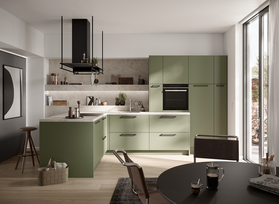
In this article, we’ll answer the most important questions about handle-free kitchens. What is a handle-free kitchen—and what are the benefits of choosing one? How do you open a handle-free kitchen, and which system works best for your daily life? What are the pros and cons of a handle-free kitchen, including honest details?
What is a handle-less kitchen, and why is it so popular?
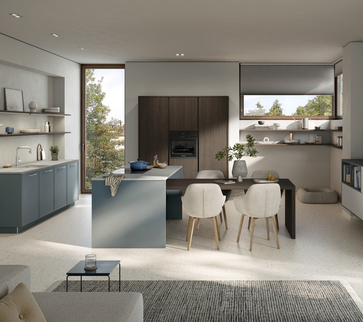
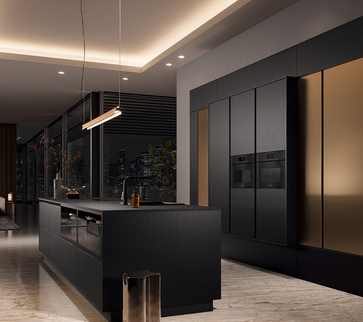
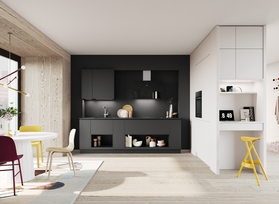
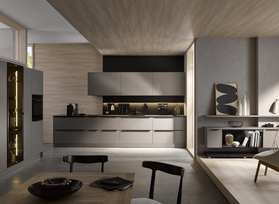
It’s simple: Some cabinet fronts do away with traditional handles. Doors and pull-outs open via integrated solutions—whether technical or structural. The result looks minimalist yet very thoughtfully designed. Why is this a trend? Because a handle-free kitchen considers the space as a whole. Geometry, materials, and light take center stage. Especially in open-concept kitchens, this creates a smoother transition to the living area. It’s important to note: a handle-free kitchen doesn’t automatically mean it’s cold or austere. Wood-effect finishes, matte colors, and subtle textures also give a handle-free design a warm and inviting feel. There’s also a practical benefit: when there are no protruding handles, you can move around more freely. This is especially helpful in narrow kitchens, near doorways, and anywhere there’s a lot of activity.
Handle-Free Kitchens: What Systems Are Available for Handle-Free Opening?
When people hear the term “handle-free,” many think of a single solution. In practice, there are several options—and they all feel different. Your choice determines comfort, maintenance requirements, and your kitchen routine, and is a key consideration when planning a kitchen. A good place to start is by asking: How often do you open what, and with which hands? Someone who cooks a lot uses their hands differently than someone who tends to clean up quickly. That’s exactly why it’s worth taking a closer look at the technology and how the handles feel.
A Comparison of Push-to-Open, Tip-On, Tipmatic Soft-Close, and Recessed Handles

Here’s the key question: How do you open a handle-less kitchen in everyday life? The answer depends on the system—and on your habits.
- Push-to-open / Tip-on (spring-loaded latch): You press briefly on the front, and the mechanism is triggered. The door or drawer opens slightly—ready to be opened. Visually, this design is minimalist and has a particularly clean look. In everyday use, it’s most convenient when your hands are free.
- Tipmatic Softclose (smooth glide to full opening): For handle-less kitchen styles, in addition to push-to-open and a spring-loaded latch, Tipmatic Softclose is also available. This mechanism allows pull-outs and drawers to glide smoothly to their full open position with just a light touch. This feels particularly natural, especially with frequently used drawers. Ideal if you valueorganization both inside and out.
- Recessed handle / handle strip (integrated access): Here, you grip into a recessed area or behind a handle strip. The look remains clean, and the feel is very direct and familiar. Many find this particularly intuitive because gripping works immediately. A cleaning tip: Dust or flour tends to accumulate more quickly in recessed handles. A quick wipe takes care of it—you’ll just need to do it more often.
- Combinations: Consciously blending design and everyday life: Many handle-less kitchens combine different systems rather than sticking strictly to a single solution. For example, recessed handles in the cooktop area and tip-on for wall cabinets. This creates a design that feels calm while remaining practical.
Which Dishwasher Is Best for a Handle-Free Kitchen? – The Special Case of Appliance Integration
The question of which dishwasher is best suited for a handle-free kitchen is a perfectly valid one. After all, you often open the dishwasher while doing other things—with a plate in your hand, holding a dishcloth, or while something is simmering.
In handle-free kitchen designs, two approaches usually make sense:
- A fully integrated dishwasher with a door-opening mechanism that matches the cabinet front
- Appliances with features that assist with opening the door (depending on the model)
It’s important to balance the front panel weight, the mechanism, and the installation height. When these elements align, everything looks seamless—and remains reliable in everyday use. A quick tip from experience: Plan the access so you don’t have to reach in again. That’s what makes the difference between “good” and “truly convenient.”
Advantages of a Handle-Free Kitchen
Why choose a handle-free kitchen? Because it often combines design and everyday life surprisingly well. Here are the benefits you’ll truly appreciate.
- Modern, uncluttered design: A handle-free kitchen has a sleek, calm appearance. Materials, colors, and light can really shine. The result is modern without looking trendy.
- Easy to clean thanks to smooth fronts: Smooth surfaces are often quicker to wipe down. If you prefer a particularly low-maintenance look, matte or textured surfaces are ideal. They have a subtle appearance and tend to show marks less noticeably.
- Safety and freedom of movement: Without protruding handles, there are fewer places to bump into. This is especially convenient in narrow walkways and in households with children. In kitchen islands in particular, this creates a more uncluttered space for movement.
- A greater sense of space in the open-concept kitchen: Handle-free kitchens have a visually unobtrusive presence. This fosters harmony between cooking, dining, and living. The kitchen becomes part of the room, not just a workspace.

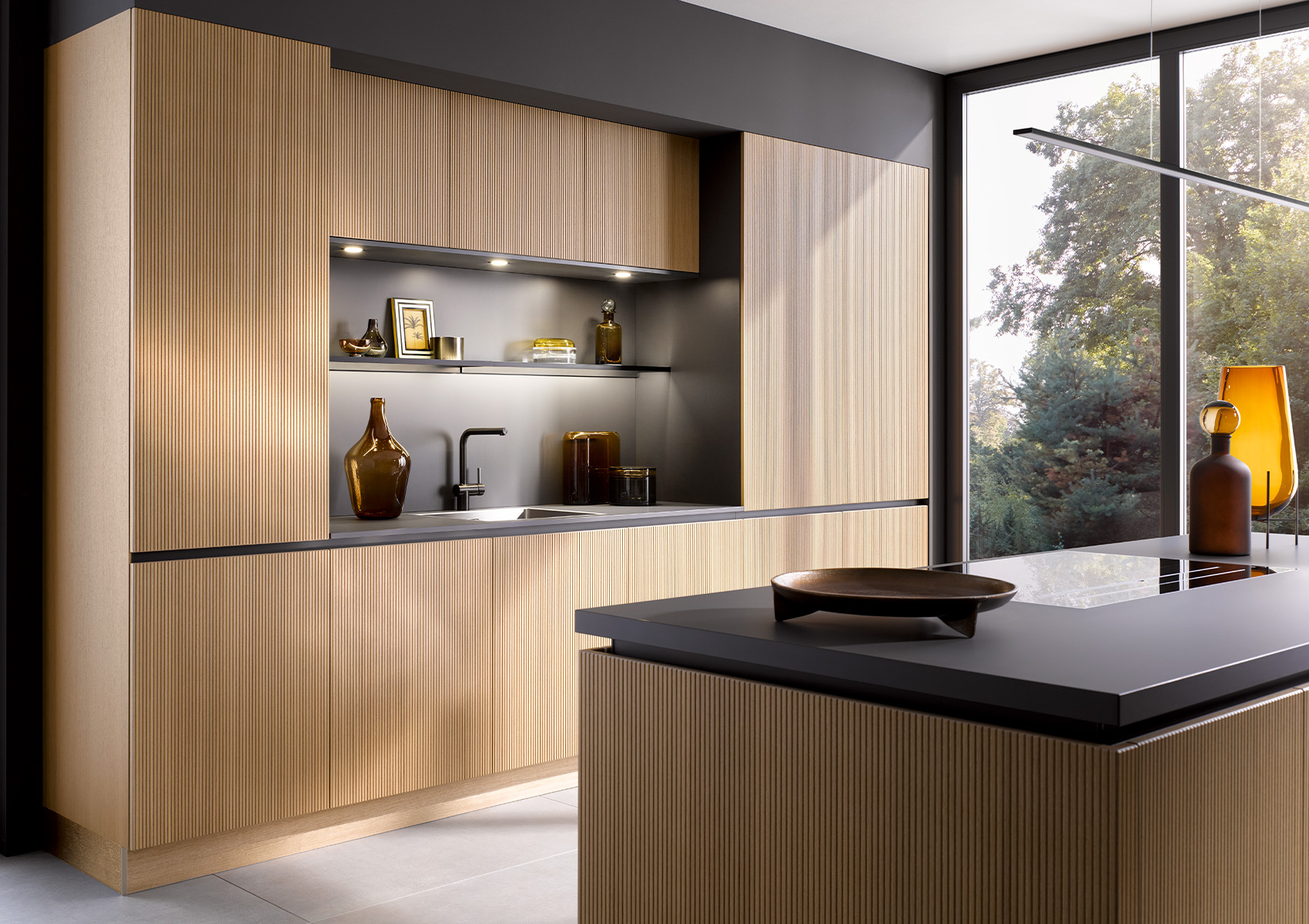

Planning Tips to Ensure Handle-Free Cabinets Remain Practical for Everyday Use: Plan frequently used pull-outs with particularly convenient opening mechanisms. Choose finishes that suit your usage, not just the color. Think in zones—cooking, washing, and storage—to keep traffic flow smooth. Make sure the grout pattern is consistent so the lines flow cleanly. One often-overlooked detail: lighting. Under-cabinet lights or indirect light strips accentuate the geometry of handle-free cabinet fronts. This makes the kitchen feel especially calm and cozy in the evening.
Ergonomic kitchen: comfort even in small spaces
Small kitchen, big impact – when it is ergonomically designed. Anyone who cooks or works every day knows that good kitchen planning not only takes storage space and design into account, but also everyday convenience. Even in a limited space, you can ensure comfortable, back-friendly use – with the right solutions.
Clever division into zones
Plan your small kitchen with clearly structured work areas: the preparation area, cooking area, and washing-up area should be sensibly coordinated. This saves time, reduces unnecessary movements, and makes everyday life more pleasant. Even with limited space, it is possible to create an ergonomic and functional kitchen layout.
With our 3D kitchen planner, you can design your small kitchen to be not only visually appealing but also ergonomically sound. Try out different heights, layouts, and storage solutions—from the comfort of your own home.
Selecting the appropriate working height
The height of the work surfaces is crucial for an ergonomic kitchen unit. If the surface is too low, every movement becomes a strain on the back. As a rule of thumb, the worktop should be about 10–15 cm below elbow height. If you are particularly tall or short, you can counteract this with individually customized base cabinets or height-adjustable plinths – an option that is also available for modern small kitchens.
Everything at your fingertips: save time, gain convenience
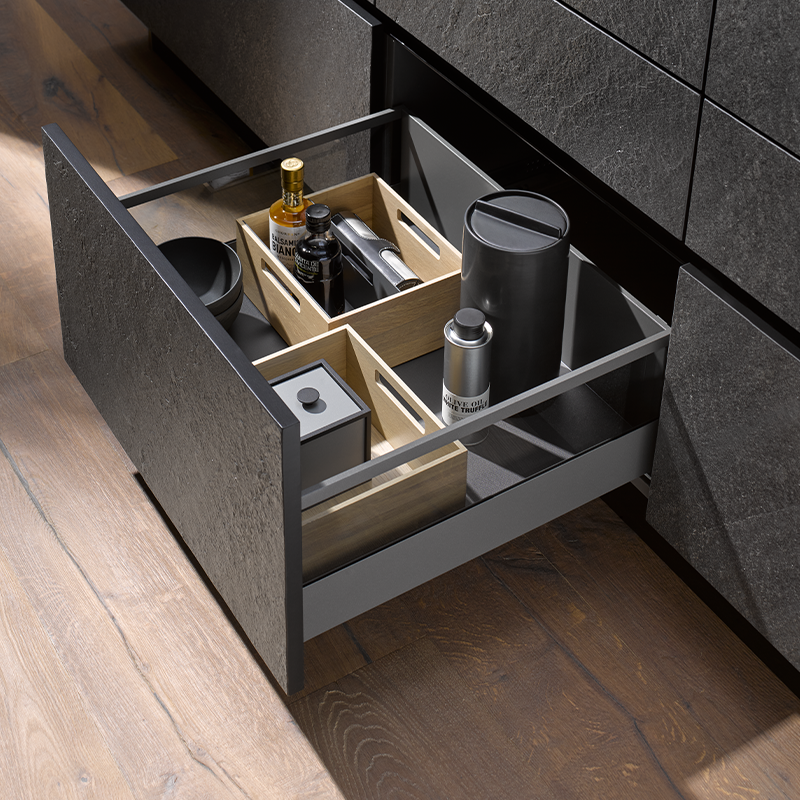
In small kitchens, every step counts. This makes it all the more important that frequently used utensils, pots, and spices are within easy reach. Pull-out cabinets, apothecary cabinets, and practical interior organization systems help to create order and make everyday use more efficient. This transforms even a compact kitchenette into a comfortable workstation.
Conclusion: Who is a handle-less kitchen the right choice for?
What are the pros and cons of a handle-free kitchen? In short: it brings a sense of calm to the design. It can be very practical if the layout and finishes fit your everyday life.
A handle-free kitchen is the right choice if:
- You appreciate clean lines, harmony, and a minimalist look.
- You’re looking for a seamless, unobtrusive connection to the living area in an open-concept kitchen.
- You enjoy the freedom of movement that comes with no protruding handles.
- You like technology that works seamlessly in the background.
If, on the other hand, you prefer a tactile experience and immediate access, a kitchen with handles may be the better solution. Or you can choose a combination that perfectly suits your daily life. The next step is often quite practical: visualize different options on the floor plan. This way, you can quickly see which design suits your space best.