What is a medicine cabinet?
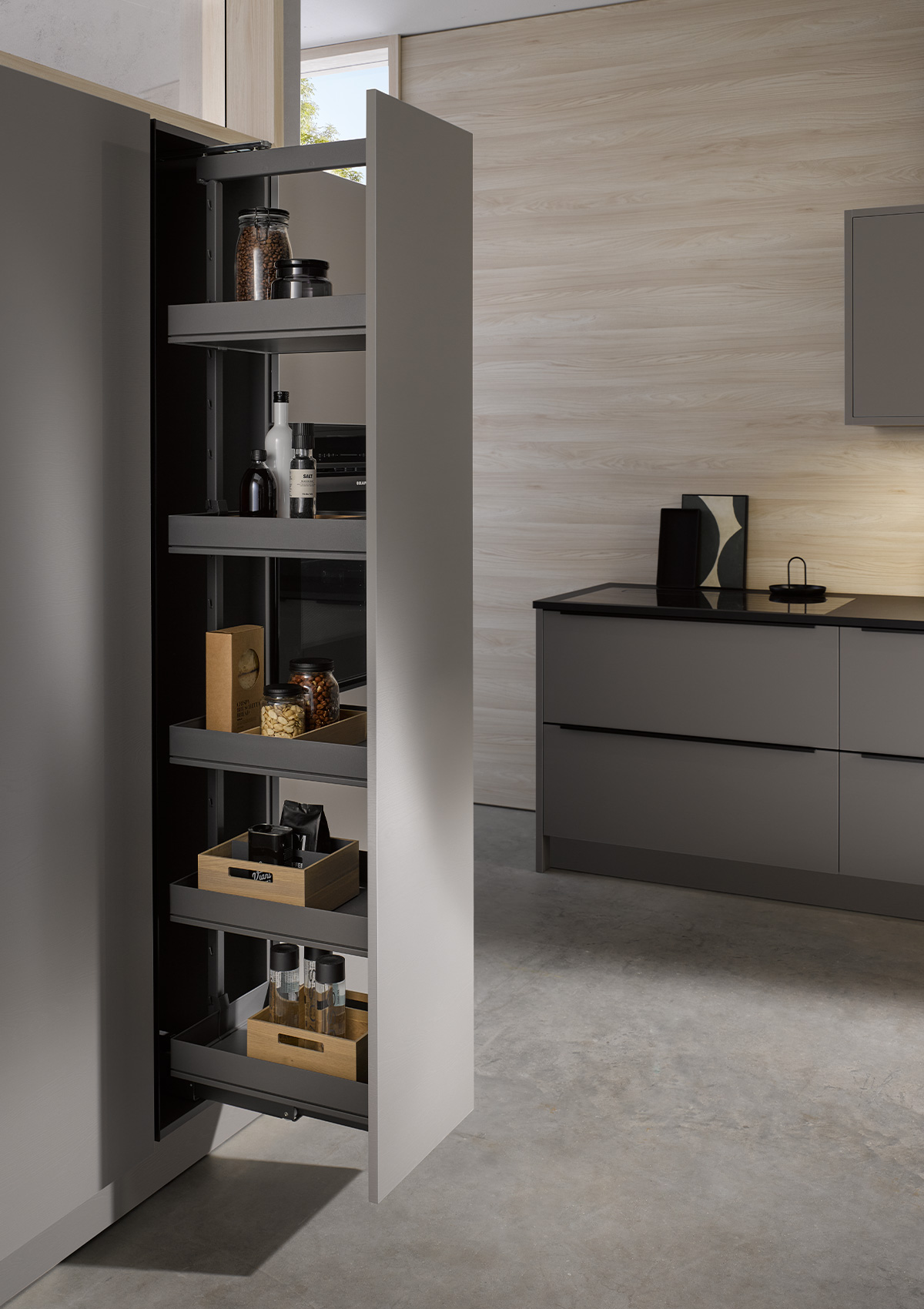
A pharmacy cabinet is a narrow, tall cabinet with several pull-out drawers. The best part: With a single motion, several drawers stacked on top of each other can be fully extended. Why is it called a pharmacy cabinet? It was originally designed for storing medications and substances in a pharmacy. Today, it comes in many different designs that redefine its somewhat outdated image. It keeps things organized and easy to see.
Items are typically stored vertically. This provides plenty of storage space—despite its narrow footprint. The advantages are clear: you can see everything at a glance, access items from both sides, and save valuable space at the same time.
We’ll explain what you should keep in mind when choosing a pharmacy cabinet for your new kitchen. Or would you like to add a pharmacy cabinet to your existing kitchen? That’s also possible with a little planning.
Why is it a good idea to have a medicine cabinet in the kitchen?
A medicine cabinet in the kitchen is perfect for storing groceries, spices, and canned goods. Everything has its designated place and is immediately within reach. Thanks to the vertical storage, you don’t have to bend down or search for items for a long time. Full-extension drawers ensure that you always have a clear overview. You can leave it open while cooking—and close it again with a single hand movement afterward.
In addition to its practicality, a pharmacy cabinet also saves space. Especially in narrow kitchens or small niches, it demonstrates how cleverly storage space can be utilized. Its height makes it a visual highlight in any kitchen. Whether in a country house style or a minimalist design: Anyone looking to combine organization, convenience, and style will find a true storage marvel in a pharmacy cabinet.

What do you keep in your medicine cabinet?
A pharmacy cabinet is particularly well-suited for dry goods such as flour, sugar, or pasta. Spices and baking ingredients can also be neatly organized here. Bottles of oil or vinegar can be safely stored in special holders, as they might otherwise easily tip over.
The upper section provides space for medications or your first-aid kit, keeping everything within easy reach. A major advantage of pharmacy cabinets is that the spacing between the individual pull-outs can be flexibly adjusted. This allows you to optimize the storage space for different sizes of items.
Important to note: Due to its narrow dimensions and weight limits, the apothecary cabinet is not suitable for heavy stacks of dishes, pots, or larger kitchen appliances. If you use it for the right items, everything will always be organized, secure, and easily accessible.
What sizes are available for kitchen medicine cabinets?
Kitchen cabinet units are typically between 180 and 220 cm tall. This aligns with standard kitchen heights, ensuring that even the upper pull-outs remain easily accessible. In smaller kitchens or rooms with lower ceilings, the height can be reduced slightly, for example to 160 to 180 cm. The individual pull-out shelves are usually evenly spaced vertically, making it easy to see and reach all your supplies. Some manufacturers even offer adjustable height options so that the apothecary cabinet can be optimally integrated into any kitchen layout.
Medicine cabinets come in various standard widths: 30 cm, 40 cm, and 60 cm. The right choice depends on the available space and your individual storage needs. A 30-cm-wide pantry cabinet is particularly suitable for narrow kitchens or as an additional module. For comparison: A box of cornflakes is about 20 cm wide—so a 30-cm cabinet offers enough space for supplies without taking up much room.
For larger kitchens with high storage needs, a 60-cm cabinet is ideal. It can even accommodate longer or bulkier items, such as a French baguette, laid horizontally. However, keep in mind that the wider the cabinet, the heavier the pull-out drawers become.

Where is the best place to install a medicine cabinet in the kitchen?
A medicine cabinet can be flexibly integrated into many areas of the kitchen. Placing it next to the stove or refrigerator is particularly practical, as it minimizes the distance you have to walk while cooking or preparing food.
Alternatively, it can serve as a “storage unit” at the edge of the kitchen. However, it should not be placed directly against a wall or in a corner so that the pull-out drawers remain easily accessible from both sides.
A pharmacy cabinet can also be integrated into a row of tall cabinets, which is particularly useful in modern kitchen layouts. However, this solution is less suitable for corner kitchens.
In small kitchens, a low apothecary cabinet used as a base cabinet can be a clever solution. This preserves storage space without restricting freedom of movement.
Should I retrofit a medicine cabinet or plan for one when installing a new kitchen?
An apothecary cabinet can be retrofitted into an existing kitchen or incorporated into a new kitchen from the start. When retrofitting, it’s important to check the dimensions and available space beforehand. If you choose pull-out shelves with lighting, you’ll need an electrical outlet.
If you’re planning a new kitchen, you can customize the pharmacy cabinet to fit your space and choose a design and materials that match the rest of the kitchen. Many kitchen designs already include pharmacy cabinets that match the kitchen cabinet fronts, making it easy to achieve a harmonious overall look. This ensures maximum convenience and visual appeal. Be sure to read our blog post on planning a kitchen.
There are two installation options: Installation by the kitchen manufacturer guarantees a perfect fit and professional installation. A DIY solution can save money, but it requires some handyman skills and careful planning to ensure the apothecary cabinet is safe and functional. Use the dealer locator to find a kitchen expert near you who can advise you on choosing the right apothecary cabinet.

How much does a medicine cabinet for the kitchen cost?
The prices for a medicine cabinet depend on its width, quality, and features. Prices typically range from about 150 to 600 euros. Narrower models or simpler designs are at the lower end of the price range, while wider or particularly high-quality cabinets are more expensive.
There are differences between built-in cabinets and freestanding models. Built-in solutions often blend harmoniously into the kitchen layout but may incur additional costs for installation or planning.
The choice between brand-name products and more affordable alternatives also affects the price. Additional costs may arise for accessories, special pull-outs, or lighting. Anyone looking to buy a pharmacy cabinet should therefore consider all these factors to plan a realistic budget.
Design and Variations of Modern Medicine Cabinets
Modern cabinetry offers plenty of design flexibility. Material options range from wood to lacquer to glass fronts. This allows you to perfectly match the cabinet to your kitchen’s style, whether it’s country, modern, or minimalist. Are you familiar with the latest kitchen trends?
There are also various handle options: classic handles or handle-less designs for a particularly minimalist look. The interior layout can also be customized. With inserts, non-slip mats, or special bottle holders, you can store your supplies safely and neatly.
Conclusion – Is a medicine cabinet worth it for your kitchen?
A pharmacy cabinet brings order, clarity, and space-saving benefits—as long as it can be seamlessly integrated into your kitchen layout. It’s especially ideal for pantry items, spices, and bottles: easily accessible, space-saving, and a visual highlight.
Plan your kitchen smartly: With our digital kitchen planner, you can select the right apothecary cabinet right away, explore products, and design your custom kitchen solution.